Top 10 Asphalt Road Construction Equipment Manufacturers

Choosing equipment manufacturers is a practical decision, not a branding exercise. A well-matched asphalt plant, paver, and roller can help crews maintain mix temperature, paving speed, and compaction quality. On a cold, windy site, those details show up in the mat: uneven texture, visible joints, or density that misses specification. The machinery matters. So does the operator.

The National Asphalt Pavement Association’s 2023 industry survey reported that roughly 94.6 million tons of reclaimed asphalt pavement and shingles were used in new mixtures in 2022. That figure points to a complex production chain, where plants need reliable controls for both virgin and recycled materials. NAPA president Dr. Audrey Copeland has described asphalt pavement as “the most recycled material in the United States.” Equipment buyers should still verify that claim’s relevance to a specific market and project; broad industry figures do not guarantee local performance.

This Top 10 guide compares manufacturers through practical criteria: product range, service support, parts availability, automation, and suitability for different project scales. Federal Highway Administration guidance also emphasizes pavement design and construction quality, not equipment brands alone. A famous logo cannot fix poor mix handling. Nor does a lower purchase price tell the whole story. Some comparisons remain imperfect because manufacturers publish specifications in different formats, and dealer support varies by region. Readers should check current product data, talk with local contractors, and match each machine to the work actually planned.

Top 10 Asphalt Road Construction Equipment Manufacturers

What Asphalt Road Construction Equipment Manufacturers Produce

What Asphalt Road Construction Equipment Manufacturers Produce

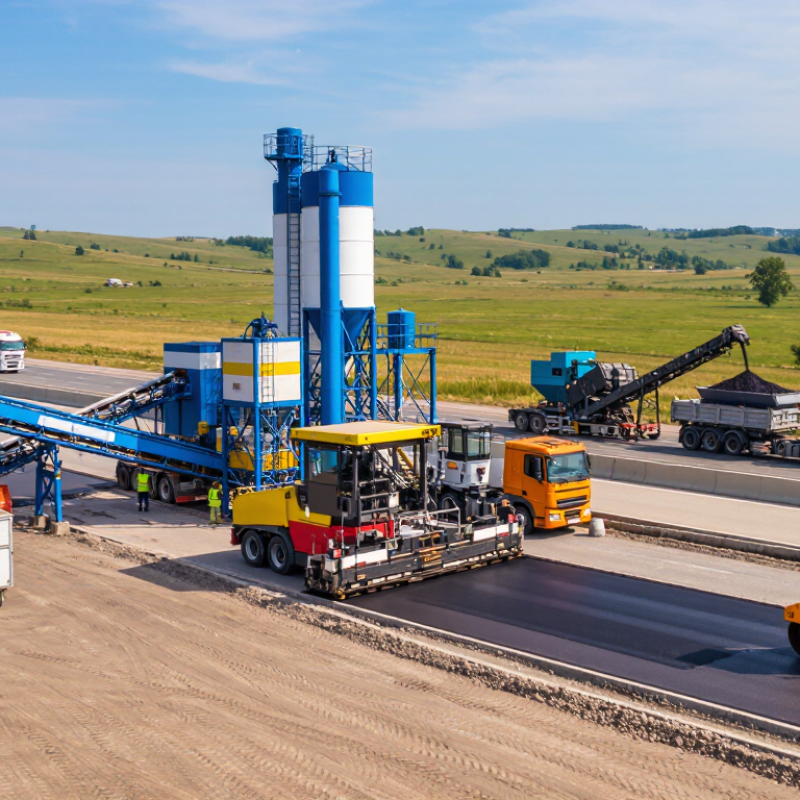
Asphalt road construction equipment manufacturers produce systems for mixing, laying, compacting, and recycling pavement materials. Their product ranges may include batch or drum-mix plants, aggregate feeders, heated storage tanks, asphalt pavers, rollers, and milling machines. Not every manufacturer makes every machine. Plant equipment meters aggregate, heats it, and blends it with binder; on site, pavers spread the mix while rollers press it into a dense, even surface.

Small details matter: a blocked feeder or uneven screed can leave visible ridges.

Recycling Equipment and Material Control

Recycling equipment is increasingly important. The National Asphalt Pavement Association’s 2023 industry survey estimated that 94.6 million tons of reclaimed asphalt pavement were used in new asphalt mixtures in 2022. That demand supports equipment such as RAP crushers, screens, conveyors, and controlled feed systems. Manufacturers also supply sensors and controls that help operators monitor temperature, material flow, and compaction. These tools can improve consistency, though they cannot compensate for poor setup or rushed work. That remains a weak point.

Tips: Match equipment capacity to the project’s daily tonnage and haul distance. Check that temperature readings are calibrated. Watch the mat edge and roller pattern during the first passes. A short test run can reveal problems early.

How the Top 10 Manufacturers Are Selected

Selecting the top ten asphalt road construction equipment manufacturers requires more than comparing machine specifications. A credible assessment should examine paving performance, build quality, parts availability, and service support. Where possible, evaluators can review documented operating hours, maintenance records, and customer feedback from active job sites. Evidence matters.

Machines should also be compared under similar conditions. A paver working on a wide highway lane faces different demands from one used for narrow urban repairs. Relevant details include mat consistency, screed temperature control, compaction results, fuel use, and ease of routine maintenance. Independent test data and clearly described evaluation methods strengthen the assessment; promotional claims alone are not enough.

Selection should consider technical expertise and support networks, including technician training, replacement-part lead times, and access to operating guidance. Safety features and emissions performance also deserve attention, with claims checked against available documentation. A transparent scoring system can assign weight to each factor, but the weights involve judgment. A neat table may conceal that. Regional conditions can change the result, too, so a ranking should explain its limits rather than suggest every contractor needs the same equipment.

Leading Manufacturers and Their Core Equipment

Leading asphalt road equipment manufacturers typically build around a few essential machine groups. Their core products may include asphalt mixing plants, pavers, compactors, milling machines, and bitumen distributors. Mixing plants control aggregate drying, binder dosing, and material temperature. Pavers spread the mix at a steady width, while rollers compact it in carefully managed passes. Milling machines remove worn pavement before resurfacing. Distributors apply binder evenly, helping new layers bond to the surface.

A manufacturer’s value is not measured by machine size alone. Buyers should compare production capacity, fuel use, control systems, parts availability, and technician response times. Ask how equipment performs with local aggregate and typical project lengths. A plant that looks efficient on paper may struggle when feed materials vary. Even strong machines can disappoint when service support is distant. Small details matter. Check access to filters, belts, and wear parts, and review how quickly operators can diagnose faults. Recycling systems can also reduce demand for new materials, but their output depends on consistent feed and careful process control. No lineup is perfect. A useful comparison includes operating costs and field support, not just purchase price.

Top 10 Asphalt Road Construction Equipment Manufacturers - Leading Manufacturers and Their Core Equipment

This table summarizes ten widely used equipment categories in asphalt road construction. It is an equipment-category overview, not a verified ranking of manufacturers; company and brand names are intentionally omitted.

No. Equipment Category Core Equipment Primary Function Commonly Specified Capability
1 Asphalt Mixing Plants Batch and drum-mix plants Dry and heat aggregates, combine them with binder, and produce asphalt mixture. Batch plants produce mix in separate batches; drum plants mix materials continuously.
2 Asphalt Pavers Tracked or wheeled pavers with screeds Distribute asphalt mix and form a uniform mat before compaction. Screed width, paving speed, mat profile, and grade or slope control.
3 Tandem Vibratory Rollers Double-drum steel-wheel rollers Compact asphalt mats using static weight and, where suitable, vibration. Drum width, operating mass, vibration settings, and compaction modes.
4 Pneumatic-Tire Rollers Multi-wheel rubber-tire rollers Knead and compact asphalt, helping close surface voids and improve aggregate seating. Ballast range, tire configuration, and adjustable tire pressure.
5 Cold Planers Rotary milling machines with cutting drums Remove existing pavement to prepare a surface for resurfacing or rehabilitation. Milling width, cutting depth, drum configuration, and material-loading system.
6 Asphalt Distributors Heated binder spray trucks or trailers Apply bituminous binder or emulsion for tack coats, prime coats, and surface treatments. Spray-bar width, application-rate control, heating, and circulation systems.
7 Chip Spreaders Self-propelled or truck-mounted aggregate spreaders Spread aggregate over freshly applied binder in chip-seal and related surface treatments. Spreading width, aggregate-feed control, and uniformity of application.
8 Recyclers and Stabilizers Reclaimer-stabilizer machines with mixing rotors Pulverize and mix existing pavement or soil with selected stabilizing materials. Rotor width, working depth, and compatibility with specified additives.
9 Material Transfer Vehicles Paving material transfer and remixing units Transfer mix from haul trucks to pavers and support a more continuous paving operation. Receiving capacity, conveyor delivery rate, and material-handling configuration.
10 Road Marking Machines Line stripers for paint or thermoplastic materials Apply lane lines, symbols, and other traffic markings to completed road surfaces. Marking-material system, line-width control, application speed, and bead dispensing.

Comparing Technology, Product Range, and Global Reach

A practical review of ten asphalt road construction equipment manufacturers should compare more than headline specifications. Technology matters when it improves control on site. Look for paving systems that monitor mat thickness, temperature, and machine speed. Clear displays and accessible service diagnostics can help crews respond to uneven results. Emissions controls and fuel-use data also matter, though their value depends on local operating conditions. Sophisticated systems are not automatically better. If operators need lengthy training, useful features may go unused.

Product range is another key measure. A manufacturer may supply pavers, rollers, milling machines, and asphalt production equipment, or focus on a narrower category. Broader coverage can simplify fleet coordination, but buyers should still check compatibility and parts availability. Global reach is not just a map of sales offices. Ask about regional technicians, spare-part lead times, operator training, and support for local materials and climates. Published specifications help, but actual service response can be harder to verify. That uncertainty deserves attention.

Tips: Compare machines on the same type of job, such as a short paving section with changing temperatures. Request service timelines and training details in writing. Record what remains unclear.

Factors to Consider When Choosing a Manufacturer

Choosing an asphalt road construction equipment manufacturer starts with the work your crews actually perform. A compact paver may suit narrow streets, while highway projects need higher output and steady material flow. Match the machine’s paving width, operating speed, and capacity to your typical job—not just your largest contract. Ask for technical specifications and operating limits in writing. Numbers should be clear.

Service support deserves equal attention. A machine stopped by a small hydraulic fault can delay an entire paving train. Ask how quickly common parts can be supplied, where technicians are based, and what training is available. Request references from contractors working in similar climates and on similar road surfaces. A polished brochure can still hide a thin service network. Visit a working site if possible, and watch how the equipment handles turns, uneven ground, and routine adjustments.

Compare total ownership costs, not only the purchase price. Fuel use, maintenance intervals, wear parts, and operator comfort all affect daily productivity. Ask to review inspection records or arrange a practical demonstration with your own crew. Pay attention to visibility, controls, and how easily operators clean the machine after a shift. Small details matter. I would still leave room for judgment: site conditions vary, and a test run cannot predict every season or material mix.

Find the Right Repair Product for Your Project

Need to find the most appropriate product for the needs of your project? We can help because we have over 70 years of experience servicing the industry with every kind of project, from Do-it-yourself projects to large skyscrapers. Package Pavement has the experience, the knowledge and the products to help every project succeed.

Quikrete Repair Products
Legend
Package Pavement has two convenient locations in Stormville, NY (Dutchess County) and Ravena, NY (Greene County) to serve the Northeastern Region with bagged concrete, blacktop, mortar, and repair products. This map gives a general idea of where we service and the product lines we offer.
Package Pavement Products
Quikrete Products
Spec Mix Products
map

Our Brands Websites