Top 10 Mortar Repair Products for Global Buyers?

Choosing the right mortar repair product can protect masonry, reduce callbacks, and extend a building’s service life. Global buyers face a crowded market, from ready-mix cartridges to polymer-modified repair mortars. Each option behaves differently on brick, block, stone, and older lime-based joints.

This guide reviews ten widely relevant product types for international purchasing decisions. It considers bond strength, shrinkage control, curing time, weather resistance, color matching, and application method. Real jobsite conditions matter. A damp basement wall needs different treatment from a sun-heated façade. A narrow crack may suit a cartridge, while deep joint loss often requires a trowel-applied mortar repair compound.

Reliable selection also depends on documentation. Buyers should check technical data sheets, safety information, coverage rates, shelf life, and storage requirements. Regional standards and climate conditions can change performance expectations. Products designed for mild weather may struggle through repeated freeze-thaw cycles. Some claims sound impressive, but independent testing and small-area trials remain valuable.

No product wins every project. That is worth remembering. Even experienced contractors can misjudge color or moisture movement. This comparison therefore treats manufacturer claims carefully and highlights practical limitations. It also encourages buyers to verify compatibility with existing masonry before ordering large quantities. The best choice is rarely the cheapest bag or fastest cure. It is the product that fits the substrate, repair depth, local climate, installer skill, and long-term maintenance plan.

Top 10 Mortar Repair Products for Global Buyers?

What Mortar Repair Products Are and How Global Buyers Compare Them

Top 10 Mortar Repair Products for Global Buyers

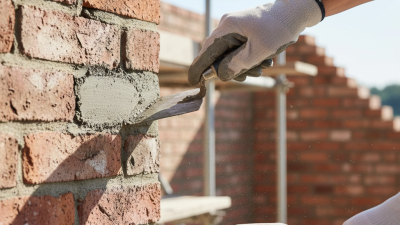
Mortar repair products restore joints, cracks, gaps, and damaged masonry between bricks or blocks. The right choice depends on the substrate, repair depth, weather, and curing time. A product that works on dense concrete may fail on soft historic brick.

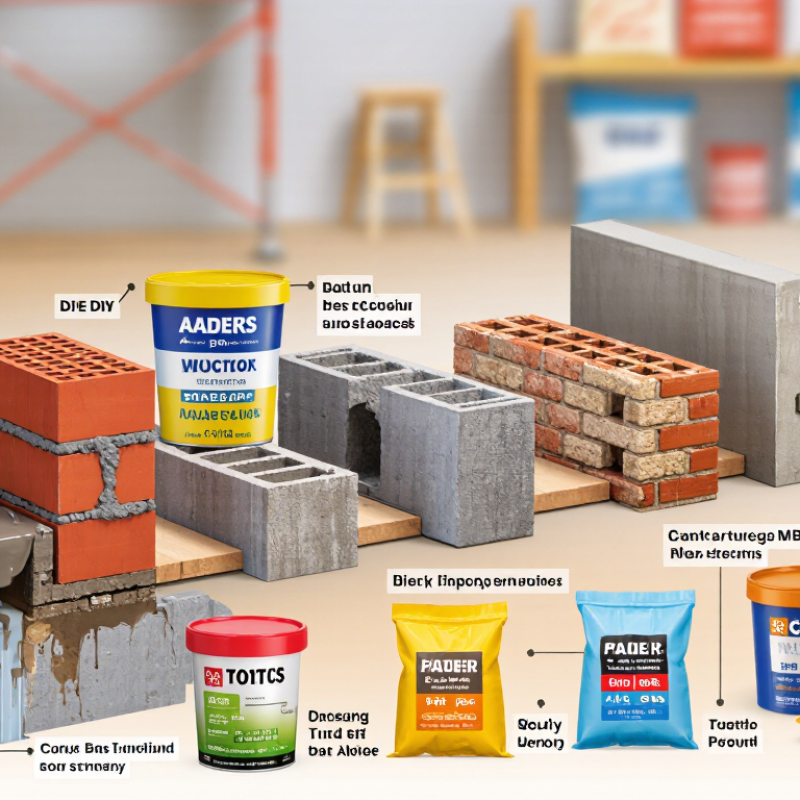
A practical comparison covers ten common options: premixed masonry patch, polymer-modified mortar, hydraulic cement, fast-setting repair mortar, flexible acrylic filler, epoxy mortar, lime-based mortar, tuckpointing mortar, refractory mortar, and fiber-reinforced repair compound. Premixed products offer convenience for small repairs. Hydraulic cement suits active damp areas, but it may shrink or crack if applied incorrectly. Lime-based mortar supports older masonry and allows vapor movement. Epoxy mortar provides strong adhesion, although removal and recycling can be difficult.

Look beyond the advertised strength. Check bond strength, movement tolerance, working time, curing temperature, water resistance, and maximum layer thickness. On international projects, buyers should request technical data sheets and safety documents in the relevant language. Confirm packaging shelf life, transport conditions, and local compliance requirements. Climate matters too. High heat can shorten working time, while cold delays curing.

Field testing is valuable. Clean a small joint, dampen it when required, and observe color and texture after curing. Do not trust color alone. A neat sample can still hide poor compatibility. No ranking is absolute. Skilled preparation often matters more than the product label. Repairs also need inspection after rain, freeze-thaw cycles, or seasonal movement.

The Top 10 Mortar Repair Product Categories by Repair Application

Top 10 Mortar Repair Products for Global Buyers

The best mortar repair category depends on the damage, substrate, and working conditions.

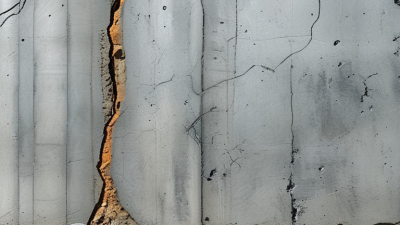
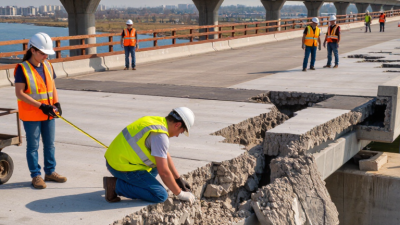
For structural cracks, use polymer-modified repair mortar or high-strength cementitious grout. Nonstructural cracks may need flexible crack-filling mortar. Spalled concrete requires patch repair mortar with controlled shrinkage. Masonry joint damage suits repointing mortar.

Vertical walls often need thixotropic mortar that stays in place. Overhead repairs demand non-sag mortar. Floor damage calls for abrasion-resistant screed repair mortar. Wet areas need low-permeability mortar.

High-temperature facilities require heat-resistant repair mortar. Rapid-setting mortar supports urgent repairs.

These categories reflect real application differences. A 2023 UNEP Global Status Report states that buildings produce about 37% of global energy-related emissions.

Repairing usable structures can reduce replacement demand, but only when compatibility is checked carefully.

The International Concrete Repair Institute emphasizes surface preparation, bond strength, curing, and defect diagnosis in repair work.

Product selection cannot replace inspection.

Field experience shows that clean, sound edges matter more than impressive packaging. Small repairs often fail first. Poor curing remains a common weakness.

Global buyers should compare compressive strength, setting time, permeability, temperature range, and local test compliance.

Reports from MarketsandMarkets identify infrastructure maintenance as a continuing construction-material demand driver. Still, report figures vary by region, and some market forecasts seem optimistic.

A practical trial panel is safer than relying on a catalog alone.

Key Performance Factors: Strength, Adhesion, Flexibility, and Durability

Top 10 Mortar Repair Products for Global Buyers

Global buyers often compare the top ten mortar repair products by compressive strength alone. That is a narrow test. A reliable repair must bond firmly with concrete, brick, or stone under real site conditions. Clean, damp masonry matters. Field preparation often decides whether the repair lasts five years or fails after one winter. Ask for adhesion data, curing requirements, and test conditions before comparing numbers. Do not trust impressive strength figures without context.

Flexibility deserves equal attention. Rigid mortar may crack when walls expand, shrink, or vibrate. Small movement matters. Products with controlled flexibility can protect edges around door frames, slabs, and exterior steps. Yet excessive softness may reduce load resistance. The best choice depends on crack width, substrate movement, repair depth, and exposure to water or salt. A practical trial patch can reveal problems that laboratory data misses.

Durability includes freeze-thaw resistance, water absorption, abrasion resistance, and color stability. Coastal projects need different protection from repairs inside a dry warehouse. On active sites, workers also need workable mixing time and predictable setting. Measure twice. Some technical sheets provide excellent laboratory results but limited field guidance. That gap deserves attention. Buyers should review independent test reports, batch consistency, storage conditions, and installer feedback from similar climates. Even experienced teams can misjudge compatibility when old masonry contains weak or contaminated material.

How to Select Mortar Repair Products for Different Climates and Structures

Top 10 Mortar Repair Products for Global Buyers?

Selecting mortar repair products requires more than matching color. The wall’s age, movement, moisture, and local climate all matter. In freeze-thaw regions, choose a low-absorption, flexible repair mortar that can tolerate repeated expansion. Check freeze-thaw test data, not only marketing claims. For hot, dry climates, slower-setting formulations reduce rapid water loss and surface cracking. Lightly dampen porous masonry before application. In humid or coastal areas, vapor-permeable lime-based or compatible mineral mortars can help moisture escape. Salt exposure needs special attention.

Structure changes the decision. Historic brick and soft stone usually need a mortar softer than the masonry. A strong cement repair may look durable, yet it can trap water and damage older units. Concrete blocks often accept polymer-modified cementitious products, especially where impact resistance matters. Chimneys require heat-tolerant repair materials and careful joint preparation. Below-grade walls need products rated for persistent dampness, but no mortar should replace proper drainage.

The useful top ten categories include lime mortar, hydraulic lime mortar, cementitious patch mortar, polymer-modified mortar, rapid-setting mortar, fiber-reinforced mortar, waterproof repair mortar, salt-resistant mortar, heat-resistant chimney mortar, and flexible movement-joint mortar. I have seen clean repairs fail because the joint was dusty. Small trials reveal more than brochures. Match color after curing, test adhesion, and follow the full mixing ratio. Even experienced crews sometimes apply too much water. That shortcut leaves a weak, powdery joint. Local standards, substrate testing, and a written repair record make global purchasing safer and more repeatable.

Top 10 Mortar Repair Products for Global Buyers

The comparative suitability index is based on typical performance characteristics of each mortar type, including freeze-thaw resistance, moisture tolerance, bond strength, setting speed, chemical resistance, and suitability for structural or non-structural repairs. Selection should be verified against project specifications, local standards, substrate condition, and actual climate exposure.

Global Purchasing Checklist: Standards, Packaging, Logistics, and Supplier Checks

Global buyers need more than a low unit price when selecting mortar repair products. Performance should match the repair location, substrate, moisture exposure, and curing temperature. For structural repairs, request evidence against EN 1504-3 or ASTM C928, where applicable. Ask for compressive strength, bond strength, shrinkage, working time, and freeze-thaw data. A technical data sheet is useful. Independent test reports are better.

Packaging affects product quality before installation. Check whether bags use moisture-resistant layers and sealed inner liners. Confirm net weight, pallet dimensions, stacking limits, and batch coding. The Global Cement and Concrete Association reports that cement production exceeds four billion tonnes annually, showing the scale of mineral-based material handling. Yet scale does not prevent damaged bags. Photograph loading conditions and require retention samples from each batch. I have seen “waterproof” packaging fail after careless container loading.

Logistics planning should include HS classification, dangerous-goods screening, humidity control, and transit insurance. UNCTAD’s Review of Maritime Transport 2024 states that more than 80% of global merchandise trade by volume moves by sea. Sea routes are economical, but moisture and delays remain real risks. The World Bank’s Logistics Performance Index 2023 compares 139 economies and highlights major differences in customs, infrastructure, and shipment reliability. Ask suppliers for production capacity, quality certificates, audit records, complaint-response times, and recent export references. Check them independently. Do not rely on polished brochures alone. A small pilot shipment may cost more, but it can expose weak packaging, inconsistent mixing, or unclear documentation before a full container does.

Top 10 Mortar Repair Products for Global Buyers — Global Purchasing Checklist: Standards, Packaging, Logistics, and Supplier Checks

Indicative product comparison for international sourcing. Final specifications, test reports, packaging, and regulatory requirements should be confirmed for each project and destination market.

Rank Product Type Typical Repair Application Typical Binder / Composition Indicative Performance Range Relevant Standards to Check Recommended Packaging Logistics and Storage Checklist Supplier Documents and Quality Checks Global Buyer Fit
1 Polymer-Modified Repair Mortar General concrete patching, spalled edges, columns, beams, façades, and structural surface repairs. Cementitious binder with graded mineral aggregate and polymer modifiers. Compressive strength commonly about 20–50 MPa at 28 days;
low to medium shrinkage;
layer thickness commonly 5–50 mm, depending on formulation.
EN 1504-3 ASTM C928 ASTM C109 Moisture-resistant 20–25 kg multi-wall paper bags with inner liner; palletized and stretch-wrapped. Keep dry and off the floor; protect from humidity; use first-in-first-out inventory; typical unopened shelf life is 6–12 months, subject to the technical data sheet. Batch number, technical data sheet, safety data sheet, compressive-strength results, chloride content, shrinkage data, and conformity declaration. High — versatile for distributors and contractors serving multiple repair applications.
2 Rapid-Setting Repair Mortar Emergency repairs, traffic areas, warehouse floors, utility access covers, and time-sensitive maintenance. Rapid-hardening hydraulic cement with graded aggregate and setting-control additives. Initial set often within approximately 10–45 minutes;
early compressive strength may reach about 10–25 MPa within several hours;
final strength varies by formulation.
EN 1504-3 ASTM C928 ASTM C191 Moisture-barrier bags or pails, generally 5–25 kg; smaller units help reduce waste during emergency repairs. Temperature-sensitive handling; avoid frozen or overheated storage; plan delivery around shelf life and installation windows. Set-time test results, early-strength data, working-time range, temperature limitations, mixing instructions, and batch traceability. High — strong demand where downtime and reopening speed are critical.
3 Fiber-Reinforced Repair Mortar Large patches, façade repairs, overhead repairs, and areas exposed to shrinkage or impact risk. Cementitious mortar reinforced with synthetic or mineral fibers and graded aggregates. Compressive strength commonly about 25–60 MPa at 28 days;
improved crack-control performance;
typical repair thickness about 10–75 mm, depending on aggregate size.
EN 1504-3 ASTM C928 ASTM C157 20–25 kg lined bags; use reinforced pallet wrapping to prevent puncture and moisture ingress. Check fiber dispersion after mixing; prevent bag damage during loading; protect from rain and condensation. Fiber type and dosage, crack-control or shrinkage results, bond strength, compressive strength, and production-batch records. High — suitable for buyers seeking broader application tolerance.
4 Non-Shrink Cementitious Repair Grout Base plates, machine foundations, structural void filling, anchor pockets, and precision repairs. High-performance cementitious grout with expansive or shrinkage-compensating additives. Flowable or pourable consistency;
compressive strength commonly about 40–80 MPa at 28 days;
low-volume-change performance when correctly mixed and cured.
ASTM C1107 EN 1504-3 ASTM C109 20–25 kg moisture-resistant bags; bulk bags may be used for large projects if humidity control is reliable. Use sealed transport; check water dosage and flow requirements; do not store in humid containers or exposed yards. ASTM C1107 compliance evidence, flow data, expansion or shrinkage results, strength certificates, and installation method statement. High — attractive for infrastructure, industrial, and equipment-installation projects.
5 Hydraulic Lime Repair Mortar Historic masonry, heritage façades, soft brick, natural stone, and breathable wall repairs. Natural or formulated hydraulic lime with compatible mineral aggregates and optional mineral pigments. Lower to medium strength, often approximately 2–15 MPa at 28 days;
vapor-permeable;
generally more compatible with traditional masonry than dense cement mortars.
EN 459-1 EN 998-2 ASTM C1707 10–25 kg lined paper bags; protect color-sensitive products from moisture and contamination. Keep dry, ventilated, and away from cement or chemical contamination; confirm local heritage requirements before import. Lime classification, particle-size distribution, vapor permeability, soluble-salt data, color consistency, and compatibility guidance. Medium–High — valuable in restoration markets but requires specialized technical support.
6 Epoxy Repair Mortar Heavy-duty industrial floors, chemical-exposure areas, impact zones, and repairs requiring strong adhesion. Two- or three-component epoxy resin system with graded silica or mineral aggregate. Compressive strength commonly about 60–100 MPa at 7 days;
high bond strength;
low water absorption compared with cementitious mortars.
EN 1504-3 ASTM C881 ASTM C579 Sealed kits in pails or cans with clearly separated components; include moisture-resistant labels and mixing ratios. Protect from excessive heat and freezing; verify dangerous-goods classification where applicable; control container orientation and leakage risk. Resin and hardener batch records, SDS, pot-life data, chemical-resistance results, bond strength, and transport classification. Medium–High — high value per shipment, but regulatory and handling requirements are more demanding.
7 Waterproof Cementitious Repair Mortar Basements, water tanks, retaining walls, wet rooms, tunnels, and damp concrete surfaces. Hydraulic cement, graded fillers, and water-resistant mineral or polymer additives. Water penetration resistance depends on test method and system design;
compressive strength commonly about 20–45 MPa at 28 days;
suitable for positive-side or negative-side use only when specifically tested.
EN 1504-2 EN 1504-3 ASTM C836 20–25 kg lined bags or two-component kits; use sealed secondary packaging for humid transport routes. Protect from humidity; confirm potable-water approval if required; verify substrate moisture and curing conditions. Water-penetration test results, adhesion data, potable-water certificate where relevant, SDS, and application limitations. High — broad demand, especially for below-grade and wet-area maintenance.
8 Masonry Tuckpointing and Joint Repair Mortar Repointing brick, block, and stone masonry joints; façade maintenance and crack remediation. Cement-lime or hydraulic-lime binder with fine, graded aggregate and optional pigments. Compressive strength commonly about 5–20 MPa at 28 days;
good workability and color-control potential;
joint depth and curing strongly affect performance.
EN 998-2 ASTM C270 ASTM C1713 10–25 kg color-protected lined bags; smaller packaging is useful for repair contractors and retail channels. Prevent moisture and color contamination; keep separate batches identifiable; use pallets with edge protection. Mortar class, water-retention data, compressive strength, color consistency, aggregate grading, and compatibility recommendations. High — easy to distribute globally when color and regional masonry requirements are managed.
9 Anchoring and Structural Repair Grout Rebar anchoring, post-installed bolts, dowel pockets, bridge components, and structural connection repairs. High-strength cementitious grout or resin-based anchoring system, depending on design requirements. Cementitious systems often exceed 50 MPa at 28 days;
flowable placement;
bond and pull-out performance must be verified for the intended anchor system.
EN 1504-6 ASTM C1107 ACI 355.4 Moisture-resistant bags for cementitious products; sealed cartridges or component kits for resin systems. Check shelf life carefully; protect from heat and moisture; confirm compatibility with anchor diameter, hole size, and installation temperature. Pull-out test data, bond strength, installation instructions, approval documents, batch certificates, and temperature limits. Medium–High — technically attractive but requires project-specific engineering acceptance.
10 Refractory Repair Mortar Furnaces, fireplaces, kilns, boilers, chimneys, and high-temperature masonry joints. Fireclay, calcium-aluminate or other refractory binder with heat-resistant mineral aggregates. Service temperature varies widely, commonly about 1,000–1,500°C;
strength and durability depend on firing cycle, joint thickness, and exposure conditions.
EN 998-2 ASTM C199 ASTM C401 Moisture-resistant bags or sealed pails, commonly 5–25 kg; use protective inner liners and clear temperature labeling. Keep completely dry; prevent contamination by ordinary cement; verify hazardous-goods and temperature-control requirements where relevant. Maximum service temperature, chemical composition, thermal-shock data, setting method, SDS, and application-cure procedure. Medium — specialized demand with good margins when technical documentation is complete.

Note: Performance ranges are typical market-oriented reference values, not guaranteed specifications. Buyers should request current laboratory reports, conformity documents, packaging photographs, pallet dimensions, net and gross weights, HS classification, minimum order quantity, lead time, and destination-specific regulatory compliance before placing an order.

Find the Right Repair Product for Your Project

Need to find the most appropriate product for the needs of your project? We can help because we have over 70 years of experience servicing the industry with every kind of project, from Do-it-yourself projects to large skyscrapers. Package Pavement has the experience, the knowledge and the products to help every project succeed.

Quikrete Repair Products
Legend
Package Pavement has two convenient locations in Stormville, NY (Dutchess County) and Ravena, NY (Greene County) to serve the Northeastern Region with bagged concrete, blacktop, mortar, and repair products. This map gives a general idea of where we service and the product lines we offer.
Package Pavement Products
Quikrete Products
Spec Mix Products
map

Our Brands Websites