2026 Best Construction Work Equipment for Global Buyers
Choosing equipment for construction work in 2026 requires more than comparing prices or engine power. Global buyers must examine productivity, operator safety, energy use, maintenance access, and local service support. A compact excavator may look ideal on a showroom floor, yet poor parts availability can stop a project for days. That practical risk deserves attention.
Tom Silva, a respected master carpenter and construction expert, often repeats the rule, “Measure twice, cut once.” His advice applies to equipment purchasing too. Buyers should measure site conditions, workload, transport limits, fuel access, and operator skills before selecting machines. A reliable skid steer, lifting platform, concrete mixer, or cordless tool system should match real working conditions. Not marketing language.
This guide reviews construction work equipment for international contractors, distributors, rental companies, and project managers. It considers verified specifications, warranty terms, replacement parts, training, emissions performance, and compatibility with regional requirements. Trusted manufacturers should provide clear manuals, documented testing, and responsive technical support. Buyers should also confirm applicable safety and certification obligations before import or use.
No ranking can fit every jobsite. A powerful machine may waste fuel on a small urban project. A cheaper tool may become expensive after repeated repairs. That is the uncomfortable part. Recommendations can also change as batteries, automation, and low-emission systems improve. Readers should treat this guide as a practical starting point, then compare supplier evidence and field experience. Good equipment does not remove every construction risk. It helps skilled teams work more safely, consistently, and efficiently.
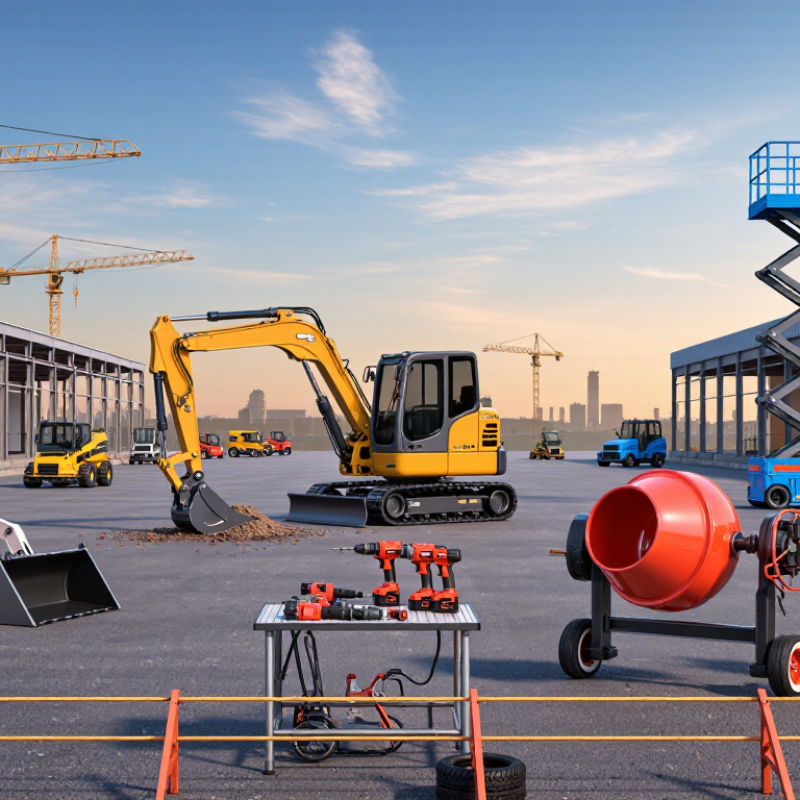
Construction Work Equipment: Definition, Categories, and Core Functions
Construction work equipment includes the machines, tools, and systems used to build, move, lift, finish, and maintain structures. It supports safer work and more consistent results.
Common categories include earthmoving equipment, lifting equipment, access equipment, concrete equipment, compaction machines, and site support tools. Each category solves a different site problem.
Excavators and loaders prepare ground, remove materials, and move aggregate. Cranes and lifting platforms raise heavy components to controlled heights.
Scaffolds and access platforms help crews reach façades, roofs, and service areas. Concrete mixers, pumps, and vibrators support accurate placement and consolidation.
Rollers and compactors reduce air gaps in soil and road layers. Small tools still matter. Drills, cutters, levels, and torque tools influence final accuracy.
Global buyers should compare rated capacity, working dimensions, fuel or power needs, safety controls, spare-parts access, and operator training.
Local climate also matters. Dust, humidity, steep terrain, and extreme temperatures can affect performance.
On active sites, poor attachment selection often causes delays, even when the main machine is powerful enough. This is an easy detail to overlook.
Equipment records, inspection routines, and clear maintenance instructions improve reliability. Yet specifications alone cannot predict every result. A practical site trial may reveal awkward controls, limited visibility, or transport problems before purchase.
Key Specifications, Safety Features, and Operator Requirements
2026 Best Construction Work Equipment for Global Buyers
For global buyers, equipment selection starts with measurable specifications, not glossy promises. Check rated operating capacity, lift height, hydraulic flow, ground clearance, turning radius, and transport weight. Match these figures to soil conditions, site access, and expected duty cycles. A compact machine may fit a narrow urban site, but its smaller fuel tank can increase downtime. That trade-off is easy to miss.
Safety deserves equal attention. ROPS and FOPS protection should align with ISO 3471 and ISO 3449 requirements. Load indicators, backup cameras, proximity alarms, emergency stops, seat interlocks, and automatic parking brakes reduce predictable mistakes. The ILO reported in 2023 that work-related deaths remain near three million annually worldwide, with construction among the higher-risk sectors. Equipment alone cannot remove that risk. Poor visibility still defeats advanced sensors.
Operator requirements must be written into the purchasing decision. Ask for documented training, practical competency checks, daily inspection records, and task-specific authorization. Operators should understand rated loads, exclusion zones, attachments, and weather limits. ISO 20474 provides useful safety guidance for earth-moving machinery, but local rules still require verification. Real work is messier. Even experienced operators can rush inspections under production pressure. A two-minute walkaround may expose damaged hoses, loose pins, or worn tires before a small defect becomes an expensive incident. Safety performance should be reviewed through near-miss data, maintenance records, and honest operator feedback.
2026 Equipment Trends: Automation, Electrification, and Smart Technology
2026 Best Construction Work Equipment for Global Buyers
Construction equipment in 2026 is becoming quieter, cleaner, and more connected. Automation now supports grading, drilling, lifting, and site monitoring. The World Economic Forum’s Future of Jobs Report 2025 identifies artificial intelligence and information processing as major business transformation drivers. Construction managers are responding with machine guidance, digital twins, and remote diagnostics.
Electrification is also moving from pilot projects toward daily operations. The International Energy Agency reports that global electric vehicle sales exceeded 17 million in 2024. This broader battery investment is improving charging systems and energy storage for construction fleets. Electric excavators can work inside buildings with less noise and no direct exhaust. Yet, high-power charging remains difficult on remote sites. A diesel-free fleet may still be unrealistic for deep excavation and long shifts. That limitation deserves honest planning.
Tips: Compare total operating cost, not purchase price. Check battery capacity, charging time, local service skills, and replacement-part access. Ask operators to test controls in real soil. A perfect digital dashboard cannot repair poor data or weak training. The Deloitte 2025 Engineering and Construction Industry Outlook highlights digital transformation, workforce capability, and productivity as continuing industry priorities. Buyers should therefore connect equipment data with maintenance records and safety procedures. Start with one measurable use case, such as reducing idle time by 10 percent. Small trials often reveal uncomfortable problems before large investments.
2026 Best Construction Work Equipment for Global Buyers
Equipment Trends: Automation, Electrification, and Smart Technology
The chart presents a normalized global buyer priority index for 2026, using 2024 as the baseline value of 100. Higher values indicate stronger expected demand for equipment capabilities that improve productivity, energy efficiency, safety, and fleet visibility.