Top Low Carbon Concrete Innovations for 2026?

As the construction industry faces pressing climate challenges, the rise of low carbon concrete offers a promising path. Leading expert Dr. Emily Hart, a renowned researcher in sustainable materials, emphasizes, "Embracing low carbon concrete is not just beneficial; it’s essential for our future." This innovative material significantly reduces CO2 emissions compared to traditional concrete.

The advancements in low carbon concrete are transforming how we view sustainable building practices. Companies are exploring alternative binding materials and incorporating recycled aggregates. These innovations are not without their challenges. Some formulations still lack the strength or durability of conventional concrete. Striking the right balance between performance and sustainability remains a key hurdle for the industry.

Experts predict that by 2026, low carbon concrete will become more widely adopted. However, the journey is complex and requires constant refinement. The industry must confront its own limitations while pursuing eco-friendly solutions. The future of construction lies in this innovative material, making low carbon concrete a central focus for ongoing research and development.

Top Low Carbon Concrete Innovations for 2026?

Innovative Materials Driving Low Carbon Concrete Solutions in 2026

Innovations in low carbon concrete are rapidly evolving. By 2026, new materials will emerge. These materials will drastically reduce the environmental impact of concrete. One key innovation is the use of recycled aggregates. These aggregates can lower emissions during production. Additionally, incorporating industrial by-products, like fly ash, enhances durability and sustainability.

In the search for greener solutions, bio-based alternatives are gaining traction. Some researchers are exploring organic materials that capture carbon. These innovations are promising but also have limitations. For instance, scaling production and ensuring consistent quality can be challenging. The market must address these hurdles to make a meaningful impact.

The adoption of low carbon concrete solutions requires collaboration. Industry experts and academics must work together. A deeper understanding of material properties is essential. Testing these new materials in real-world applications will reveal their true potential. Continuous innovation is necessary but must be approached with caution and scrutiny.

Top Low Carbon Concrete Innovations for 2026

Key Technologies for Enhancing Carbon Capture in Concrete Production

Innovative technologies are emerging in the field of low carbon concrete. The primary aim is to significantly enhance carbon capture during concrete production. One promising approach involves the use of alternative binders. These materials can drastically reduce CO2 emissions compared to traditional Portland cement. Their application might not be straightforward, raising concerns about performance and long-term durability.

Another key technology is carbon mineralization. This process captures CO2 and integrates it into the concrete matrix. As a result, the final product can store carbon for years. However, achieving consistent results remains a challenge. Variability in raw materials can affect the efficiency of carbon uptake. Researchers are investigating methods to optimize this process to ensure reliability.

Research is ongoing to improve these technologies. Collaboration among scientists, engineers, and industry professionals is crucial. This partnership can lead to innovations that make low carbon concrete viable on a larger scale. Ensuring practicality while minimizing environmental impact is a complex task. The pathway to widespread adoption requires continuous testing and refinement.

Sustainable Manufacturing Processes for Low Carbon Concrete Innovations

The construction industry faces significant challenges in reducing carbon emissions. Low carbon concrete represents a promising solution. Sustainable manufacturing processes can transform traditional methods, making them more eco-friendly. Innovations in this area focus on minimizing material waste and energy consumption during production.

Tips: Consider local sourcing of materials. This reduces transportation emissions. Also, explore alternative binding agents. They can lower the carbon footprint significantly.

One promising trend involves recycling industrial by-products. Fly ash and slag can replace cement, improving concrete's durability and sustainability. However, this practice requires careful monitoring. The quality of these materials can vary, potentially affecting the final product.

Exploring digital fabrication is another avenue. Technologies such as 3D printing can create precise structures, reducing excess material. Yet, this innovative approach also requires further research. Understanding the long-term performance of these innovations is crucial for widespread adoption.

Design Strategies for Reducing Carbon Footprint in Concrete Structures

The construction industry is evolving towards more sustainable practices. Low carbon concrete innovations are essential for reducing carbon footprints. Effective design strategies play a crucial role in this transformation.

One approach is optimizing concrete mixes. Utilizing alternative materials, such as fly ash or slag, lowers emissions. These substitutes enhance durability while reducing the need for Portland cement. Therefore, they offer both environmental and structural benefits. Implementing thinner slabs can also minimize material usage without compromising strength.

Another strategy involves incorporating renewable resources. Research has shown that using recycled aggregates can be beneficial. However, challenges arise, such as ensuring consistency and quality. It's vital to address these issues to fully embrace greener options. Continuous innovation and careful design assessments are necessary to reach sustainability goals in concrete structures.

Top Low Carbon Concrete Innovations for 2026 - Design Strategies for Reducing Carbon Footprint in Concrete Structures

Innovation Type Description CO2 Reduction Potential (%) Implementation Year Challenges
Recycled Aggregate Concrete Utilizes recycled materials to replace traditional aggregates. 30 2024 Variable quality of recycled materials.
Carbon Capture Utilization Incorporates captured CO2 into the curing process of concrete. 20 2025 Technology scalability and cost.
Geo-Polymer Concrete Uses industrial by-products instead of cement to reduce carbon impact. 50 2026 Limited acceptance in construction standards.
High-Performance Concrete Enhances durability and requires less material for the same performance. 25 2025 Higher initial cost of materials.
Smart Concrete Integrates sensors to monitor the health of concrete structures. 15 2026 Complexity of sensor integration and maintenance.

Future Trends and Market Outlook for Low Carbon Concrete in 2026

The low carbon concrete market is set to experience significant growth by 2026. According to a recent sector report, the global low carbon concrete market is projected to reach approximately $12 billion in value. This is a direct result of increasing environmental regulations and the urgent need for sustainable construction practices.

Research highlights several innovative practices in low carbon concrete. For example, incorporating industrial by-products like fly ash and slag can reduce carbon emissions by over 30%. Additionally, advancements in carbon capture technologies show promise, potentially sequestering millions of tons of CO2 annually. However, challenges persist. Material availability and consistent quality control are critical roadblocks.

Stakeholders are seeking solutions to these issues. The rise of bio-based additives is one promising avenue, aiming to enhance performance while lowering carbon footprints. The market must adapt quickly to shifting demands for sustainability. Building codes are also evolving, pushing for greener solutions. The potential for low carbon concrete is immense, but careful consideration of its implementation is necessary.

Find the Right Repair Product for Your Project

Need to find the most appropriate product for the needs of your project? We can help because we have over 70 years of experience servicing the industry with every kind of project, from Do-it-yourself projects to large skyscrapers. Package Pavement has the experience, the knowledge and the products to help every project succeed.
Quikrete Repair Products
Legend
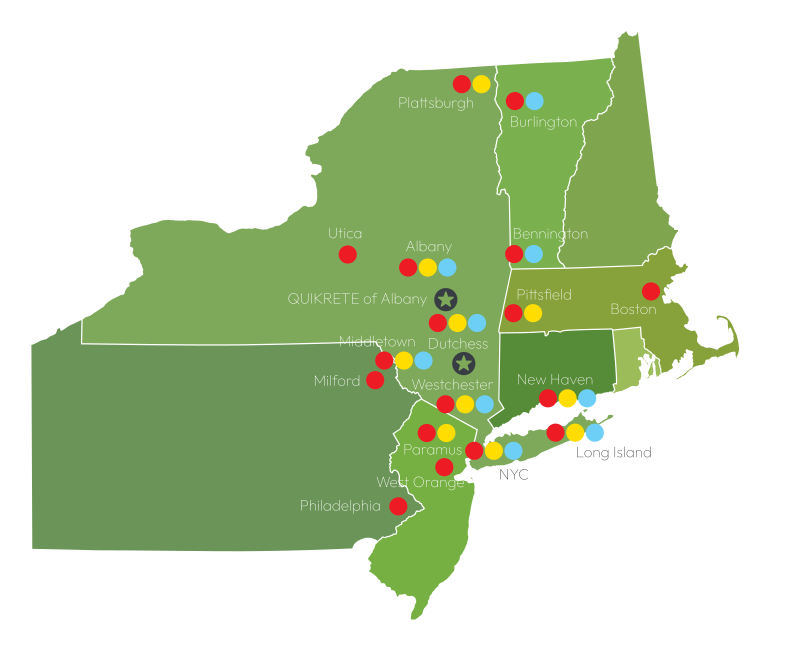
Package Pavement has two convenient locations in Stormville, NY (Dutchess County) and Ravena, NY (Greene County) to serve the Northeastern Region with bagged concrete, blacktop, mortar, and repair products. This map gives a general idea of where we service and the product lines we offer.
Package Pavement Products
Quikrete Products
Spec Mix Products
map

Our Brands Websites