What is Low Carbon Concrete and Why is it Important?

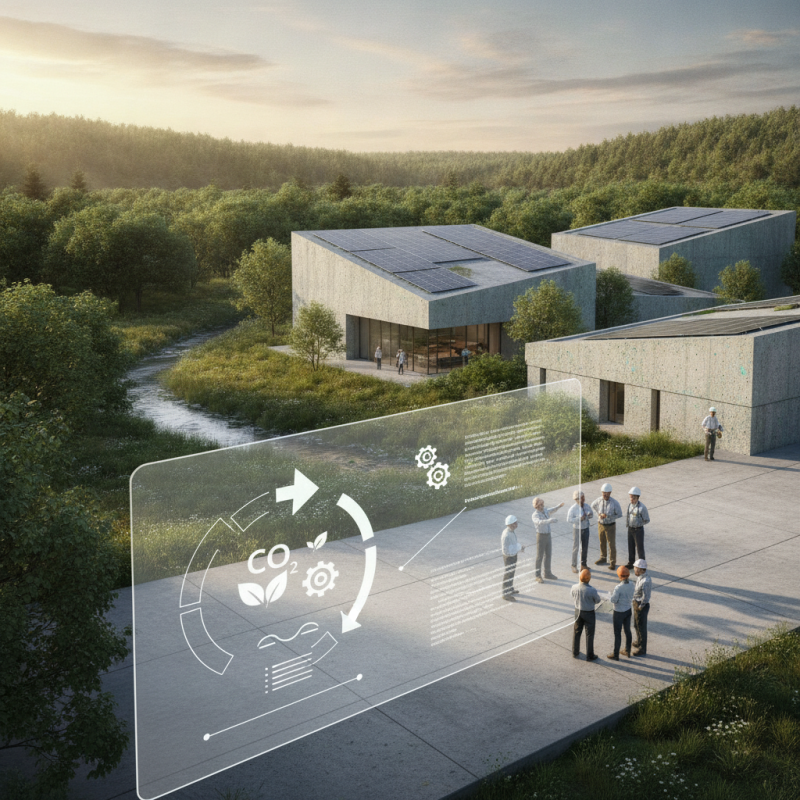
Low carbon concrete represents a significant evolution in sustainable construction practices. As the construction industry faces increasing pressure to reduce its carbon footprint, low carbon concrete emerges as a viable solution. This innovative material incorporates alternative ingredients, minimizing the reliance on traditional cement, which is a major source of CO2 emissions.

The benefits of low carbon concrete extend beyond environmental impact. It demonstrates comparable strength and durability to conventional concrete, making it suitable for various applications. However, some challenges persist. For instance, the availability of sourcing materials may vary by region, and adapting construction habits can be complex.

Moreover, while low carbon concrete shows promise, ongoing research is necessary to fully understand its long-term performance and environmental benefits. As builders and engineers explore this material, transparency about its limitations is crucial. By fostering a deeper understanding of low carbon concrete, we can better appreciate its role in a sustainable future.

What is Low Carbon Concrete and Why is it Important?

What is Low Carbon Concrete and its Composition?

Low carbon concrete is an innovative material aimed at reducing carbon emissions in the construction industry. Its composition is different from traditional concrete. Standard concrete relies heavily on Portland cement, which accounts for a substantial portion of CO2 emissions during production. In contrast, low carbon concrete incorporates alternative binders, such as fly ash and slag. These materials not only reduce emissions but also enhance performance.

The use of recycled aggregates in low carbon concrete is also significant. This practice minimizes waste and supports sustainability. However, the durability and long-term performance of low carbon concrete still require further research. Some experts question whether it can fully replace traditional concrete in all applications. The reliability of low carbon mixtures is under scrutiny, especially in extreme weather conditions.

Despite its benefits, the adoption of low carbon concrete faces challenges. Builders may be uncertain about its performance compared to conventional options. Education and awareness are vital for overcoming this hesitance. Additionally, establishing industry standards for low carbon concrete is crucial for ensuring consistent quality. These are vital steps for pushing sustainable construction practices forward.

The Role of Low Carbon Concrete in Reducing Carbon Emissions

Low carbon concrete plays a crucial role in mitigating climate change. Traditional concrete production is responsible for about 8% of global carbon dioxide emissions. To address this, low carbon concrete offers a sustainable alternative. It often utilizes alternative materials, such as fly ash and slag, which can significantly reduce the carbon footprint of concrete by up to 30%.

Research indicates the construction industry needs to adapt quickly. According to a report by the Global Cement and Concrete Association, emissions must drop 25% by 2030 to meet global climate targets. Low carbon concrete not only lowers emissions but also enhances durability. Structures built with it can last longer, reducing the need for repairs and thus, minimizing resource consumption over time.

However, challenges remain in widespread adoption. Some industry professionals question the performance and workability of low carbon options when compared to traditional mixtures. Ensuring that low carbon concrete meets safety and quality standards is essential. These concerns highlight the importance of continued research and development in this field, while emphasizing the potential benefits for both the environment and the economy.

What is Low Carbon Concrete and Why is it Important? - The Role of Low Carbon Concrete in Reducing Carbon Emissions

Aspect Traditional Concrete Low Carbon Concrete Potential Reduction in CO2 Emissions
Cement Production Approx. 0.9 tons of CO2/ton of cement Approx. 0.5 tons of CO2/ton of cement ~44% Reduction
Lifecycle Carbon Footprint ~800 kg CO2/m³ ~400 kg CO2/m³ ~50% Reduction
Material Sources Natural aggregates and Portland cement Recycled materials and alternative binders Promotes material reuse
Durability Standard durability Improved durability with less cracking Longer lifespan
Cost Comparison Higher initial costs Competitive or lower costs with sustainability incentives Potential long-term savings

Comparative Analysis: Low Carbon Concrete vs. Traditional Concrete

Low carbon concrete represents a pivotal shift in construction materials, primarily due to its reduced environmental impact. Traditional concrete production contributes approximately 8% of global carbon dioxide emissions. In contrast, low carbon concrete can cut emissions by 30% to 50% through various strategies like incorporating alternative materials and utilizing less cement. This reduction is crucial as the construction industry continues to seek sustainable solutions.

A comparative analysis reveals significant differences between low carbon concrete and its traditional counterpart. While traditional concrete relies heavily on cement, low carbon variants utilize recycled aggregates or industrial by-products, such as fly ash or slag. A report from the Global Concrete and Cement Association highlights that employing these materials not only decreases greenhouse gas emissions but also enhances the durability of the concrete. However, challenges exist. Achieving the same strength and longevity as traditional concrete can be a hurdle. Continuous research is needed to address these limitations effectively.

Understanding these disparities is vital for industry professionals. The adoption of low carbon concrete is not just a trend; it's a necessity for minimizing the carbon footprint of construction. As regulations tighten and the demand for sustainable practices grows, adopting low carbon technologies will play a crucial role in shaping future construction paradigms. However, stakeholders must carefully evaluate the trade-offs involved with material performance and sustainability.

Applications and Case Studies of Low Carbon Concrete in Construction

What is Low Carbon Concrete and Why is it Important?

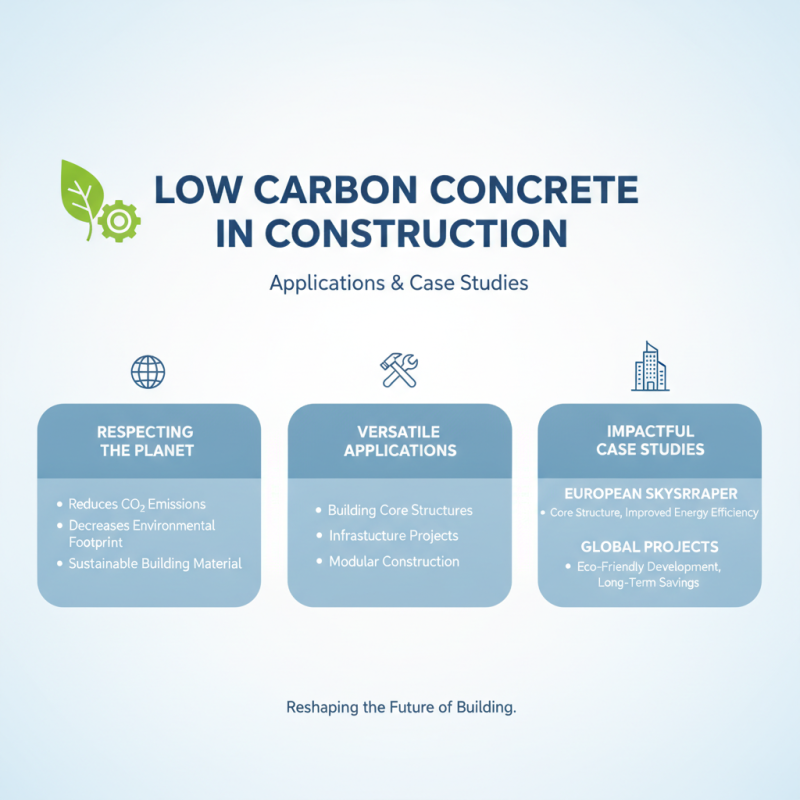
Low carbon concrete is reshaping the construction industry. Its applications are vast and impactful. Projects around the world are integrating this innovative material to reduce environmental footprints. For example, a recent skyscraper in Europe used low carbon concrete in its core structure. This not only cut down carbon emissions but also improved energy efficiency in construction processes.

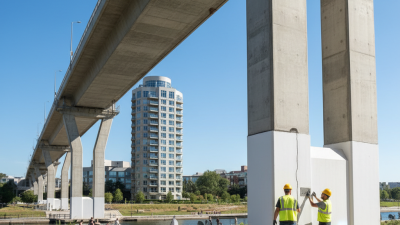
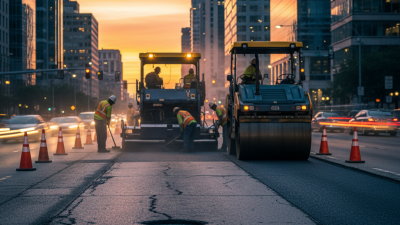
Cities are embracing low carbon concrete in infrastructure projects. Bridges and pavements made with this material demonstrate durability while minimizing environmental harm. In one notable case, a city refurbished its roads using low carbon concrete. The project lowered greenhouse gas emissions significantly, showcasing tangible benefits.

Tip: When considering low carbon concrete, assess local regulations and resources. Understanding regional standards helps ensure compliance and quality.

Employing low carbon concrete offers lessons too. Not all projects yield expected results on the first attempt. Some mixtures require adjustment in local climates, impacting performance. Experimentation is key.

Tip: Monitor and evaluate performance regularly. This will help highlight areas for improvement and guide future projects.

Future Trends and Innovations in Low Carbon Concrete Technology

The future of low carbon concrete technology is promising yet challenging. Innovations are driving the development of materials that reduce carbon emissions. Researchers are exploring various alternatives to traditional cement. These options include industrial byproducts and new types of aggregates. Each alternative presents unique benefits and complications.

One notable trend is the use of recycled materials. Incorporating waste products can cut down carbon footprints. However, the performance of concrete might vary. This inconsistency raises questions about its long-term durability. Another area to consider is carbon capture technology. It shows great potential in reducing emissions during cement production. But practical implementation remains a hurdle.

Collaboration among academics, industry professionals, and policymakers is crucial. Sharing knowledge can lead to breakthroughs in low carbon concrete. However, challenges such as cost, scalability, and regulations must be addressed. Progress is being made, yet the path forward requires continuous evaluation and adaptation.

Find the Right Repair Product for Your Project

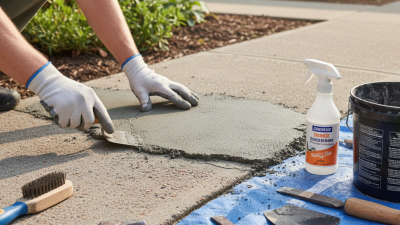
Need to find the most appropriate product for the needs of your project? We can help because we have over 70 years of experience servicing the industry with every kind of project, from Do-it-yourself projects to large skyscrapers. Package Pavement has the experience, the knowledge and the products to help every project succeed.
Quikrete Repair Products
Legend
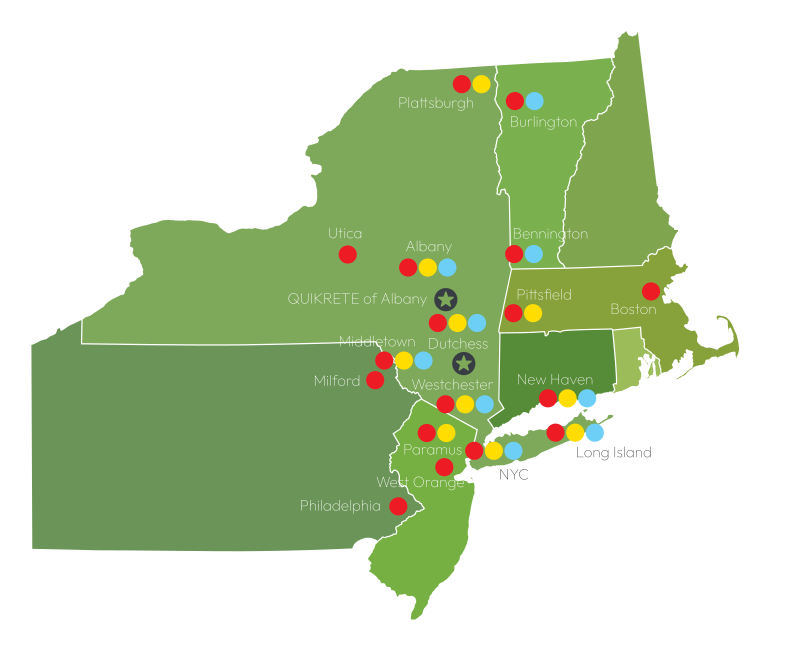
Package Pavement has two convenient locations in Stormville, NY (Dutchess County) and Ravena, NY (Greene County) to serve the Northeastern Region with bagged concrete, blacktop, mortar, and repair products. This map gives a general idea of where we service and the product lines we offer.
Package Pavement Products
Quikrete Products
Spec Mix Products
map

Our Brands Websites