How to Find Reliable USA Asphalt Suppliers?

Finding a dependable usa asphalt supplier requires more than comparing prices. Pavement projects depend on consistent binder grades, aggregate quality, production controls, and delivery timing. A delayed truck can leave a paving crew waiting beside a cooling mat. That small interruption can affect density, joints, labor costs, and public safety.

Industry data shows why supplier verification matters. The National Asphalt Pavement Association’s 2023 Asphalt Pavement Industry Survey reported that U.S. producers used approximately 89.7 million tons of reclaimed asphalt pavement in new mixtures during 2022. The report also found that nearly all reclaimed asphalt pavement was recycled. This scale reflects a mature industry, but it does not guarantee equal performance from every supplier. The Federal Highway Administration’s pavement materials guidance also emphasizes mix design, material testing, quality control, and documented specifications. These details should guide your supplier shortlist.

Audrey Copeland, Ph.D., President and CEO of NAPA, has stated, “Asphalt is the most recycled material in America.” Her observation highlights an important point: sustainability is valuable only when material performance remains dependable. Ask suppliers for recent test results, applicable certifications, production capacity, storage practices, and delivery records. Request references from projects with similar traffic loads and climate conditions. A polished website proves little. A clear quality-control system proves more.

Some buyers focus too heavily on the lowest quotation. That approach can fail. Even reliable suppliers may face weather, equipment, or logistics problems, so contingency planning matters. This guide examines practical ways to evaluate usa asphalt suppliers, compare evidence, and choose a partner that can perform consistently rather than simply promise well.

How to Find Reliable USA Asphalt Suppliers?

Define Your Asphalt Supply Requirements and Project Specifications

Before contacting USA asphalt suppliers, define the material your project actually needs. Specify the asphalt mix, surface thickness, aggregate size, binder grade, and estimated tonnage. Include paving dates, delivery distance, site access, and expected traffic loads. A parking lot may need different performance from a highway entrance. Vague requests invite inconsistent quotes.

Ask suppliers for technical data, recent test results, and evidence of quality-control procedures. Confirm production capacity and delivery temperature requirements. Asphalt that arrives too cool may compact poorly, creating weak joints and early cracking. From project experience, I have learned that delivery timing can matter as much as price. One overlooked detail was truck access during morning traffic. The schedule slipped.

Tips:

Prepare a one-page specification sheet. Request itemized pricing, minimum order quantities, and proposed delivery windows. Check whether the supplier can provide certificates for the requested mix. Ask how rejected or off-specification loads are handled. Keep written records of every change. A phone promise is not enough. Compare answers, not just numbers. Some requirements may change after a site inspection, so leave room for adjustment without weakening the original performance goals.

Research Potential Asphalt Suppliers Across the United States

Research potential asphalt suppliers across the United States, not only those near your project. State departments of transportation publish approved-material lists, plant directories, and specification manuals. These records reveal whether a supplier regularly serves public infrastructure work. I also compare production capacity, delivery radius, seasonal availability, and documented quality testing. A low quote means little if trucks arrive late or the mix cools before placement.

The National Asphalt Pavement Association’s 2022 industry survey reported approximately 89 million tons of reclaimed asphalt pavement used in new mixtures. It also recorded more than 20 million tons of warm-mix asphalt production. These figures support practical questions about recycled content, temperature control, and mix consistency. Ask each supplier for recent gradation results, binder-grade details, laboratory certifications, and samples from comparable projects. Request delivery records, too. Paperwork can expose weak systems.

My first supplier spreadsheet was too confident. I ranked price above transport risk. That was a mistake. Fuel costs, bridge restrictions, and winter production can change the real delivered cost quickly. The Federal Highway Administration’s Highway Statistics reports provide state-level information on roads, traffic, and public spending, helping buyers understand regional demand. I would still verify every number with the supplier. Reports guide research; current plant evidence earns trust.

Verify Supplier Quality, Certifications, Capacity, and Service Area

How to Find Reliable USA Asphalt Suppliers?

A reliable supplier should prove quality before discussing price. Request recent test results for binder grade, aggregate gradation, air voids, and density. Confirm that the laboratory follows AASHTO procedures and that the plant holds current state Department of Transportation approvals. A certificate helps, but it is not proof of consistent field performance. Ask for batch records, calibration dates, and corrective-action reports. Small gaps can matter.

Capacity must match your paving schedule. The supplier should disclose daily production, storage capacity, truck availability, and backup arrangements. NAPA’s 2023 Asphalt Pavement Industry Survey reported more than 89 million tons of reclaimed asphalt pavement used in new mixes during 2022. This shows why recycled-content controls deserve attention. Ask how RAP percentages are measured and documented. Do not accept vague claims.

Service area is equally practical. FHWA’s 2022 Highway Statistics reported roughly 4.2 million miles of public roads in the United States, making delivery distance a serious cost and quality factor. Request a written delivery radius, normal haul time, traffic contingency plan, and temperature-control procedure. A supplier may serve your county but still struggle during peak demand. I would also call two recent customers. Reviews can be useful, yet they sometimes hide seasonal problems. Verify the details yourself.

How to Find Reliable USA Asphalt Suppliers? - Verify Supplier Quality, Certifications, Capacity, and Service Area

Supplier screening matrix based on recognized asphalt specifications, quality-control documentation, production capability, logistics coverage, and customer-service requirements.

Anonymous Supplier Profile Primary Service Area Typical Asphalt Products Quality Verification Relevant Standards and Certifications Indicative Production Capacity Delivery and Logistics Coverage Technical Service Screening Result
Supplier Profile 01 Northeastern United States
  • PG-grade performance asphalt binder
  • Hot-mix asphalt
  • Warm-mix asphalt
  • Batch test certificates for each shipment
  • Viscosity and penetration testing
  • Aggregate gradation records
  • Retained production samples
  • AASHTO M 320 for performance-graded binder
  • ASTM D946 where penetration grading is specified
  • ISO 9001 quality-management certificate requested
Approximately 250,000–500,000 short tons per year; confirm current plant allocation before contracting.
  • Truck delivery within approximately 150–250 miles
  • Rail or terminal transfer may be available for larger orders
  • Typical lead time: 3–10 business days
Mix-design support, job-mix-formula review, temperature guidance, and on-site troubleshooting subject to contract. Strong Candidate
Supplier Profile 02 Southeastern United States
  • Dense-graded hot-mix asphalt
  • Open-graded friction course
  • Reclaimed asphalt pavement mixtures
  • Marshall or Superpave mix-design reports
  • Air-void and density testing
  • Moisture-susceptibility testing when specified
  • RAP percentage documentation
  • AASHTO M 323 for Superpave volumetric mix design
  • ASTM D6927 for Marshall stability and flow when applicable
  • State department of transportation approval should be checked
Approximately 100,000–300,000 short tons per year; capacity varies by seasonal paving demand.
  • Regular truck dispatch within approximately 75–175 miles
  • Multiple local asphalt plants may improve continuity
  • Typical lead time: 2–7 business days
Pavement-temperature recommendations, compaction guidance, and documentation for recycled-content usage. Suitable After Document Review
Supplier Profile 03 Midwestern United States
  • PG 64-series and PG 70-series binders
  • Commercial-grade asphalt cement
  • Polymer-modified asphalt upon request
  • Certificate of analysis for binder grade
  • Flash point, rotational viscosity, and dynamic shear testing
  • Traceable lot and storage records
  • AASHTO M 320 performance grading
  • ASTM D7175 for dynamic shear rheometer testing
  • ASTM D4402 for rotational viscosity testing
Approximately 500,000–1,000,000 short tons per year; confirm available volume during winter planning.
  • Truck and rail distribution options
  • Service radius may exceed 300 miles for bulk orders
  • Typical lead time: 5–14 business days
Binder selection based on climate and traffic loading; technical response target of one business day. Strong Candidate for Bulk Orders
Supplier Profile 04 Southwestern United States
  • Hot-mix asphalt for high-temperature climates
  • Polymer-modified asphalt
  • Asphalt emulsion for maintenance applications
  • High-temperature performance grading
  • Storage-stability testing for modified binders
  • Emulsion residue and settlement testing
  • Weather-specific formulation records
  • AASHTO M 320 for binder classification
  • ASTM D3625 for water in emulsified asphalt, where applicable
  • Project-specific state approval required
Approximately 75,000–250,000 short tons per year; verify polymer-modified binder availability separately.
  • Truck delivery generally within approximately 100–200 miles
  • Remote-site delivery may require minimum order quantities
  • Typical lead time: 4–12 business days
Support for high-temperature mix selection, storage conditions, application temperature, and field performance monitoring. Conditional Approval
Supplier Profile 05 Western United States
  • Dense-graded asphalt mixtures
  • Stone-matrix asphalt
  • Warm-mix asphalt using approved additives
  • Aggregate source and abrasion records
  • Moisture content and gradation testing
  • Hamburg wheel-tracking or rutting data when required
  • Plant calibration records
  • AASHTO M 323 for Superpave mixtures
  • ASTM D6752 for gyratory-compacted specimen density, where applicable
  • Local transportation-agency material approval
Approximately 150,000–400,000 short tons per year; production depends on aggregate availability and project distance.
  • Truck delivery within approximately 50–150 miles
  • Long-haul supply requires confirmed temperature-control planning
  • Typical lead time: 3–10 business days
Mix-design optimization, compaction-window planning, and field quality-control coordination. Suitable for Regional Projects
Supplier Profile 06 Nationwide or Multi-State Distribution
  • Bulk asphalt binder
  • Drummed or packaged asphalt materials
  • Specialty emulsions and modified binders
  • Supplier certificate of analysis
  • Independent laboratory verification available
  • Chain-of-custody and shipping documentation
  • Product safety data sheets
  • AASHTO M 140 or AASHTO M 208 for emulsified asphalt, as applicable
  • AASHTO M 320 for performance-graded binders
  • ISO 9001 certificate should be checked for validity and scope
Approximately 50,000–500,000 short tons per year across distributed terminals; terminal-specific capacity must be confirmed.
  • Multi-state truck, rail, or marine logistics
  • Service area depends on terminal location and freight cost
  • Typical lead time: 7–21 business days
Centralized order management, compliance documents, shipment tracking, and escalation support. Use for Multi-Location Sourcing
Supplier Profile 07 Local or Metropolitan Market
  • Standard hot-mix asphalt
  • Cold patch and maintenance mixtures
  • Small-batch paving materials
  • Basic gradation and binder-content reports
  • Delivery tickets
  • Limited independent laboratory data
  • Plant inspection should be completed before approval
  • Applicable state or municipal material specifications
  • ASTM and AASHTO testing records requested by project
  • Formal quality certification may not be available
Approximately 25,000–100,000 short tons per year; suitable capacity depends on daily plant output and fleet size.
  • Truck delivery commonly within approximately 25–75 miles
  • Fast local dispatch may be available
  • Typical lead time: 1–5 business days
Basic product guidance and delivery coordination; advanced pavement engineering support may be limited. Additional Verification Required
Verification checklist: Request current certificates of analysis, applicable AASHTO or ASTM test results, valid certification scope, plant and terminal locations, available monthly volume, delivery radius, insurance documentation, safety data sheets, references from comparable projects, and written procedures for handling complaints or off-specification material.

Compare Pricing, Materials, Delivery Terms, and Contract Conditions

Finding a reliable USA asphalt supplier starts with comparable numbers, not a polished sales sheet. The National Asphalt Pavement Association reports that asphalt covers about 94% of paved U.S. roads. That scale makes material consistency essential. Request the mix design, aggregate gradation, binder grade, recycled asphalt percentage, and recent test results. A low price can hide unsuitable PG binder or excessive haul distance. Compare delivered cost per ton, not the quoted plant price. The Bureau of Labor Statistics Producer Price Index can help track asphalt-related price movement before negotiations.

Delivery terms deserve equal attention. Ask for the plant location, truck capacity, loading schedule, minimum order, and guaranteed delivery window. FHWA guidance emphasizes temperature control and proper compaction, so a late truck may reduce usable paving time. Specify who pays standby charges, traffic delays, rejected loads, and weather-related rescheduling. Contract quantities should include a clear tolerance, measurement method, testing procedure, payment schedule, and written change-order process. I have seen small wording gaps become expensive disputes. That part is easy to underestimate.

Tips: Obtain three written bids using identical specifications. Check at least two recent project references. Visit the plant if practical. Confirm calibration records and quality certificates. Ask for a sample ticket showing mix temperature, tonnage, and time loaded. Review insurance and licensing documents, then have a construction lawyer examine unusual indemnity clauses. Cheapest is not always best. A supplier who answers slowly before signing may perform worse after delivery. There is no perfect contract, and your assumptions still need testing.

Evaluate References, Trial Orders, and Long-Term Supplier Reliability

Reliable USA asphalt suppliers prove performance through references, trial orders, and consistent records. Request three recent project references with similar climate, traffic, and asphalt grade. Call the contractors directly. Ask about delivery accuracy, material consistency, and problem resolution.

A reference is evidence, not decoration. The 2023 Asphalt Pavement Industry Survey from the National Asphalt Pavement Association reported that more than 90 million tons of reclaimed asphalt pavement were used in new mixtures during 2022. Therefore, suppliers should disclose recycled content and provide batch-specific certificates. Review penetration, viscosity, softening point, and performance grade results against applicable ASTM standards. Missing documents signal weak control.

Trial orders expose practical weaknesses. Order enough material for a controlled production run, then compare laboratory results with field behavior. Check drum seals, loading times, temperature records, and delivered quantity. Test it locally. The Federal Highway Administration emphasizes quality control and proper characterization when using asphalt materials, especially mixtures containing reclaimed material. One successful shipment proves little. Track at least three deliveries across different weather conditions. Late trucks, changing specifications, or vague corrective actions deserve attention. I would also score communication, not just price; cheap material becomes expensive when paving crews wait. No supplier is perfect, and my own evaluation may overvalue polished paperwork. Long-term reliability requires repeated proof, transparent corrections, and stable technical support.

Find the Right Repair Product for Your Project

Need to find the most appropriate product for the needs of your project? We can help because we have over 70 years of experience servicing the industry with every kind of project, from Do-it-yourself projects to large skyscrapers. Package Pavement has the experience, the knowledge and the products to help every project succeed.

Quikrete Repair Products
Legend
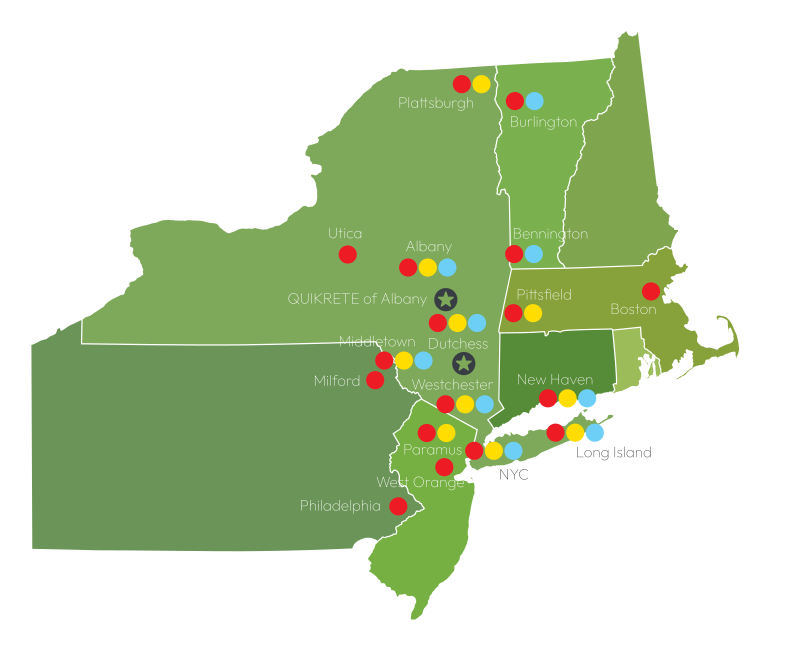
Package Pavement has two convenient locations in Stormville, NY (Dutchess County) and Ravena, NY (Greene County) to serve the Northeastern Region with bagged concrete, blacktop, mortar, and repair products. This map gives a general idea of where we service and the product lines we offer.
Package Pavement Products
Quikrete Products
Spec Mix Products
map

Our Brands Websites