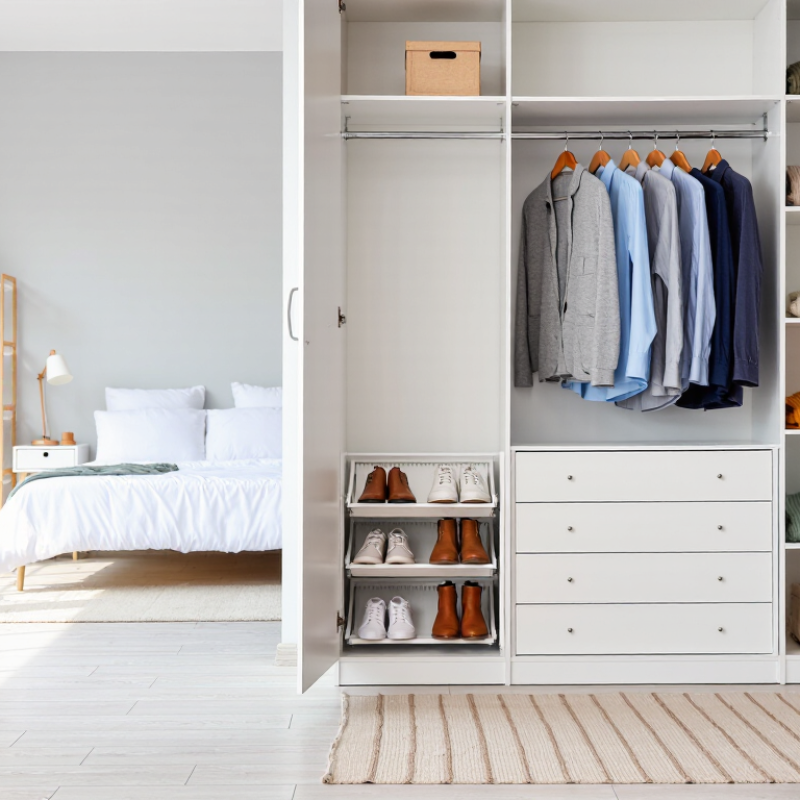
| Hanging section | About 24 in (61 cm) deep for standard clothes hangers | Shirts, jackets, dresses, and trousers on hangers | Keeps garments visible, reduces folding, and helps prevent clothes from becoming creased in piles. |
| Double-hang section | Two hanging rails, each with roughly 40–42 in (102–107 cm) of vertical space | Short garments such as shirts, skirts, and folded trousers on hangers | Uses vertical space efficiently and separates clothing by type, season, or occasion. |
| Long-hang section | About 60–66 in (152–168 cm) of vertical hanging space | Long dresses, coats, and other garments that should hang freely | Prevents longer garments from resting on the floor or being folded over a rail. |
| Adjustable shelves | Commonly spaced about 10–12 in (25–30 cm) apart; spacing can vary by item | Sweaters, jeans, bags, and folded everyday clothing | Creates separate, easy-to-reach stacks and can be adjusted as storage needs change. |
| Drawers or pull-out bins | Choose drawer depth to suit the items; shallow drawers work well for small accessories | Socks, underwear, belts, and other smaller items | Contains small items, makes them easier to sort, and keeps them from getting lost among larger clothes. |
| Upper shelf | Position above the main hanging area, leaving enough clearance for garments below | Seasonal clothing, spare linens, and storage boxes | Moves less frequently used items out of the everyday area while keeping them in one designated place. |
| Separate storage zones | Divide the interior by clothing type, wearer, season, or frequency of use | Any wardrobe with multiple clothing categories | Gives each category a consistent home, making it quicker to put clothes away and find them later. |