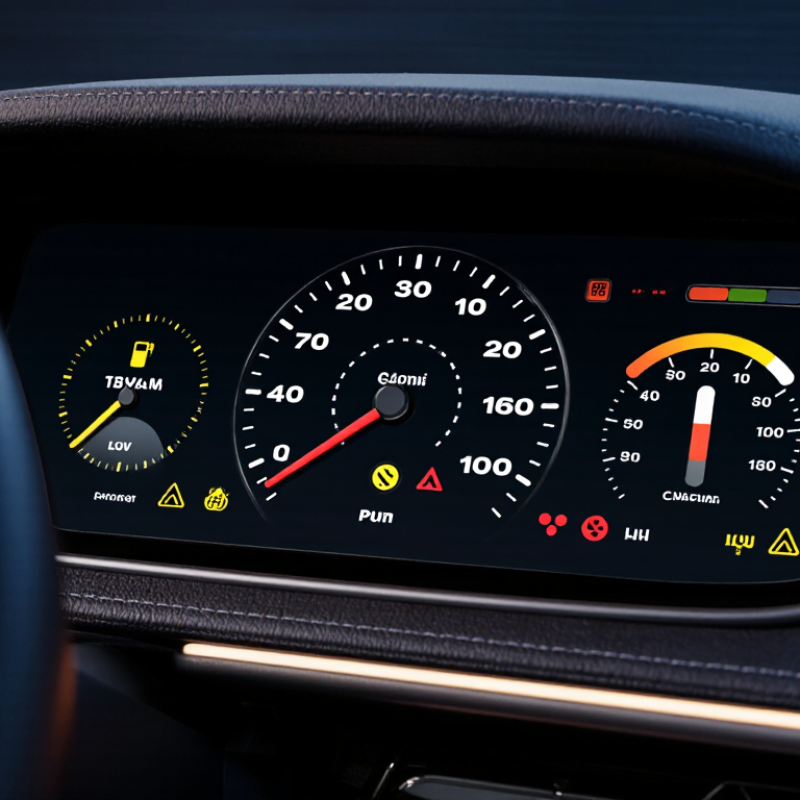
| Speedometer | Current vehicle speed, typically in kilometres per hour, miles per hour, or both. | Use clear numerals, strong contrast, and a display that can be read with a brief glance. | A speed-limit or overspeed warning may be available, depending on the vehicle and settings. | Helps the driver monitor speed and make timely adjustments without relying on estimates. |
| Fuel or battery-energy gauge | Remaining fuel, or estimated battery charge in an electric vehicle. | Show the remaining level consistently and make low-range information easy to locate. | A low-fuel or low-charge warning can prompt the driver to plan a refuelling or charging stop. | Supports trip planning and reduces the chance of being caught off guard by limited range. |
| Warning and indicator lights | Vehicle status, including conditions related to braking, engine systems, lighting, or safety equipment. | Use distinct symbols and labels; avoid making drivers identify a warning by colour alone. | Many vehicles use red for urgent warnings, amber for cautions, and other colours for status indications; meanings depend on the symbol and vehicle manual. | A consistent visual hierarchy helps drivers notice important information and judge whether action may be needed. |
| Audible alerts | Time-sensitive events such as an unfastened seat belt, an open door, or a parking warning. | Keep alert tones distinguishable and avoid unnecessary or repetitive sounds. | A chime or tone can accompany a visual message for selected warnings. | Provides an additional cue when the driver is not looking directly at the instrument cluster. |
| Temperature and system-status indicators | Information such as engine temperature or the status of a vehicle system. | Present the normal range clearly and make abnormal readings or status changes noticeable. | A warning may appear if a monitored condition moves outside its normal operating range. | Helps drivers recognize a developing issue before it is overlooked during routine driving. |
| Tyre-pressure monitoring alert | A warning that one or more tyres may be underinflated, where the vehicle has a monitoring system. | Show the warning clearly and provide wheel-specific details when the system supports them. | A dashboard telltale may indicate low tyre pressure; the driver should check pressure using the vehicle guidance. | Draws attention to a condition that can affect handling, tyre wear, and energy or fuel use. |
| Driver-assistance status and warnings | Status or alerts from available features such as lane support, forward-collision warning, or adaptive cruise control. | Use brief messages and recognizable icons, with clear distinctions between system status and urgent warnings. | Visual, audible, or steering feedback may be used according to the feature and vehicle design. | Communicates what assistance is active and alerts the driver when attention or intervention may be required. |
| Display layout and readability | The overall arrangement of gauges, messages, icons, and trip information. | Prioritize essential driving information, use legible type, and limit clutter and competing notifications. | Important messages should be prominent and remain understandable in different lighting conditions. | Reduces the effort needed to find information and supports quicker interpretation during a brief glance. |