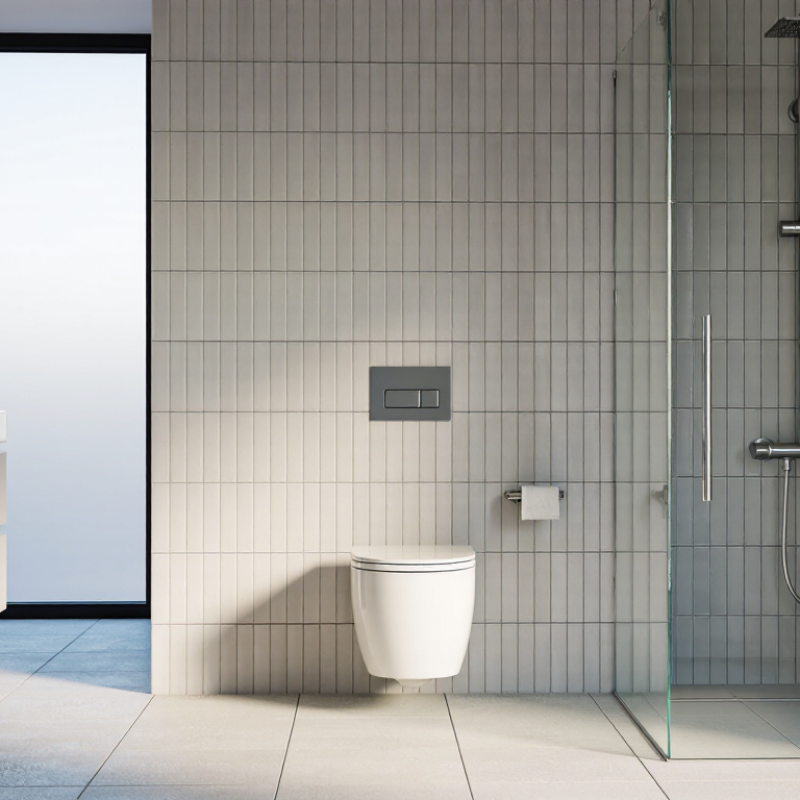
| Floor Area | The toilet pan is suspended above the floor, leaving the floor area unobstructed. | The concealed frame and cistern require a suitable wall cavity or a purpose-built service wall. | Makes bathroom floors easier to clean and can improve the visual spaciousness of compact bathrooms. |
| Structural Support | The bowl is supported by a concealed steel carrier frame rather than by the finished floor alone. | The frame must be fixed to the building structure according to the manufacturer’s load and fixing instructions. | Provides a stable installation when the wall structure, anchors, and frame are correctly selected and fitted. |
| Common Seat Height | Many installations are adjusted to approximately 400–480 mm from the finished floor to the top of the seat, depending on user needs and local requirements. | Set the carrier height before closing the wall because later adjustment is limited. | Allows more flexibility for residential, accessible, and commercial bathroom layouts. |
| Carrier Bolt Spacing | Common mounting bolt centres include approximately 180 mm and 230 mm, but the exact dimension depends on the carrier and bowl. | Match the bowl, carrier, fixing bolts, and installation template before wall finishing. | Reduces compatibility problems when products are sourced from different countries. |
| Water Consumption | Dual-flush concealed cisterns commonly provide a reduced flush and a full flush, such as 3/6 L or 3/4.5 L, subject to the selected model and regulations. | Confirm flush volume, inlet pressure, drainage capacity, and local water-efficiency requirements. | Supports water-saving objectives while allowing buyers to comply with regional plumbing standards. |
| Drainage Connection | Outlet sizes and connection arrangements vary by market; common nominal drainage sizes include approximately 100 mm and 110 mm. | Verify outlet diameter, pipe direction, pan connector type, and local plumbing code before installation. | Helps prevent costly adaptation work when importing products for different plumbing systems. |
| Wall Depth | The finished projection is determined by the bowl depth, carrier frame, cistern, wall lining, and service cavity; many systems require a dedicated false wall. | Allow sufficient depth for the frame, water connections, drainage, insulation, access opening, and wall finish. | Enables cleaner design planning and more accurate shipping and construction estimates. |
| Access to Cistern Components | The flush plate or service opening is normally used to reach the inlet valve, flush valve, and adjustment mechanisms. | Do not permanently seal the service opening. Keep the flush plate and internal components accessible. | Allows routine repairs without removing wall tiles or dismantling the entire toilet installation. |
| Leak Testing | Water supply and drainage connections should be tested before the wall is closed. | Check joints, valves, connectors, and the flush mechanism under operating water pressure, following local practice. | Identifies hidden leaks early and reduces the risk of damage to finished walls and floors. |
| Cleaning Routine | Clean the bowl, seat, flush plate, and exposed surfaces regularly with products compatible with the ceramic, plastic, and metal finishes. | Avoid abrasive pads, harsh acids, and incompatible chemicals that may damage glazing, seals, or plated surfaces. | The unobstructed floor and fewer exposed pipe components make routine bathroom cleaning more convenient. |
| Maintenance Inspection | Inspect visible connections, flush performance, water shut-off operation, seat fixings, and signs of moisture periodically. | The inspection interval should follow the product instructions, building use, water quality, and local maintenance policy. | Regular checks help detect running water, loose fittings, blocked outlets, and seal deterioration before they become major faults. |
| Hard-Water Considerations | Mineral deposits may affect flush valves, inlet valves, aerators, and ceramic surfaces in areas with hard water. | Use approved descaling procedures and follow the component manufacturer’s chemical and cleaning recommendations. | Supports reliable flushing and extends the service life of internal components in different water conditions. |
| Replacement Parts | Typical replaceable parts include flush valves, inlet valves, seals, pan connectors, flush plates, fixing kits, and seat hinges. | Record the model, dimensions, valve type, and installation date, and retain service instructions and spare parts information. | Improves long-term maintainability when replacement components must be sourced internationally. |
| Standards and Certification | Requirements differ by destination and may cover ceramic performance, flushing, water efficiency, plumbing connections, structural support, and accessibility. | Confirm applicable national or regional standards with the importer, designer, plumber, and authority having jurisdiction. | Reduces compliance risks and helps ensure the product is suitable for the intended market. |
| Best Project Applications | Suitable for many residential, hospitality, office, retail, and accessible bathroom projects when the wall system is properly designed. | Coordinate the toilet, carrier, wall construction, plumbing, access panel, and finishing schedule as one system. | Offers design flexibility, easier floor cleaning, and a concealed appearance across a wide range of international projects. |