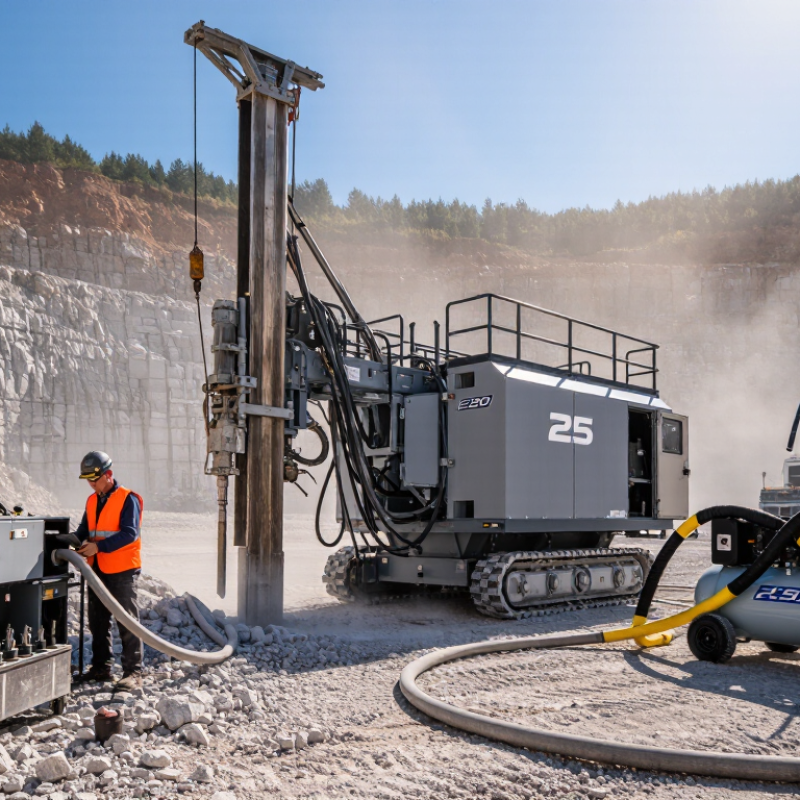
An S250 rock drill should be judged by field performance, not its model label. Ask for verified impact energy, drilling speed, air consumption, and operating pressure. These figures should come from controlled tests, preferably using ISO 1217 measurement principles. A drill that penetrates quickly but consumes excessive air may increase compressor and fuel costs.
The U.S. Department of Energy reports that compressed-air leaks can waste 20–30% of compressor output. Inspect hoses, couplings, and valves before comparing machines.
Match the drill to the rock, hole diameter, and daily workload. Check its service weight, shank compatibility, vibration control, and lubrication method. In a dusty quarry, sealing quality matters. So does access to replacement seals and routine maintenance instructions.
OSHA estimates that about 2.3 million U.S. workers encounter respirable crystalline silica at work, so buyers should also evaluate wet drilling or effective dust-control options. Safety is part of productivity.
Ask for trial records from similar ground conditions. A polished brochure is not enough. Request measured results from hard rock, fractured rock, and inclined holes. I would also calculate output per operating hour, not only penetration speed.
That judgment can still be imperfect. Weather, operator skill, and worn tooling can change results. A practical trial often reveals more than a laboratory number.