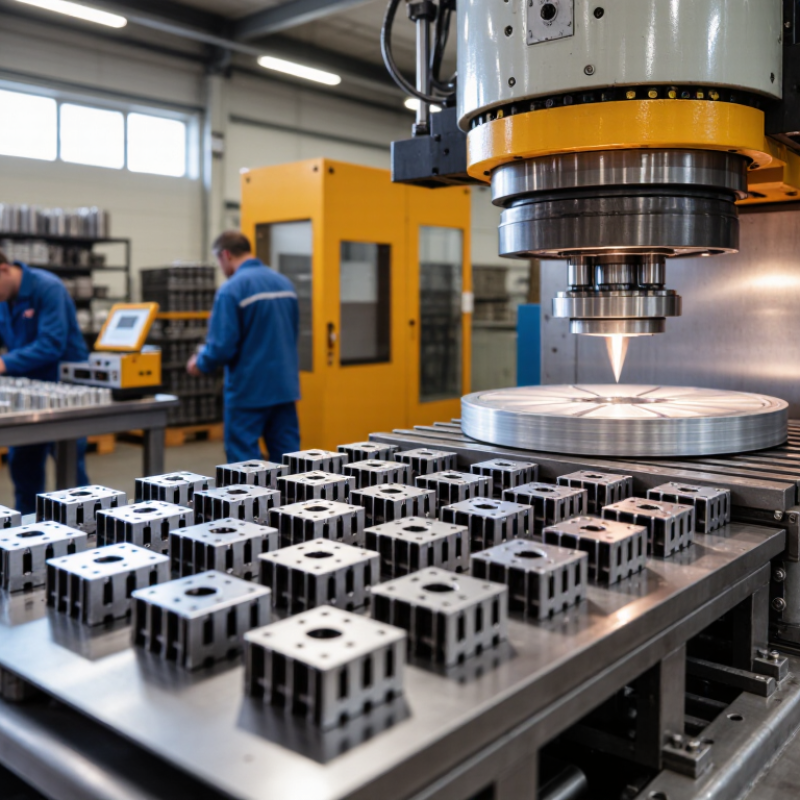
| Stamped metal parts | Components made by pressing sheet or strip metal into a die to cut or form it into a specified shape. | Used in products such as electrical equipment, appliances, vehicles, and industrial machinery. |
| Common operations | Blanking and piercing cut material; bending changes its angle; drawing forms it into a cup-like or contoured shape. | One part may require one operation or a sequence of operations, depending on its design. |
| Typical materials | Common choices include low-carbon steel, stainless steel, aluminum, copper, and brass. | Material selection depends on factors such as strength, formability, corrosion resistance, conductivity, and cost. |
| How production works | A press drives a punch and die against the material. The tooling controls the cut or formed shape, while the press supplies the required force. | Tool design, press setup, and material properties all affect part quality and production performance. |
| Production methods | Single-station dies perform operations at one press station; progressive dies perform successive operations as strip material advances; transfer dies move individual blanks between stations. | The appropriate method depends on part geometry, production volume, tooling investment, and handling requirements. |
| Typical process sequence | The process commonly includes design and tooling, material feeding, pressing, part removal, inspection, and—when required—finishing or assembly. | Planning the full sequence helps identify quality checks and any secondary operations before production begins. |
| Potential advantages | Presses can produce repeatable parts at a high rate, and automated feeding can support efficient production runs. | Stamping may be cost-effective for suitable designs, particularly when production volume can make use of dedicated tooling. |
| Cost considerations | Custom dies require upfront design and manufacturing work. Part cost also depends on material, complexity, production volume, scrap, and secondary processes. | Compare tooling and unit costs across the expected production quantity rather than assessing unit price alone. |
| Quality checks | Inspection can check dimensions, hole locations, formed features, burrs, and surface condition against the part specification. | Clear drawings, tolerances, and inspection criteria help align production output with the intended application. |
| Design considerations | Material thickness, bend geometry, hole placement, tolerances, and the direction of material grain can affect forming and manufacturability. | Reviewing a design for manufacturability early can help reduce avoidable tooling changes and production issues. |