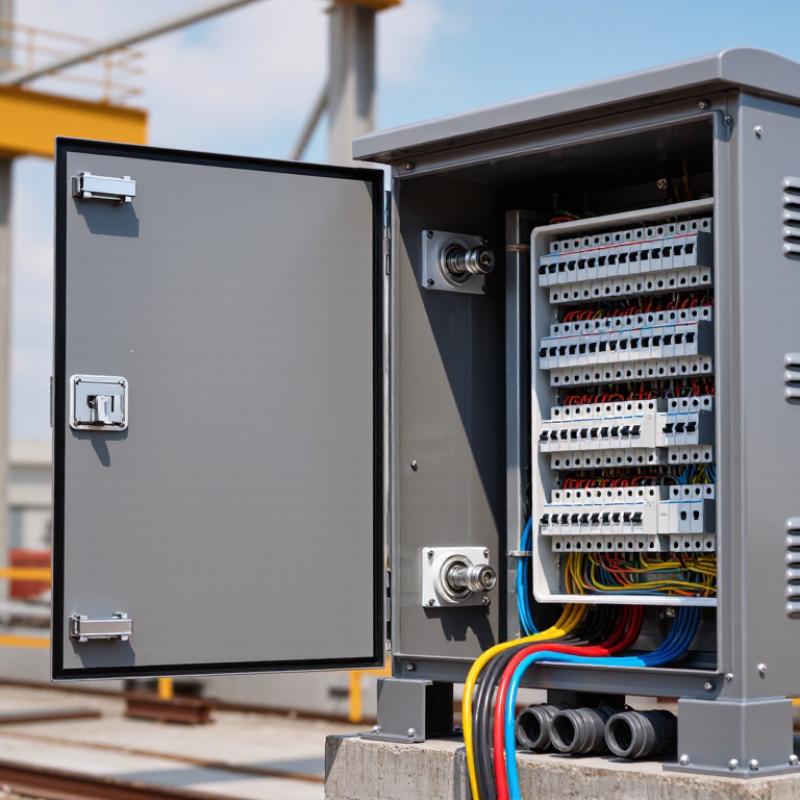
| Enclosure construction | IEC 62208 | General requirements and tests for empty enclosures used in low-voltage switchgear and controlgear assemblies. | Use an enclosure evaluated for the intended voltage, installation environment, temperature, and mechanical configuration. | Test reports, technical construction file, material specifications, and enclosure ratings. | Steel or stainless steel provides a rigid mounting surface and supports secure installation of electrical components. |
| Low-voltage assembly safety | IEC 61439 series | Design verification, routine verification, temperature rise, short-circuit withstand, clearances, creepage distances, and protective circuits for low-voltage assemblies. | Apply the appropriate part of the IEC 61439 series according to the assembly type and installation use. | Design-verification records, routine-test reports, rated current, short-circuit rating, and wiring diagrams. | The enclosure can withstand mechanical stresses and maintain stable component positioning during service. |
| Ingress protection | IEC 60529 | IP code classification for protection against access to hazardous parts, solid foreign objects, and water. | Typical planning targets are IP54 for many protected indoor areas and IP65 or higher for exposed outdoor locations, subject to site conditions. | IP test report identifying the complete enclosure configuration, door seals, cable entries, and ventilation accessories. | A properly sealed metal box can protect conductors and devices from dust, rain, and accidental contact. |
| Impact resistance | IEC 62262 | IK code classification for resistance to externally applied mechanical impacts. | IK08 is a common minimum planning level for general industrial areas; higher levels may be required in public or high-impact zones. | Impact test report and the declared IK rating of the complete installed configuration. | Metal panels generally offer greater resistance to dents, punctures, and accidental impact than many non-metallic alternatives. |
| Protective earthing and bonding | IEC 61439; IEC 60364; local electrical installation rules | Continuity of the protective circuit, bonding of exposed conductive parts, and protection against electric shock. | Provide a dedicated protective-earth terminal, reliable door bonding where required, and verified low-resistance continuity. | Earth-continuity test results, bonding diagram, terminal specifications, and installation instructions. | Conductive steel enables robust bonding when paint, coatings, hinges, and removable panels are correctly addressed. |
| Electrical clearances and creepage | IEC 60664-1; IEC 61439 | Insulation coordination, minimum clearances through air, creepage distances, pollution degree, and overvoltage category. | Confirm dimensions using the system voltage, pollution degree, material group, altitude, and overvoltage category. | Insulation-coordination calculations, layout drawings, component data sheets, and dielectric test results. | A rigid enclosure helps preserve component spacing and reduces the risk of panel deformation during transport or installation. |
| North American enclosure requirements | UL 50E; NEMA 250 | Environmental construction and enclosure-type requirements commonly used for electrical equipment in the United States and Canada. | Select the required enclosure type according to indoor or outdoor use, corrosion exposure, hose-down conditions, and hazardous-location requirements. | Certification or evaluation records, construction details, gasket specifications, and enclosure-type documentation. | Metal construction is widely used where strong environmental protection, grounding, and physical durability are required. |
| Fire and installation safety | NFPA 70 (NEC); applicable national wiring regulations | Conductor sizing, overcurrent protection, grounding, working space, box fill, cable entries, and installation methods. | Verify local requirements for voltage, current, fault current, conductor temperature rating, access, and service clearance. | Single-line diagrams, load schedules, short-circuit calculations, installation instructions, and inspection records. | Steel is non-combustible and can provide a robust barrier around energized components, although correct overcurrent protection remains essential. |
| Corrosion protection | ISO 12944; project coating specification | Classification of corrosivity environments and selection of protective paint or coating systems for steel structures and equipment. | Specify coating performance according to exposure, such as indoor, industrial, coastal, humid, or marine conditions. | Coating system description, surface-preparation method, dry-film thickness, adhesion results, and corrosion-test data where required. | Steel can be galvanized, powder-coated, painted, or manufactured in stainless steel to suit demanding environments. |
| Temperature and heat dissipation | IEC 61439; IEC 60068-2 environmental tests where specified | Temperature rise, ambient operating conditions, thermal cycling, humidity, and equipment performance under environmental stress. | Define the ambient range, internal heat load, solar exposure, ventilation method, and maximum permissible temperature rise. | Temperature-rise calculations or tests, derating data, ventilation details, and environmental test records. | Metal conducts and distributes heat effectively, but ventilation, spacing, and component derating must still be engineered. |
| Hazardous locations | IEC 60079 series; local hazardous-area regulations | Equipment protection for explosive gas, vapor, dust, or other classified atmospheres. | Use only equipment with the correct protection method, gas or dust group, temperature class, zone, and certification for the location. | Valid hazardous-location certificate, marking information, approved cable glands, installation conditions, and inspection records. | Metal provides mechanical strength and effective bonding, but ordinary metal construction alone does not make an enclosure suitable for hazardous areas. |
| Market access and documentation | Applicable regional conformity legislation and technical-file requirements | Declarations, risk assessment, labeling, traceability, language requirements, and records needed for the destination market. | Prepare a region-specific compliance matrix before design approval and procurement. | Declaration of conformity where applicable, drawings, bills of materials, test reports, labels, manuals, and change-control records. | Metal enclosures support durable labels, serialized identification plates, and consistent mechanical traceability. |