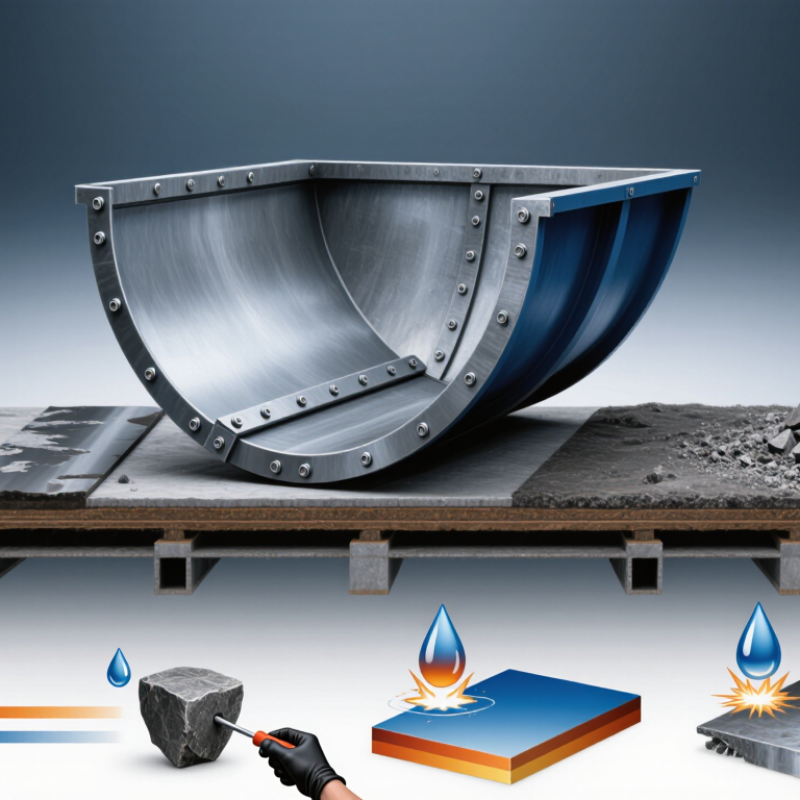
| Mining and quarrying | Repeated impact and sliding abrasion from blasted rock, ore, and crushed stone. | A hard, abrasion-resistant surface can slow material loss and extend service intervals when the grade and thickness are matched to the duty. | Chutes, hoppers, bins, truck bodies, and crusher feed areas. |
| Material handling | Continuous contact with bulk solids, often concentrated at transfer points and bends. | Replaceable liner plates protect the supporting structure and can make worn areas easier to maintain. | Transfer chutes, conveyor loading zones, diverters, and discharge points. |
| Construction and earthmoving | Abrasive soil, gravel, and rock wear on equipment exposed to loading and dumping cycles. | Wear-resistant plate can help reduce wear in high-contact areas while keeping equipment weight and fabrication needs in view. | Bucket interiors, blades, dump bodies, and material-handling attachments. |
| Cement and aggregate processing | Dust and sharp, moving particles abrade equipment during conveying, storage, and processing. | Appropriately selected liners can protect equipment surfaces and support planned maintenance in high-wear zones. | Aggregate hoppers, screens, feed chutes, and transfer ducts. |
| Recycling and waste processing | Mixed materials can cause abrasive wear, with occasional impact from bulky or irregular items. | A liner can provide a replaceable wear surface; design should account for impact, material flow, and attachment method. | Shredder feed areas, sorting chutes, skips, and transfer bins. |
| Agriculture and bulk storage | Repeated movement of grain, feed, fertilizer, or other bulk materials can wear contact surfaces. | Wear-resistant plate may be useful where abrasion is significant, subject to corrosion, hygiene, and material-compatibility requirements. | Hoppers, elevator transitions, discharge chutes, and trailer floors. |