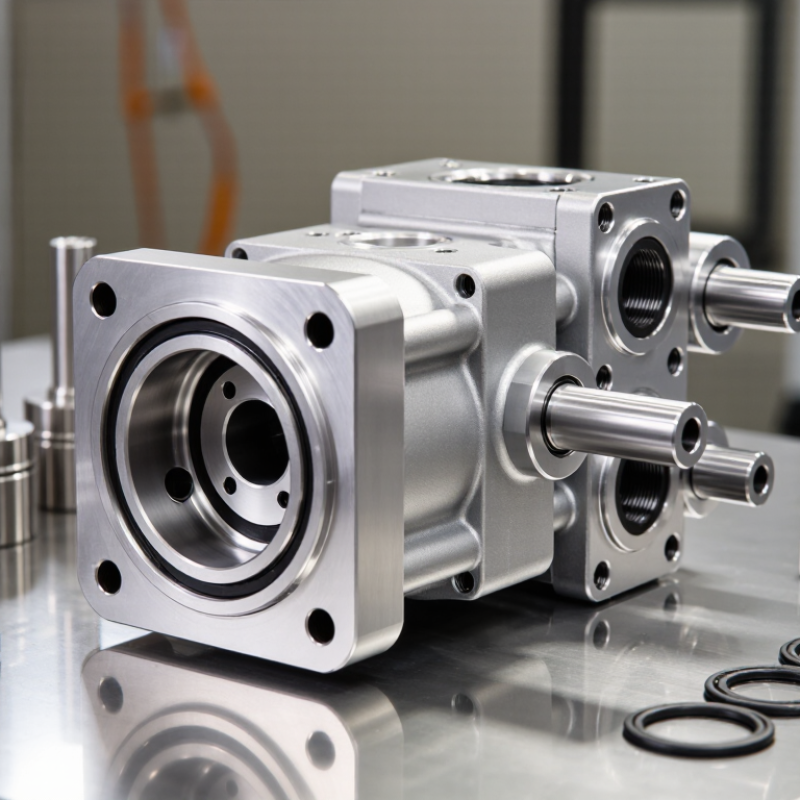
| Product Configuration | Standard fluid end module with common connection geometry and replaceable wear components | Reference configuration; usually easier to source than a fully customized design | Standardization can reduce engineering review, tooling requirements, and approval time | Use a standardized technical data sheet with dimensional drawings, material requirements, and inspection criteria | Low |
| Material Grade | Forged alloy steel or other high-strength steel selected for high-pressure reciprocating service | Material certification, heat-treatment records, and traceability commonly required for critical pressure-containing parts | Higher alloy content and additional testing increase unit cost and may extend production time | Specify the required mechanical properties, hardness range, heat treatment, and certificate requirements before quotation | Medium |
| Pressure Rating | High-pressure fluid end suitable for the operating envelope of the intended pumping system | Final rating depends on design, operating pressure, temperature, fatigue loading, and applicable engineering standards | Higher pressure capability generally requires more material, stricter inspection, and more demanding qualification | Provide maximum working pressure, test pressure, operating cycles, fluid characteristics, and safety factors | High |
| Order Quantity | Small project order compared with a scheduled annual procurement program | Small batches often carry higher setup, inspection, packaging, and freight costs per unit | Volume consolidation can lower unit cost and reduce repeated documentation and logistics charges | Compare single-shipment, blanket-order, and scheduled-release options using total landed cost | Medium |
| Manufacturing Lead Time | Forging, heat treatment, machining, non-destructive testing, assembly, and final inspection | Approximately 8–16 weeks for a standard production order; complex or custom work may require longer | Capacity constraints, raw-material availability, tooling, and approval delays can shift the delivery date | Request a milestone schedule covering material purchase, forging, machining, testing, and final release | Medium |
| Engineering Approval | Technical review of drawings, interfaces, pressure boundaries, and replacement compatibility | Approximately 1–3 weeks when the specification is complete and no design changes are required | Incomplete drawings or late revisions can delay production and create rework costs | Freeze the approved drawing revision before production and define a formal change-control process | Medium |
| Quality Inspection | Dimensional inspection, material verification, hardness testing, pressure testing, and non-destructive testing | Inspection scope may add approximately 3–10 working days depending on test complexity and third-party involvement | Additional inspection improves reliability but may increase testing, witness, and documentation costs | Define inspection and test plans, acceptance criteria, hold points, and required quality records in the purchase order | Low |
| Origin and Sourcing Region | Cross-border sourcing from a qualified manufacturing region | Quoted price differences commonly reflect labor, energy, steel, compliance, financing, and local overhead conditions | Lowest unit price may not produce the lowest landed cost after freight, duties, inspection, and inventory costs | Compare suppliers using an equivalent specification and a complete landed-cost model | Medium |
| International Freight Mode | Ocean freight for planned replenishment or air freight for urgent replacement requirements | Ocean transit commonly requires several weeks; air freight is faster but significantly more expensive per kilogram | Transport mode affects freight cost, delivery certainty, inventory exposure, and emergency response time | Use ocean freight for forecasted demand and reserve air freight for critical shortages or shutdown risks | Medium |
| Incoterm Selection | Buyer compares supplier-arranged transport with buyer-controlled international logistics | Common commercial structures include EXW, FOB, FCA, CIF, and DAP; responsibilities differ by term | Incoterms change freight visibility, insurance responsibility, customs exposure, and local delivery charges | Use the same Incoterm, destination, currency, and shipment assumptions for all supplier comparisons | Medium |
| Import Duties and Taxes | Fluid end modules classified under the importing country’s applicable machinery or industrial-component tariff code | Duty rates vary by jurisdiction, product classification, origin, trade agreements, and customs valuation | Incorrect classification or incomplete origin documentation can cause unexpected charges and clearance delays | Confirm the tariff classification and documentation requirements with a qualified customs adviser before ordering | High |
| Packaging and Preservation | Heavy machined component protected against moisture, impact, contamination, and corrosion during international transport | Export-grade wooden cases, barrier protection, lifting points, and corrosion inhibitors may be required | Packaging affects material cost, cargo dimensions, handling charges, and damage probability | Approve a packaging specification covering lifting, moisture protection, marking, and storage duration | Low |
| Delivery Buffer | Planned delivery for maintenance, overhaul, or new equipment installation | A practical planning buffer is often 10–20% of the estimated total lead time, depending on project criticality | A schedule with no contingency can be affected by production variance, port congestion, customs, or weather | Set a required-on-site date and work backward through approval, production, inspection, shipping, and customs milestones | High |
| Inventory Strategy | Critical spare module kept near the operating site versus just-in-time replenishment | Safety stock should reflect failure probability, replenishment lead time, equipment criticality, and storage conditions | Holding inventory increases working capital but can reduce downtime and emergency freight exposure | Classify the component as critical or non-critical and calculate safety stock from historical consumption and lead-time variability | Medium |
| Currency and Payment Terms | Cross-border purchase subject to exchange-rate movement and agreed payment milestones | Typical structures may include an advance payment, progress payment, balance at shipment, or approved credit terms | Currency volatility and payment timing influence the effective procurement cost and cash-flow requirement | State the quotation currency, validity period, payment milestones, bank charges, and currency-adjustment rules | Medium |
| Total Landed Cost | Supplier price evaluated together with engineering, inspection, packaging, freight, insurance, duties, taxes, and local delivery | Total landed cost is more reliable than unit price for global sourcing decisions | A low ex-works price may be offset by higher logistics, compliance, quality, or inventory costs | Use a cost model with consistent assumptions for quantity, destination, delivery term, lead time, and quality scope | Low |