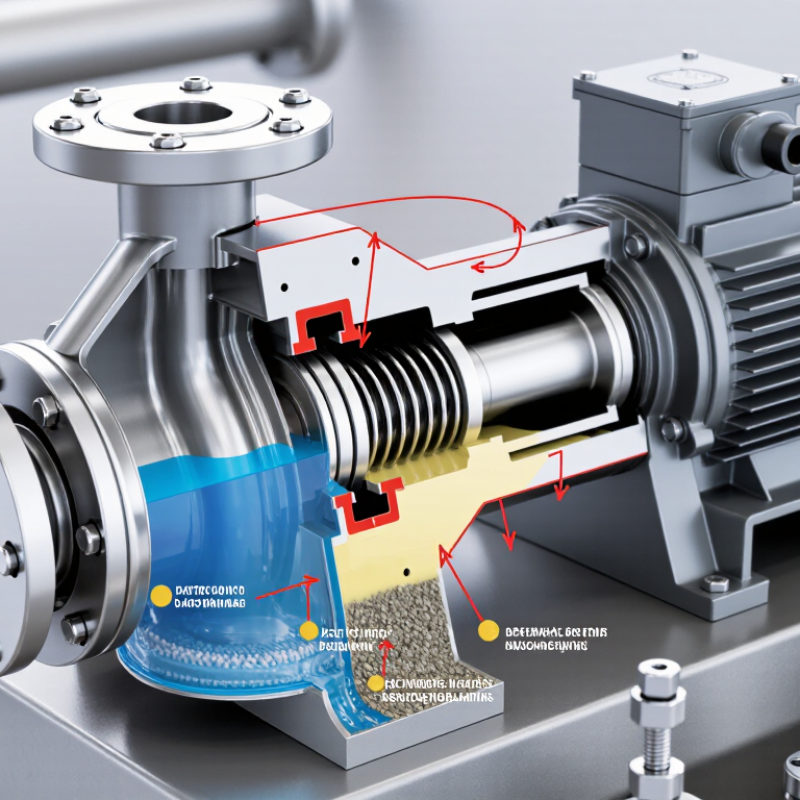
| Basic definition | A face mechanical seal is a device that limits fluid leakage where a rotating pump shaft passes through the stationary casing. | It seals between two flat, lapped faces: one rotates with the shaft and the other remains stationary. | It provides a controlled sealing interface without relying on a packing material rubbing directly around the shaft. |
| Primary sealing faces | The rotating and stationary faces form the main sealing interface. | Common face materials include carbon graphite, silicon carbide, and tungsten carbide; selection depends on the fluid and operating conditions. | Face material, surface finish, fluid properties, and operating conditions influence wear, heat generation, and seal life. |
| Lubricating film | A very thin film of the pumped fluid, or an appropriate barrier fluid, normally separates the faces during operation. | The film helps reduce friction and carries heat away from the interface. | Dry running, inadequate lubrication, or unsuitable fluid conditions can quickly damage the faces. |
| Secondary seals | O-rings, elastomer bellows, or other compliant elements seal around components that move or fit together. | Elastomer choice must suit the fluid, temperature, and chemical exposure. | Correct secondary-seal selection helps prevent leakage around the face assembly and accommodates limited movement. |
| Spring or bellows loading | A spring or metal bellows applies closing force to keep the sealing faces in contact when the pump is stopped or operating at low pressure. | Designs may use a single spring, multiple springs, or a bellows arrangement. | The loading mechanism helps maintain face contact while allowing for small axial movement and wear. |
| Leakage control | A mechanical seal is designed to keep leakage very low, but it should not automatically be described as absolutely leak-free. | Allowable leakage and monitoring requirements depend on the seal design, fluid, application, and applicable regulations. | Lower leakage can reduce product loss and help limit emissions compared with many conventional packing arrangements. |
| Single and dual arrangements | A single seal has one primary sealing interface; a dual seal uses two interfaces and may use a barrier or buffer system between them. | Dual seals are selected for certain hazardous, volatile, abrasive, or otherwise demanding services. | The arrangement should match the fluid hazard, leakage-control requirements, and operating conditions. |
| Auxiliary piping and support | Some seals require piping or other support systems to cool, flush, vent, or pressurize the seal chamber. | Support requirements depend on the seal arrangement and pump application; they may follow an established piping plan. | Proper installation and support help manage heat, solids, vapor formation, and barrier-fluid conditions. |
| Operating limits | Pressure, temperature, speed, and fluid compatibility limits are specific to the seal design and application. | There is no single pressure or temperature range that applies to every face mechanical seal. | Confirming actual operating conditions with the equipment documentation helps prevent premature failure. |
| Maintenance considerations | Face seals generally require correct installation, clean handling, and attention to pump operating conditions. | Common causes of damage include dry running, contamination, misalignment, vibration, and unsuitable materials. | Good installation and reliable pump operation can reduce unplanned maintenance and extend service life. |