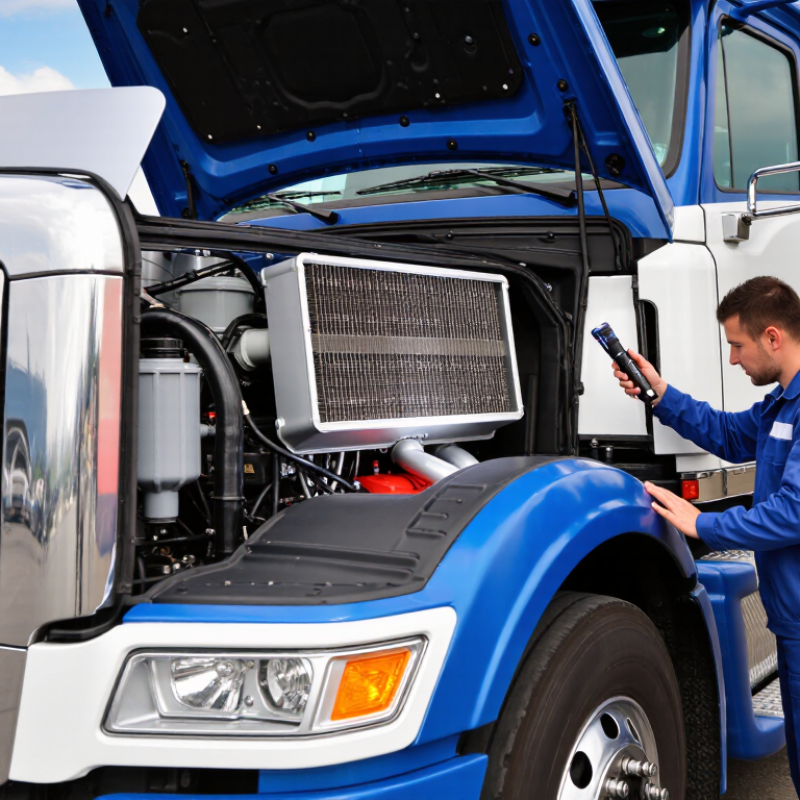
| Radiator core | Transfers heat from engine coolant to outside air. | Hot coolant flows through tubes while fins increase the surface area exposed to airflow. Heat passes from the coolant, through the tubes and fins, and into the air. | A core designed for the vehicle’s cooling requirements helps manage sustained heat loads during hauling, climbing, and other demanding work. |
| Coolant circulation | Carries heat away from the engine and toward the radiator. | The engine-driven or electric water pump circulates coolant through the engine and cooling circuit. The radiator then cools the returning fluid. | Reliable circulation helps limit localized hot spots in the engine, provided the system is correctly filled and maintained. |
| Thermostat | Regulates coolant flow as the engine warms up. | When the engine is cold, the thermostat restricts flow to the radiator. As coolant temperature rises, it opens progressively to allow more coolant through the radiator. | Helps the engine reach and maintain its intended operating temperature instead of cooling it unnecessarily from startup. |
| Cooling fan and airflow | Moves air through the radiator core, especially at low vehicle speeds. | A fan draws or pushes air through the fins when vehicle-speed airflow is insufficient. Fan operation may be mechanically controlled or electronically managed, depending on the vehicle. | Supports heat rejection during idling, slow traffic, and low-speed work, when natural airflow is limited. |
| Pressure cap and sealed system | Maintains system pressure and raises coolant’s boiling point. | The pressure cap regulates system pressure within the rating specified for the vehicle. A sealed, correctly pressurized system helps coolant remain liquid at higher temperatures. | Helps reduce the risk of coolant boiling and loss under demanding operating conditions. The cap rating must match the vehicle specification. |
| Coolant condition and concentration | Provides heat transfer and protection against corrosion and freezing. | Coolant flows through the engine and radiator, absorbing and releasing heat. The correct coolant type and mixture support the system’s intended performance. | Proper coolant maintenance helps protect internal passages and radiator materials; the required formulation and service interval depend on the vehicle. |
| Radiator capacity and construction | Determines how effectively the system can shed heat under its designed conditions. | Core size, tube and fin arrangement, material, and airflow all influence heat transfer. Capacity must be matched to the engine and vehicle cooling package. | A correctly specified heavy-duty radiator is better suited to the vehicle’s rated heat load than an incorrectly sized replacement. |
| Temperature monitoring | Provides information about engine cooling performance. | A coolant-temperature sensor sends readings to the vehicle’s gauge or control system. The reading can alert the operator to overheating or an abnormal change. | Monitoring supports timely action, but a temperature reading should be interpreted using the vehicle manufacturer’s operating limits. |