Why Choose a Commercial Food Sealer Machine?
Choosing a Commercial Food Sealer Machine is a practical decision about product protection, daily workflow, and consistent packaging. A well-matched machine can help reduce air exposure, limit spills, and keep portions neat on the shelf or in a delivery box. Think of a bag of roasted coffee, a tray of prepared vegetables, or a pouch of dried fruit. Each product may need a different seal width, film type, and operating rhythm. The machine should fit the work, not just look impressive in a catalog.
“A dependable seal starts with matching the machine to the product, packaging material, and pace of work.” This is an illustrative expert-style quotation, not a sourced statement, attributed here to packaging specialist Alex Morgan. It captures a point buyers can easily overlook: sealing performance depends on more than heat or pressure. Bag thickness, moisture, fill level, and operator technique all matter. Small details matter.
This guide explores why businesses choose commercial sealing equipment, which features deserve close attention, and how to compare options without overbuying. It also considers routine cleaning, training, and the space available beside the production line. A machine may seal quickly during a demonstration, yet feel awkward after hours of real use. That deserves reflection. The right choice is the one your team can operate consistently, maintain responsibly, and adjust when products or packaging needs change.
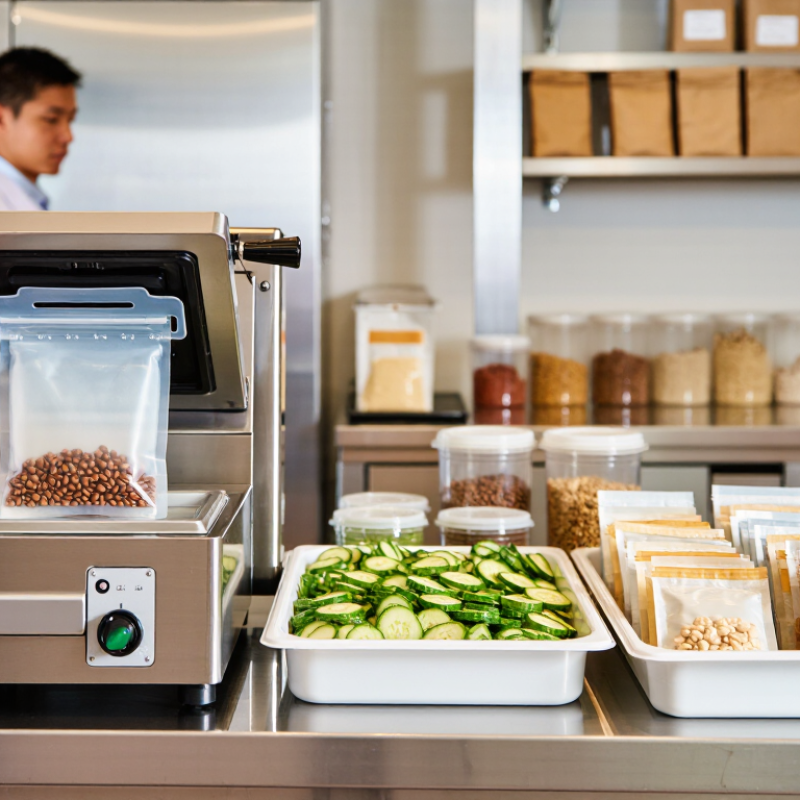
What Commercial Food Sealers Do: Vacuum, Heat, and Modified-Atmosphere Packaging
A commercial food sealer does more than close a bag. It controls how air and heat interact with packaging, helping food businesses protect portions during storage and handling. Vacuum sealing removes much of the air around food before the pouch is sealed. This can slow oxidation and reduce freezer burn, but it does not sterilize food or replace safe refrigeration. A pump draws air through a chamber or nozzle, then a heated bar presses the pouch layers together. A continuous seam matters. Even a small wrinkle can allow air to enter.
Heat sealing works differently. It joins compatible packaging materials using controlled temperature, pressure, and contact time, often without removing air. For foods that bruise or compress easily, modified-atmosphere packaging may be a better fit. The machine removes some air and replaces it with a selected gas mixture. The right mixture depends on the food, film, and storage conditions. Testing helps. A neat-looking seal can still fail during transport or refrigeration. Operators should check seal width, pouch cleanliness, and machine settings during routine runs. Not always. One setting may not suit every product, since film thickness and surface moisture can change the result. That extra check takes time, but it can prevent costly product loss.
Which Sealer Fits Your Operation: Chamber, Nozzle, Tray, or Band Models
A commercial food sealer can reduce leaks, protect product quality, and make packing more consistent. The right model depends on what you pack and how quickly you work.
Chamber sealers suit bagged portions, including moist foods, because the entire pouch sits inside the vacuum chamber.
Nozzle models draw air from larger bags outside the machine, but liquids may need careful handling.
Tray sealers work well for portioned meals and display-ready packs; check that trays and lidding film match the machine.
Band sealers continuously close bags and can help with steady runs of dry products.
Compare your largest package, daily volume, cleaning routine, and available bench space. A fast cycle means little if staff must stop often to reload or clean. Ask about seal width, temperature control, and compatible packaging, then test samples with your actual food.
Small details matter. I once underestimated how much bag size affected workflow; the first estimate was too optimistic. That is worth checking before purchase.
Tips: Keep a few filled sample packs on hand during testing. Look for wrinkles, trapped food near the seal, and leaks after cooling. Test again after adjusting the settings.
How to Compare Machines: Throughput, Seal Quality, Packaging Costs, and Maintenance
Why Choose a Commercial Food Sealer Machine?
How to Compare Machines: Throughput, Seal Quality, Packaging Costs, and Maintenance
Compare throughput using your own products, not just a machine’s advertised cycle rate. Record finished, acceptable packs per hour during a realistic shift. Include loading, film changes, and brief stops. A fast cycle means little if staff must constantly clear jams. That matters.
Check seal quality with several package shapes and fill levels. Look for wrinkles, uneven seal widths, trapped crumbs, or product near the seal area. Run leak checks after sealing, then repeat them after packages cool. Small leaks add up. A short trial with your actual packaging film can reveal issues that a showroom sample will miss.
Estimate packaging cost per usable pack, including film waste, rejected seals, labor, and energy. Ask how quickly operators can change settings and replace routine wear parts.
Inspect guards, seal bars, and cleaning access; sticky residue in hard-to-reach corners can slow sanitation. No scorecard is perfect. A machine may perform well on one product and poorly on another, so keep trial conditions consistent and note every adjustment.
Maintenance access may seem minor until a shift is waiting on a replacement part.
