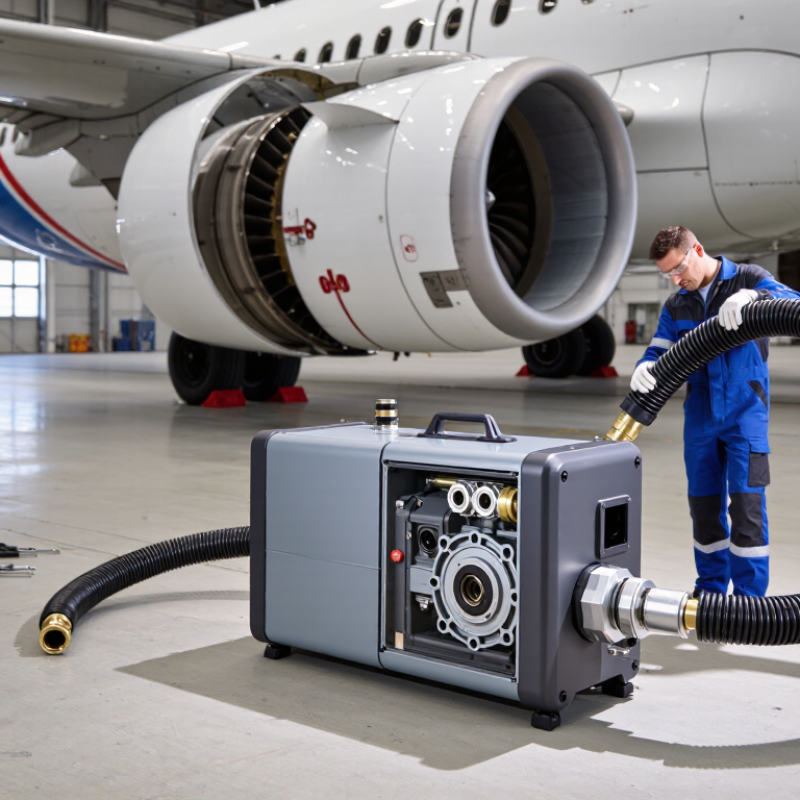
| Component Type | Pneumatic turbine starter | An aircraft air starter unit is a compact turbine-driven starting device that converts compressed air energy into mechanical rotation for turning an aircraft engine during startup. |
| Primary Function | Initial engine rotation | The unit rotates the engine compressor or accessory gearbox until the engine reaches a speed at which fuel ignition and self-sustaining operation can occur. |
| Compressed-Air Sources | Ground air cart, auxiliary power unit, or cross-bleed air | Compressed air may be supplied by a pneumatic ground cart, the aircraft auxiliary power unit, or another operating engine through the aircraft bleed-air system. |
| Typical Starter Air Pressure | Approximately 30–45 psig (2.1–3.1 bar) at the starter inlet | This is a common operating range for many pneumatic aircraft starting systems. The approved pressure range varies according to the aircraft and engine design. |
| Energy Conversion | Compressed air to shaft torque | Air expands through a turbine wheel, producing torque that is transmitted through reduction gearing and an output shaft to the engine starting pad. |
| Drive Connection | Engine accessory gearbox or dedicated starter pad | The starter is mechanically connected to the engine through a drive shaft, clutch, and gear train. This arrangement allows the starter to rotate the engine without remaining engaged during normal operation. |
| Starter Cutout | Usually at a specified compressor speed, commonly around 40–55% of the relevant engine spool speed | At the scheduled cutout speed, the starter control valve closes and the overrunning clutch disengages so the engine can continue operating without driving the starter. |
| Control System | Starter control valve, start switch, and speed-sensing logic | The control system regulates airflow to the starter, coordinates fuel and ignition commands, and removes starter air when the engine reaches the required speed. |
| Overrunning Clutch | One-way mechanical clutch | The clutch transmits torque from the starter to the engine during starting and prevents the running engine from back-driving the starter after disengagement. |
| Typical Operating Duration | Usually limited to a short start cycle, often about 30–90 seconds | Time limits protect the starter from overheating and excessive mechanical stress. A cooling period may be required before another start attempt. |
| Installation Location | Engine accessory gearbox or engine starting interface | The unit is mounted where it can transfer torque directly to the engine core or compressor while remaining accessible for inspection and maintenance. |
| Advantages | High starting torque, low electrical demand, and suitability for large turbine engines | Pneumatic starters can deliver substantial torque from stored or generated air and are widely used where an electric starter would be too heavy or would require excessive battery power. |
| Common Applications | Turbofan, turbojet, turboprop, and turboshaft engines | Air starter units are used across many gas-turbine aircraft propulsion systems, although the exact starter configuration depends on the engine and aircraft architecture. |
| Key Maintenance Checks | Air leakage, rotor condition, clutch operation, lubrication, and starter-valve performance | Inspection focuses on reliable airflow, turbine and bearing condition, proper clutch engagement, correct lubrication, and compliance with the applicable maintenance instructions. |