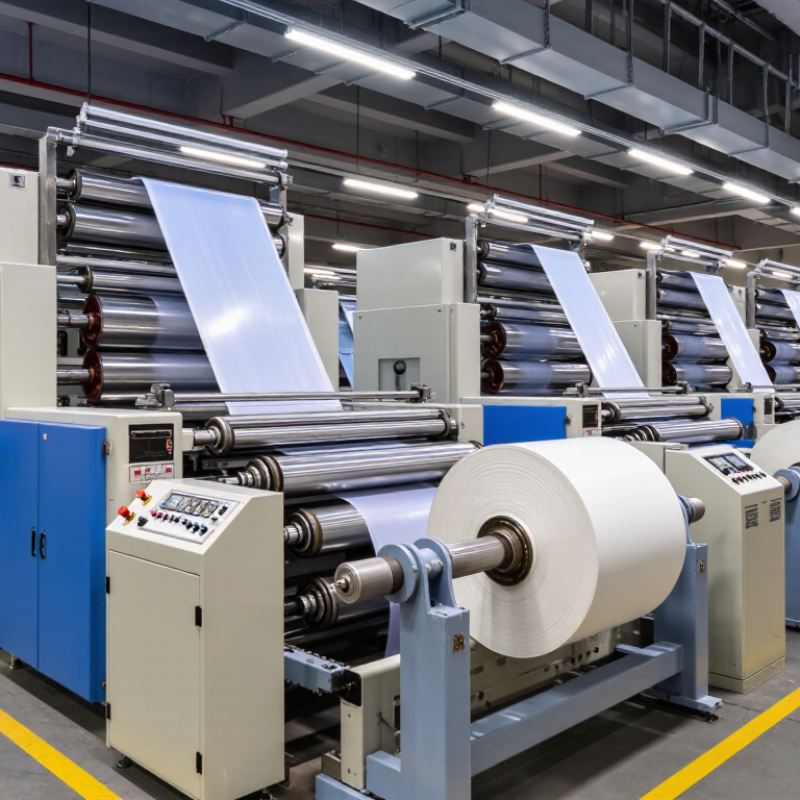
| 1 | Continuous Hot-Melt Laminating Line | Thermoplastic adhesive film, web, or powder activated by heated rollers | Woven fabrics, knitted fabrics, nonwovens, foam, synthetic leather, and technical textiles | 1,600–3,200 mm | 5–40 m/min | 80–180°C, depending on adhesive chemistry | High productivityConsistent bondingSuitable for roll goods | Apparel interlinings, outdoor textiles, automotive fabrics, and protective clothing |
| 2 | Flame Lamination Machine | Controlled surface melting of polyurethane foam followed by pressure bonding | Polyurethane foam with polyester, nylon, cotton, microfiber, or laminated fabric layers | 1,600–2,800 mm | 10–45 m/min | Uses a flame zone rather than a conventional heated platen | Fast bondingNo added adhesive filmStrong foam adhesion | Automotive interiors, mattress fabrics, upholstery, sportswear, and padded products |
| 3 | Hot-Melt Powder-Dot Laminator | Thermoplastic adhesive powder applied in dots and activated by heat and pressure | Textiles, nonwovens, foam, and breathable membrane assemblies | 1,600–2,400 mm | 8–35 m/min | 100–170°C, depending on powder type and fabric construction | Breathable bondLow adhesive usageFlexible hand feel | Garment interlinings, breathable sportswear, footwear components, and medical textiles |
| 4 | Adhesive Film Laminator | Preformed thermoplastic adhesive film bonded through heated rollers or a heated belt | Membranes, fabrics, foams, synthetic leather, films, and multilayer textile assemblies | 1,600–3,000 mm | 3–30 m/min | 70–160°C, based on the film’s softening range | Clean processAccurate adhesive dosageGood appearance | Waterproof garments, seam-tape substrates, soft furnishings, and functional textile composites |
| 5 | Reactive PUR Hot-Melt Laminator | Moisture-curing polyurethane reactive adhesive applied as a thin coating | Technical fabrics, breathable membranes, foam, films, leather, and heat-sensitive textiles | 1,600–2,600 mm | 5–25 m/min | 80–130°C, with final curing occurring after lamination | High final strengthExcellent flexibilityGood wash resistance | Waterproof-breathable clothing, automotive trim, footwear, and high-performance technical textiles |
| 6 | Solvent-Free Two-Component Laminator | Metered application of resin and hardener followed by controlled pressure bonding | Films, foil, coated fabrics, woven textiles, nonwovens, and barrier materials | 1,600–3,000 mm | 20–120 m/min | Typically 20–90°C, depending on the adhesive system | Low emissionsEfficient material useStrong barrier bonding | Technical laminates, coated fabrics, packaging textiles, and industrial textile composites |
| 7 | Heated Calendar-Roller Laminator | Heat and nip pressure applied through one or more temperature-controlled rollers | Fabrics, films, nonwovens, foam, coated textiles, and synthetic leather | 1,600–3,400 mm | 5–60 m/min | 60–200°C, depending on substrate and adhesive | Uniform pressureCompact configurationHigh web control | Home textiles, apparel fabrics, filtration media, labels, and industrial laminates |
| 8 | Continuous Belt Laminator | Heated endless belt provides extended dwell time and even pressure | Delicate fabrics, foam, membrane textiles, multilayer composites, and quilted materials | 1,600–3,200 mm | 2–20 m/min | 60–180°C, depending on adhesive and substrate | Gentle handlingLong dwell timeLow distortion | Soft furnishings, insulation materials, medical textiles, and low-pressure composite bonding |
| 9 | Flatbed Heat-Press Laminator | Stationary heated platen applies controlled heat and pressure to cut panels or sheets | Garment panels, patches, films, fabrics, foam, transfer materials, and small textile assemblies | 400–2,000 mm press width | Batch operation; commonly 10–60 seconds per cycle | 80–220°C, depending on bonding material | Precise temperature controlSuitable for short runsEasy changeover | Sampling, custom apparel, reinforcement panels, labels, repairs, and small-batch production |
| 10 | Spray-Adhesive Textile Laminator | Controlled adhesive spray followed by nip or belt pressing | Foam, upholstery fabrics, nonwovens, insulation fibers, and uneven or three-dimensional surfaces | 1,500–2,500 mm | 3–20 m/min | Ambient to approximately 120°C, depending on adhesive formulation | Flexible coverageWorks with irregular surfacesAdjustable coating weight | Mattress production, furniture upholstery, acoustic panels, automotive interiors, and insulation products |