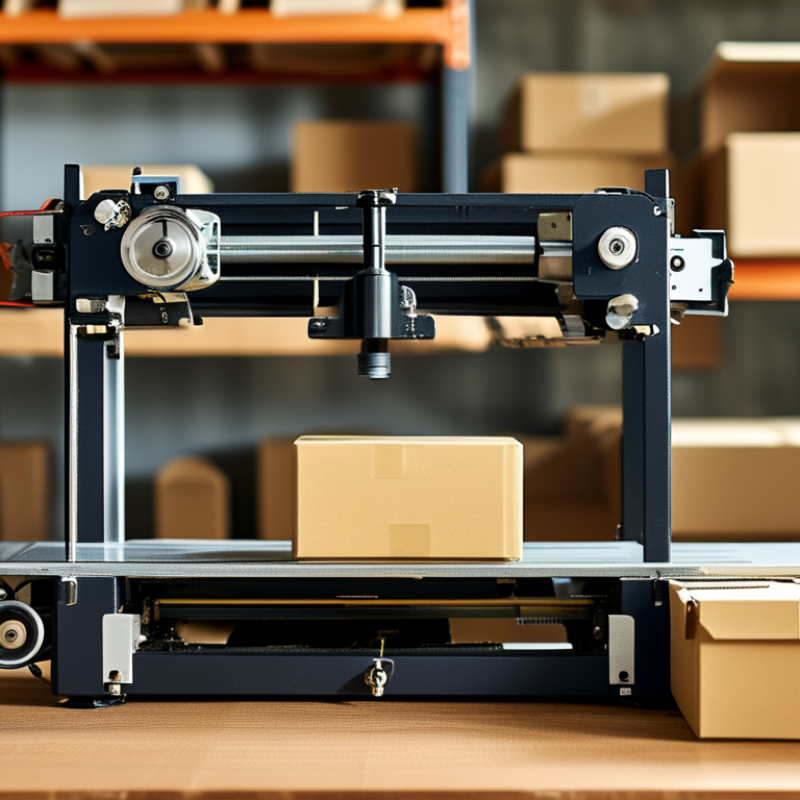
| 1 | Uniform-Case Automatic Carton Sealer | Pressure-sensitive adhesive tape applied to the top and bottom flaps | Up to approximately 30–40 cartons per minute | One consistent carton size, commonly medium-size shipping cases | 48–75 mm carton-sealing tape | High-volume packaging lines with standardized boxes | High speed Excellent repeatability and simple operation | Not suitable for frequent carton-size changes; requires accurately formed cartons | Fully automatic |
| 2 | Random-Case Automatic Carton Sealer | Automatic flap folding followed by top and bottom tape sealing | Up to approximately 20–30 cartons per minute, depending on size variation | Multiple carton sizes within the machine’s adjustment range | 48–75 mm pressure-sensitive tape | E-commerce fulfillment, distribution centers, and mixed-SKU operations | Flexible Handles changing carton dimensions with limited operator input | Higher purchase cost and more sensors, controls, and maintenance points | Fully automatic |
| 3 | Uniform-Case Semi-Automatic Carton Sealer | Powered side belts convey the carton while the operator closes the flaps | Approximately 12–20 cartons per minute | One main carton size or a narrow size range | 48–75 mm carton-sealing tape | Small and medium production lines with regular carton dimensions | Cost-effective Improves consistency without full-line automation | Requires an operator to fold or prepare the top flaps | Semi-automatic |
| 4 | Random-Case Semi-Automatic Carton Sealer | Manual carton preparation with powered conveying and automatic tape application | Approximately 8–15 cartons per minute | Several carton sizes with manual adjustment or guided adjustment | 48–75 mm pressure-sensitive tape | Contract packaging, workshops, and moderate-volume shipping departments | Adaptable Lower investment than a random-case automatic system | Production rate depends on operator speed and carton presentation | Semi-automatic |
| 5 | Hot-Melt Adhesive Carton Sealer | Thermoplastic hot-melt adhesive applied to carton flaps | Approximately 15–35 cartons per minute, depending on configuration | Standard corrugated shipping cartons with compatible flap geometry | Hot-melt adhesive | Food and beverage, household goods, and applications requiring strong seals | Strong bond Good resistance to vibration and many storage conditions | Requires heated adhesive equipment, warm-up time, and safety controls | Semi-automatic or fully automatic |
| 6 | Water-Activated Tape Carton Sealer | Moistened reinforced or non-reinforced paper tape adheres to the carton surface | Approximately 10–25 cartons per minute | Common corrugated cartons with relatively clean, absorbent surfaces | Water-activated paper tape, typically 50–75 mm wide | Parcel shipping, export packaging, and tamper-evident distribution packaging | Secure seal Strong fiber-to-paper bond and easy tamper visibility | Needs a water supply or tape-moistening system; performance can vary with humidity | Manual, semi-automatic, or automatic |
| 7 | Side-Belt Carton Sealer | Parallel powered belts stabilize and transport cartons through tape heads | Approximately 10–25 cartons per minute | Regular cartons with enough sidewall area for belt contact | Pressure-sensitive carton-sealing tape | General manufacturing, warehousing, and shipping operations | Reliable conveying Provides stable carton movement and consistent tape placement | May struggle with very light, unstable, damaged, or highly irregular cartons | Semi-automatic or fully automatic |
| 8 | Top-and-Bottom Belt Carton Sealer | Upper and lower drive belts support the carton while sealing both flap surfaces | Approximately 12–30 cartons per minute | Medium and large corrugated cartons with stable bases | Pressure-sensitive tape or hot-melt adhesive, depending on the sealing head | Heavy products, industrial components, and palletizing lines | Stable handling Helps maintain alignment for heavier cartons | Requires suitable carton rigidity and adequate clearance around the box | Semi-automatic or fully automatic |
| 9 | Case Former and Sealer Combination | Automatically erects flat blanks, folds the bottom flaps, and seals the bottom | Approximately 8–20 cartons per minute | Carton sizes compatible with the selected forming tooling | Pressure-sensitive tape, hot-melt adhesive, or water-activated tape | Packaging lines receiving flat corrugated blanks before filling | Labor saving Integrates carton erection and bottom sealing in one process | More complex than a standalone sealer and generally less flexible for many carton styles | Fully automatic |
| 10 | Case Former, Filler, and Sealer Line | Forms the carton, loads the product, closes the flaps, and applies the final seal | Approximately 5–25 cartons per minute, depending on the filling process | Carton dimensions matched to the product and line design | Tape, hot-melt adhesive, or water-activated tape | Integrated food, consumer-goods, pharmaceutical, and industrial packaging lines | End-to-end automation Reduces manual handling and supports coordinated production | Highest integration cost; changes to products or carton sizes may require line adjustments | Fully automatic |