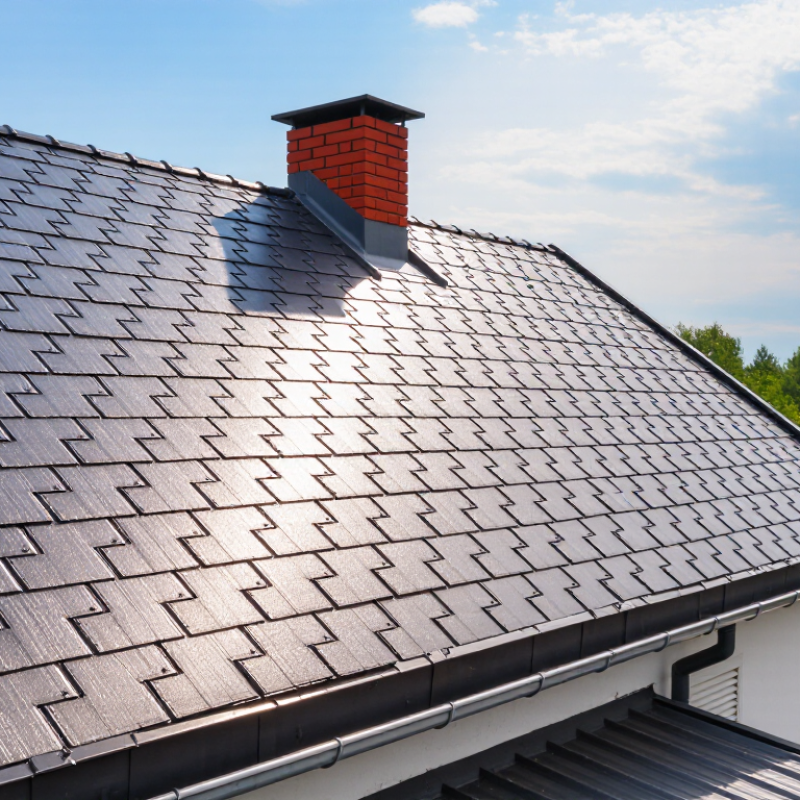
| Definition | Small, interlocking or overlapping roofing panels made from formed metal | Metal shingles provide a protective roof covering while imitating the appearance of materials such as slate, tile, or traditional shingles. |
| Common Base Metals | Steel, aluminum, zinc, or copper | The base metal influences weight, corrosion resistance, malleability, cost, and the installation methods used for the roofing system. |
| Typical Steel Construction | Metal substrate with a metallic protective coating and a top finish | A metallic coating, commonly based on zinc or an aluminum-zinc alloy, helps protect the steel from corrosion. The finish adds color and provides additional weathering protection. |
| Panel Formation | Pressed, stamped, roll-formed, or folded into a shingle profile | Forming creates the visible texture, edges, ribs, and interlocking features that help the panels maintain shape and shed water. |
| Typical Panel Thickness | Approximately 0.40–0.60 mm for many steel products | Thickness varies by material and product design. A thicker panel may offer greater stiffness, while the finished performance also depends on the profile, coating, and attachment system. |
| Panel Size | Usually smaller than a full-length standing-seam panel; dimensions vary by profile | Smaller panel formats can create a shingle-like appearance and allow the roof to accommodate changes in alignment and geometry. |
| Weight | Generally lighter than concrete or clay tile roofing | Lower weight can reduce structural load, although the complete roof assembly still includes underlayment, flashings, fasteners, and other components. |
| Water-Shedding Method | Overlapping courses, side locks, end laps, and formed channels | Water is directed down the roof surface by gravity. Proper overlap, slope, flashing, and installation details are essential to prevent water from reaching the roof deck. |
| Fastening Method | Exposed or concealed corrosion-resistant fasteners, depending on the system | Fasteners secure panels to the roof deck or supporting structure. Correct spacing and allowance for thermal movement help maintain wind resistance and serviceability. |
| Roof Slope Requirement | Varies by shingle profile; many systems require a moderate or steep slope | The minimum slope is determined by the panel design and manufacturer’s installation instructions. Lower-slope applications require specially designed water-management details. |
| Thermal Movement | Metal expands when heated and contracts when cooled | Interlocks, fastener slots, clips, and system layouts may be designed to accommodate movement and reduce stress on panels and fasteners. |
| Corrosion Protection | Metallic coatings, paint finishes, protective layers, or natural patina | Protection slows oxidation and corrosion. Cutting, scratching, incompatible metals, standing water, and coastal exposure can affect long-term performance. |
| Weather Resistance | Designed to resist rain, wind, snow, and sunlight when correctly installed | Actual resistance depends on the product profile, roof design, attachment pattern, flashing, underlayment, and local weather conditions. |
| Fire Performance | Noncombustible metal surface | Metal itself does not readily ignite, but the fire classification of the complete roof assembly depends on the deck, underlayment, insulation, and tested construction. |
| Maintenance Needs | Periodic inspection and cleaning; repainting may be needed for some finishes | Inspections should check for loose fasteners, damaged coatings, blocked drainage paths, debris accumulation, and deterioration around flashings and penetrations. |
| Service Life | Often several decades, depending on material, coating, climate, and maintenance | Longevity is not determined by metal alone. Installation quality, moisture exposure, ventilation, fastener compatibility, and finish durability are also important. |
| Sound Control | Can be noisier than some roof coverings without adequate roof assembly layers | Underlayment, insulation, roof decking, and attic construction can reduce the transmission of rain and hail noise. |
| Environmental Characteristics | Metal can be recycled at the end of its useful life | Recyclability can reduce disposal waste, while the overall environmental impact also depends on material production, transport, coatings, and roof longevity. |
| Best Use Considerations | Projects seeking durability, low weight, fire resistance, and a shingle-style appearance | The appropriate system should be selected according to roof slope, climate, structural capacity, local building requirements, appearance goals, and installation expertise. |