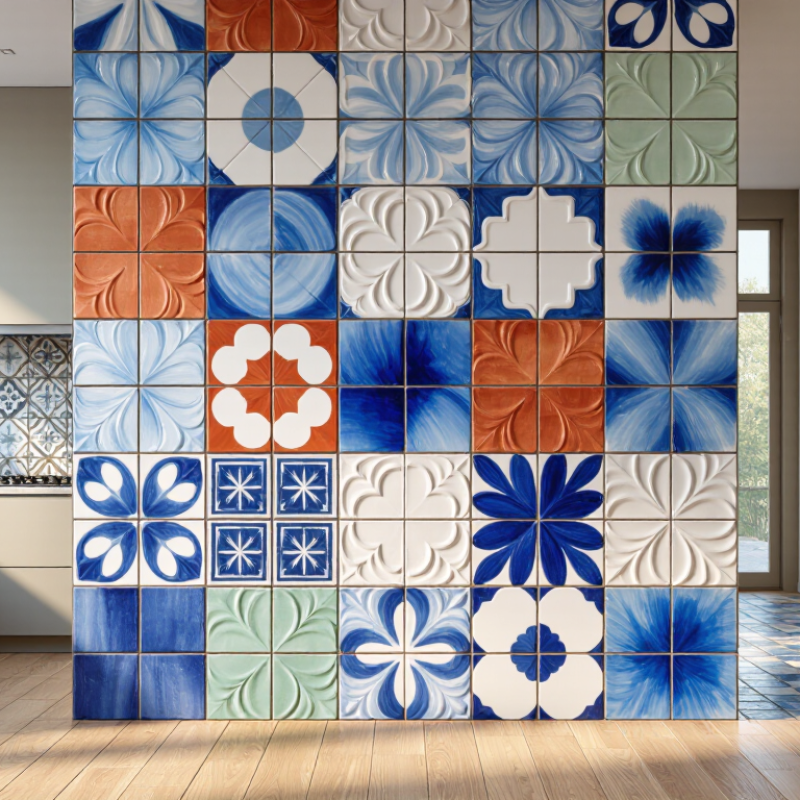
| Hand-painted ceramic | Clay body, mineral-based pigments, and glaze | Clay is shaped, dried, and fired. Designs are painted by hand, then the tile is glazed and fired again. | Painted motifs beneath or on top of a transparent glaze; finishes may be glossy or matte. | Each tile can show small variations in color and brushwork. Often used for murals, borders, and feature areas. |
| Relief ceramic | Clay or ceramic body, with glaze or engobe where desired | Patterns are pressed into a mold or carved into the clay before firing. | Raised and recessed details create shadows; glaze can highlight the relief. | Provides visible texture and depth. The relief is part of the tile body rather than a printed image. |
| Porcelain decorative tile | Refined clay, feldspar, silica, and mineral colorants | Typically pressed into shape and fired at high temperatures; decorative designs may be printed, glazed, or applied before firing. | Available with glazed, polished, textured, or digitally printed surfaces. | Dense and generally low in water absorption when properly manufactured. Suitable for many interior and exterior settings, depending on its rating. |
| Glass mosaic | Colored glass, sometimes with mineral additives or reflective backing | Glass is melted, formed into small pieces, and cut or molded into tesserae; the pieces are mounted in sheets for installation. | Color is integral to the glass or applied as a backing; surfaces may be clear, opaque, iridescent, or textured. | Reflects and transmits light in distinctive ways. Small pieces help create detailed patterns and curves. |
| Encaustic cement tile | Portland cement, mineral pigments, sand, and aggregate | Pigmented cement is placed into a patterned mold, followed by a cement backing layer; tiles are hydraulically pressed and cured rather than kiln-fired. | The colored pattern forms a layer within the tile face; the surface is usually matte and may be sealed after installation. | Patterns are not simply printed on the surface. Cement tiles are porous and generally require appropriate sealing and maintenance. |
| Terracotta tile | Natural, iron-rich clay | Clay is shaped by hand, extrusion, or a mold, then dried and kiln-fired. | Often left unglazed for a natural, earthy appearance; it may also be glazed or surface-treated. | Typically warm in color and porous when unglazed. Appearance varies with the clay and firing conditions. |
| Natural stone mosaic | Stone such as marble, limestone, slate, or granite | Stone is cut, split, or tumbled into small pieces, then arranged in a pattern and mounted on mesh or another backing. | Finishes can include polished, honed, tumbled, or split-face textures. | Natural veining and color variation make each arrangement distinctive. Porosity and care requirements vary by stone type and finish. |