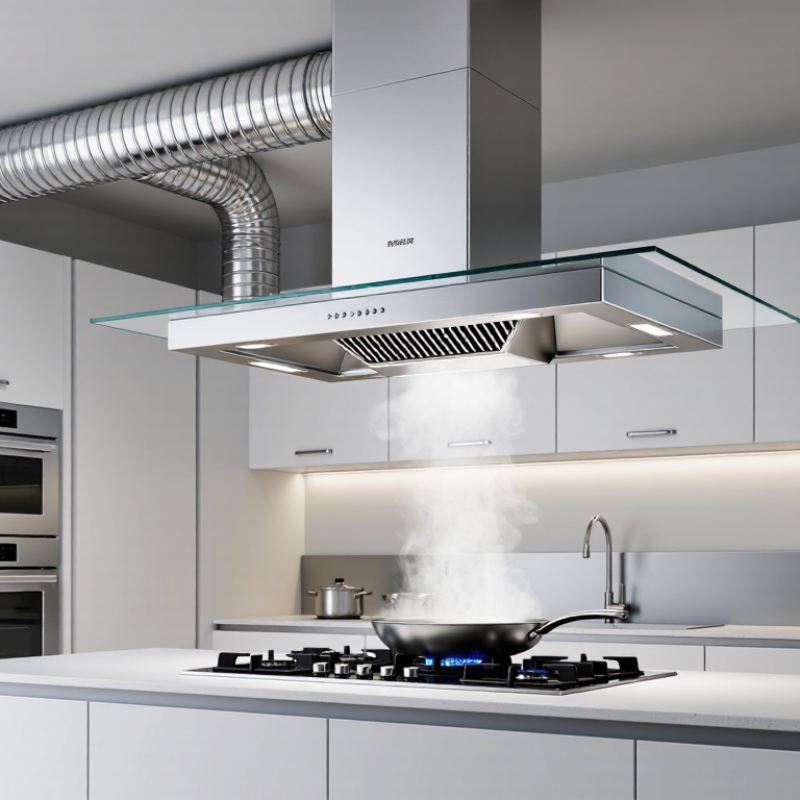
| Range hood canopy | Captures cooking smoke, grease, heat, and odors above the cooking surface. | Usually made from sheet metal, commonly stainless steel; available in wall-mounted, island, under-cabinet, and insert styles. | A hood that covers the cooking area effectively is more likely to capture rising cooking emissions. Installation height should follow the hood and cooking-appliance instructions. |
| Grease filters | Remove airborne grease particles before air reaches the fan and duct. | Common types include removable metal mesh and baffle filters. | Filters need regular cleaning. A dirty or incorrectly installed filter can restrict airflow and allow grease to build up inside the hood. |
| Blower or fan | Moves air from the hood into the exhaust duct or through a recirculating filtration path. | May be installed inside the hood, in an inline duct position, or outdoors, depending on the system design. | Airflow capacity is commonly stated in cubic feet per minute (CFM). The required capacity depends on the cooking appliance, hood design, duct layout, and applicable local requirements. |
| Ductwork | Carries extracted air from the hood to an outdoor discharge point in a ducted system. | Typically uses smooth, rigid metal ducting sized for the hood or blower outlet. | Shorter, straighter duct runs generally reduce airflow resistance. Duct size, routing, and permitted materials should follow the equipment instructions and local building codes. |
| Duct joints and transitions | Connect duct sections and, where needed, adapt between different duct shapes or sizes. | May include elbows, connectors, and reducers or expanders compatible with the duct material. | Excessive bends or abrupt transitions can increase resistance. Joints should be secured and sealed with materials suitable for the installation. |
| Backdraft damper | Helps limit outdoor air, pests, and debris from entering through the exhaust duct when the fan is off. | Usually a hinged or spring-assisted flap located in the hood, duct, or exterior termination. | The damper must be able to open freely when the fan runs. Some systems include a damper as part of the hood or exterior cap. |
| Exterior wall or roof cap | Provides the outdoor outlet for exhaust air and helps protect the duct opening from weather. | Typically includes an exterior hood or louver and may incorporate a backdraft damper. | The outlet should be positioned and installed according to applicable codes and equipment instructions, with attention to nearby windows and other air intakes. |
| Lighting and controls | Illuminate the cooking surface and allow the user to select fan speed and lighting settings. | Controls may be mechanical buttons, switches, or electronic touch controls; lighting may use replaceable or integrated fixtures. | Electrical connections and servicing should follow the product instructions and applicable electrical requirements. |
| Optional charcoal filter | Helps reduce odors in a recirculating system that returns filtered air to the kitchen instead of exhausting it outdoors. | Usually a replaceable or serviceable carbon-based filter fitted inside the hood. | Charcoal filters do not replace grease filters and do not provide outdoor exhaust. Replacement or maintenance intervals depend on the system and cooking habits. |