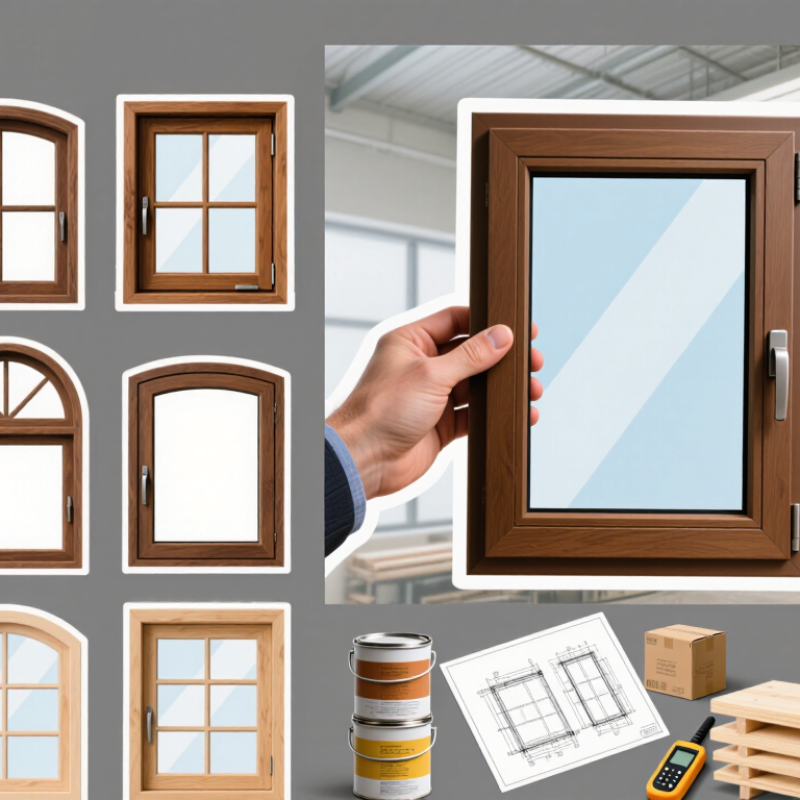
| Product and configuration identification | EN 14351-1 covers performance characteristics for windows and external pedestrian doorsets within its scope. Performance evidence relates to defined products and configurations. | Product datasheet identifying the window type, opening style, dimensions, frame and sash materials, glazing, hardware, seals, and intended use. | Check that the model and configuration on each report match the product being quoted. Confirm that any differences, such as size, glazing, or opening type, are covered by the report or its permitted scope. |
| Performance declaration and traceability | EN 14351-1 is a product standard used to declare relevant window performance characteristics. EU documentation and marking obligations depend on the applicable Construction Products Regulation rules and the product’s scope. | Where applicable, request the Declaration of Performance, product identification, declared characteristics, and supporting assessment or test documentation. | Compare product identifiers and declared values across the declaration, technical datasheet, test reports, and order documents. Verify that the documentation applies to the supplier’s offered product, not merely to a similar design. |
| Thermal transmittance (Uw) | ISO 10077-1:2017 specifies a calculation method for the thermal transmittance of windows, doors, and shutters. A window calculation generally accounts for frame and glazing areas, their thermal transmittances, and the glazing-edge contribution. | A calculation report stating the Uw value, product dimensions, calculation inputs, glazing build-up, frame data, and relevant edge-of-glass data. | Check that the reported Uw is for the complete window and stated size, not just the frame (Uf) or glazing (Ug). Review the inputs and confirm they correspond to the quoted frame, glass, spacer, and configuration. |
| Air permeability | EN 14351-1 includes air permeability as a window performance characteristic. Testing and classification are commonly associated with EN 1026 and EN 12207, respectively. | Test report identifying the tested specimen, test method, pressure conditions, and classification. | Confirm the report identifies the same opening type and relevant frame, seals, and hardware. Check the classification and test details rather than relying on an unqualified “airtight” claim. |
| Watertightness | EN 14351-1 includes watertightness performance. EN 1027 is a commonly used test method, with classification under EN 12208. | Test report stating the specimen details, test method, exposure conditions, and achieved classification. | Match the tested specimen to the offered design and installation orientation. Check that the report records the test result and classification; do not treat a general water-resistance statement as a rated result. |
| Resistance to wind load | EN 14351-1 includes resistance to wind load as a performance characteristic. Testing and classification are commonly associated with EN 12211 and EN 12210. | Test report showing specimen dimensions, test pressures, deflection or other reported results, and classification. | Compare the tested dimensions and construction with the proposed window. Ask how the reported result applies to larger or differently configured units. |
| Wood species, treatment, and finish | EN 14351-1 and ISO 10077-1:2017 do not, by themselves, establish a supplier’s wood species, coating durability, or sourcing claims. | Wood-species declaration, material specification, treatment and coating details, and relevant product-specific inspection or test records. | Ensure the documents identify the actual wood and finish offered. Treat sustainability, durability, or treatment claims as separate claims requiring their own supporting evidence. |
| Report authenticity and scope | Standards-based claims are meaningful only when the evidence is traceable to the applicable product, test or calculation method, and report scope. | Complete reports, including issuing laboratory or responsible technical party, report number, date, specimen description, methods, and results. | Contact the issuing organization through independently verified contact details where possible. Check report completeness, dates, product identity, and any stated limitations or exclusions. |
| Supplier comparison outcome | Neither standard is a supplier ranking system. EN 14351-1 addresses product performance characteristics; ISO 10077-1:2017 provides a thermal-transmittance calculation method. | A comparison sheet recording the same product configuration, declared or calculated values, report references, and unresolved evidence gaps for each bidder. | Compare suppliers on a like-for-like basis. Record “not provided” or “not verified” where evidence is missing instead of treating an unsupported claim as a confirmed performance result. |