| Vibrating Screen | A vibrating deck moves material across one or more screen surfaces; particles are separated according to whether they pass through the openings. | Separating glass by particle size and removing small fines or oversized pieces. | Early size classification of crushed glass or mixed incoming material. | Screen openings determine the size split. Wet, sticky, or irregular material can reduce screening efficiency. |
| Rotary Trommel Screen | A rotating perforated drum tumbles material, allowing smaller pieces to pass through its openings while larger pieces continue to the discharge end. | Separating fine material from larger glass fragments and other bulky items. | High-volume, relatively robust screening of mixed or irregular feed. | Drum speed, angle, and aperture size affect separation. It classifies by size, not by glass color or material composition. |
| Ballistic Separator | Inclined moving paddles or decks separate material according to its size, shape, and motion: rolling or rigid items move differently from flat or flexible items. | Separating rolling containers and rigid objects from flatter packaging materials. | Mixed packaging streams that contain glass containers alongside paper, film, and other materials. | Performance depends on feed consistency and material condition. It is a physical separator, not a glass-color sorter. |
| Air Classifier | Controlled airflow separates lighter materials from heavier pieces according to their aerodynamic behavior. | Removing lightweight paper, labels, film, and other light contaminants from heavier glass. | Dry processing lines where light contaminants need to be removed before further glass cleaning. | Air settings and feed rate must be adjusted to limit glass loss. Dust control is important. |
| Magnetic Separator | A permanent magnet or electromagnet attracts ferrous metals as material passes by or beneath the magnetic field. | Removing iron and steel items, such as caps or fragments, from a glass stream. | Metal removal before or after size reduction to protect downstream equipment and improve material quality. | It removes magnetic metals; it does not separate glass from other nonmagnetic materials. |
| Eddy Current Separator | A rapidly changing magnetic field induces currents in conductive nonferrous metals, causing them to be displaced from the main material flow. | Recovering or removing nonferrous metals, such as aluminum, from mixed material. | Processing streams that contain nonferrous metal alongside glass and other recyclables. | It targets conductive nonferrous metals, not glass itself. Feed preparation and particle size influence performance. |
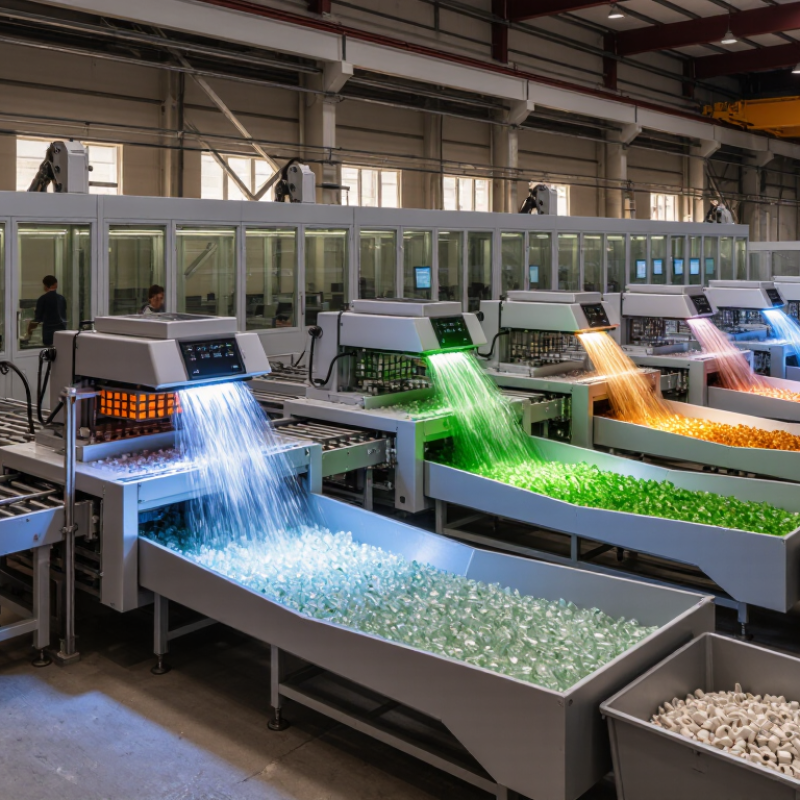
| Optical Glass Sorter | Cameras or other optical sensors identify differences in color or material appearance; controlled air jets eject selected pieces. | Separating glass by color or rejecting visible contaminants such as ceramics, stones, and heat-resistant glass. | Later-stage cleaning when a more consistent glass cullet stream is required. | It is a sensor-based sorting system rather than a purely mechanical separator. Results depend on presentation, cleanliness, and calibration. |
| Process note: A typical line combines several methods. Screens and trommels classify by size; air and ballistic separators handle differences in weight, shape, or motion; magnetic and eddy current units remove metals; optical sorters can perform more selective color and contaminant sorting. |