



2026 Top Trends in Construction Work You Should Know?

As we look toward the future, construction work stands at a crossroads. Emerging trends will redefine the industry. The integration of technology and sustainability will play pivotal roles. We see the rise of smart buildings and greener materials. These innovations promise to transform how we build and design.

In 2026, many will embrace prefabrication and modular construction. This approach saves time and resources. It also reduces waste, an essential factor in today’s environmentally conscious market. However, challenges remain. The need for skilled labor is growing, but training programs are often inadequate. Bridging this skill gap will be crucial for success.

Moreover, the role of safety in construction work cannot be overlooked. With new technologies, safety measures can become more effective. Yet, not all companies will adopt these advancements quickly. Some may struggle to keep up, creating disparities in practices. Staying current with trends will be vital, but it requires ongoing commitment and adaptation.

2026 Top Trends in Construction Work You Should Know?

Emerging Technologies Transforming Construction in 2026

Emerging technologies are transforming the construction industry. By 2026, the integration of AI, robotics, and BIM will be pivotal. According to research, AI could enhance project management efficiency by over 25%. It analyzes data patterns and predicts project outcomes. This may reduce costs and improve timelines.

Robotics is another game-changer in construction. Drones and automated machinery can handle heavy lifting. They increase safety on-site. However, the transition to robotic systems presents challenges. Workers may resist change, fearing job losses. Ensuring training programs will be crucial.

Building Information Modeling (BIM) is revolutionizing design and collaboration. It allows for real-time modifications and visualizations. A report suggests BIM can minimize errors by 30%. But, the adoption rate is still low. Many companies struggle with implementation. The industry must address these gaps for better integration.

2026 Top Trends in Construction Work You Should Know

Trend Description Impact on Construction Emerging Technologies
Modular Construction Off-site manufacturing of building components to improve efficiency. Reduces construction time and costs while enhancing quality control. 3D Printing, Prefabrication Techniques
Sustainable Materials Use of eco-friendly materials to minimize environmental impact. Helps in achieving sustainable building certifications and reduces carbon footprint. Recycled Materials, Bio-based Products
Digital Twin Technology Creating a virtual replica of physical assets for real-time monitoring. Enhances project management and allows for predictive maintenance. IoT Sensors, Advanced Simulation Software
Drones and UAVs Utilization of drones for surveying and monitoring construction sites. Increases safety and accuracy in site assessments. Aerial Imaging, LiDAR Technology
Robotics and Automation Use of robotic systems for repetitive tasks on construction sites. Reduces labor costs and improves safety on-site. Robotic Arms, Automated Machinery

Sustainable Practices Shaping the Future of Building Projects

2026 Top Trends in Construction Work You Should Know?

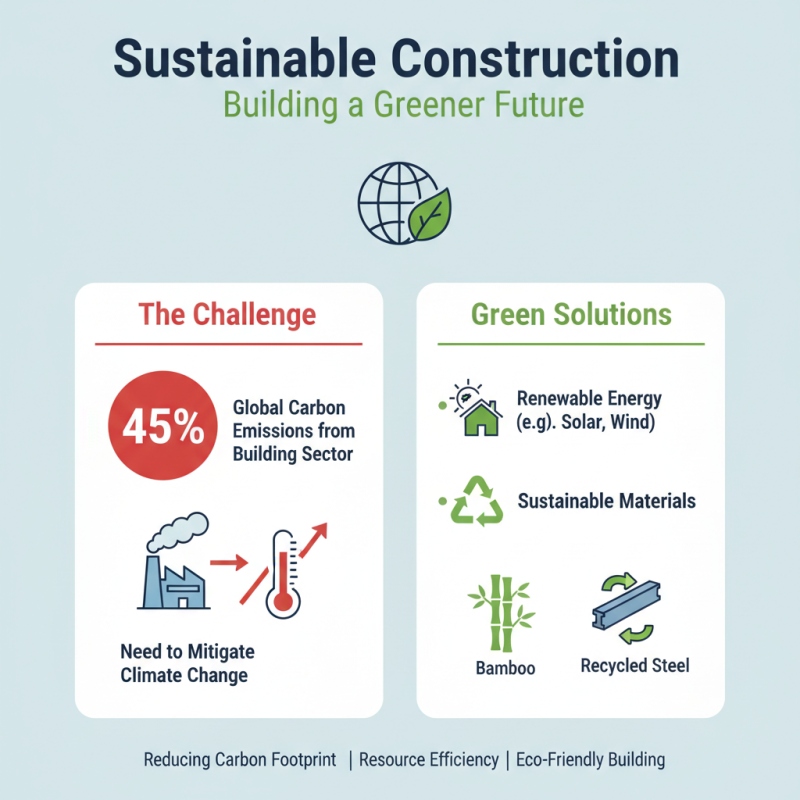
Sustainable practices are becoming essential in construction. Recent data shows that about 45% of global carbon emissions come from the building sector. To mitigate this, builders are adopting green technologies. These include using renewable energy sources and sustainable materials. For instance, bamboo and recycled steel are gaining traction.

Energy efficiency is a top priority. Buildings equipped with solar panels can reduce energy costs by up to 30%. Many construction companies are now implementing energy-efficient designs. These designs not only lower emissions but also attract eco-conscious clients. However, transitioning to sustainable methods can be difficult. Logistics and upfront costs remain potential barriers.

Waste reduction is another area of focus. According to a report, construction produces 30% of global waste. Strategies to minimize this include reusing materials and careful planning. Yet, not all firms prioritize these techniques. Some still rely on traditional methods that lead to excessive waste. Continuous improvement is needed to ensure sustainability in every project.

The Rise of Modular and Prefabricated Construction Techniques

The construction industry is undergoing a significant transformation with the rise of modular and prefabricated techniques. These methods involve assembling building components off-site and then transporting them to the final location. This can drastically reduce construction time, often completing projects in a fraction of the usual duration. However, challenges remain. Ensuring quality control during the prefabrication process is not always straightforward. It requires rigorous standards and inspections.

Another aspect of modular construction is its environmental impact. Building off-site can lead to less waste and improved efficiency. But not all materials used in modular projects are sustainable. This raises questions about true environmental benefits. Furthermore, the integration of these modules on-site can be complex. It requires skilled labor and precise planning to align with existing structures.

Still, the appeal is undeniable. Projects can be customized to fit specific needs. The flexibility of designs allows for innovative architectural solutions. Yet, as with any evolving trend, it’s crucial to weigh the pros and cons. The construction industry must critically assess these methods to enhance their effectiveness and sustainability. Balancing efficiency and quality will determine the future success of modular construction techniques.

Impact of Automation and Robotics on Labor in the Construction Sector

The integration of automation and robotics in construction is transforming the labor landscape. According to a recent McKinsey report, up to 60% of jobs could be impacted by automation by 2030. This shift is alarming for traditional labor roles. Many workers feel uncertain about their future.

Robotics can enhance safety on job sites. For example, drones can perform surveying tasks. This reduces the need for human presence in risky environments. However, it may also lead to job displacement. In 2021, over 130,000 construction workers were displaced due to automation advancements. This trend raises significant concerns.

Yet, there are positives. Automation can increase efficiency by 50%. Tasks that took days may now take hours. But this fast pace creates pressure. Workers must adapt rapidly or risk being left behind. The construction sector faces a crucial crossroads. Balancing the benefits of automation with the concerns of labor displacement is essential. The future of construction is promising, but not without challenges.

Trends in Smart Building Solutions and Internet of Things Integration

2026 Top Trends in Construction Work You Should Know?

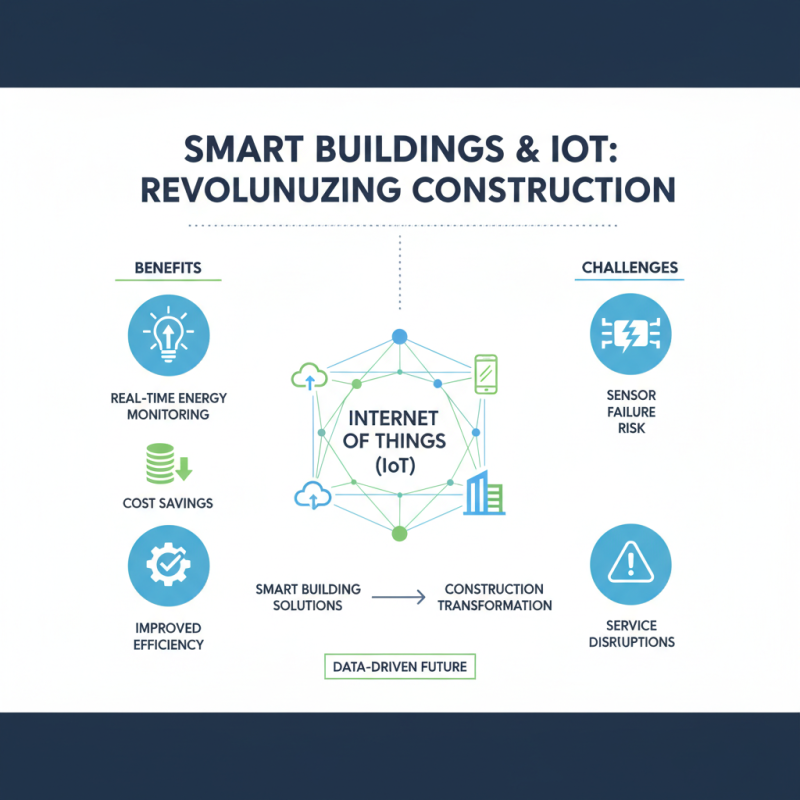
The integration of smart building solutions and the Internet of Things (IoT) is transforming construction work. Buildings equipped with sensors can monitor energy use in real time. This technology allows for significant cost savings and improved efficiency. However, the reliance on data can lead to challenges. For example, if the sensors fail, it could cause serious disruptions.

Another aspect to consider is the adaptability of smart systems. While many buildings are becoming more intelligent, not all structures can easily integrate these features. Older buildings may require extensive retrofitting, which can be expensive. This raises the question of whether the investment is worthwhile.

Collaboration among stakeholders becomes vital in this context. Architects, engineers, and builders must work closely to design smart spaces. The goal is to ensure that new technologies align with the building's purpose. However, miscommunication can lead to errors, creating delays and increased costs. A more cohesive approach is essential for successful implementation.

Find the Right Repair Product for Your Project

Need to find the most appropriate product for the needs of your project? We can help because we have over 70 years of experience servicing the industry with every kind of project, from Do-it-yourself projects to large skyscrapers. Package Pavement has the experience, the knowledge and the products to help every project succeed.
Quikrete Repair Products
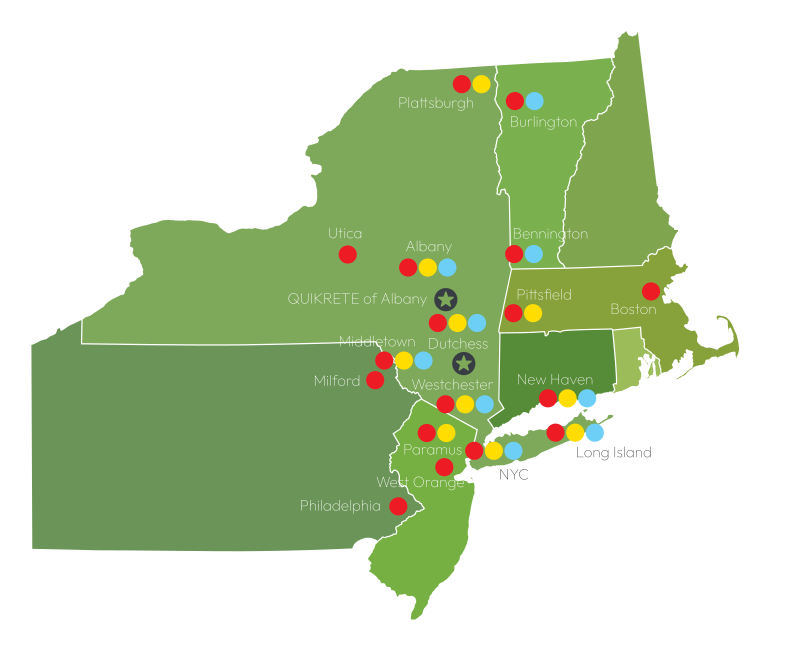
Legend
Package Pavement has two convenient locations in Stormville, NY (Dutchess County) and Ravena, NY (Greene County) to serve the Northeastern Region with bagged concrete, blacktop, mortar, and repair products. This map gives a general idea of where we service and the product lines we offer.
Package Pavement Products
Quikrete Products
Spec Mix Products
map

Our Brands Websites