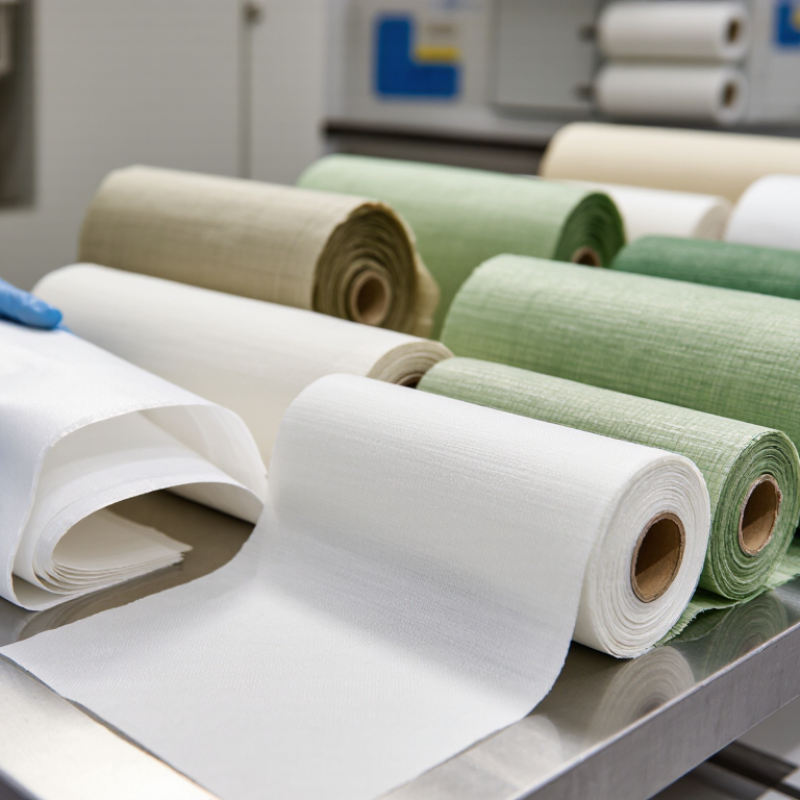
| Polyester Spunlace | Polyester staple fibers, used alone or blended with other fibers. | A fiber web is formed and mechanically entangled with high-pressure water jets, then dried. | Generally durable, dimensionally stable, and suitable for repeated handling. Polyester is not biodegradable under ordinary environmental conditions. | Industrial wipes, cleaning cloths, automotive interiors, and some personal-care products. | Consider absorbency, softness, linting, and end-of-life requirements. Polyester itself is less absorbent than many cellulosic fibers. |
| Viscose (Rayon) Spunlace | Viscose staple fibers, commonly used alone or blended with polyester. | Carded or otherwise formed fibers are hydroentangled; water jets bind the web without conventional adhesive bonding. | Soft and absorbent, with a cellulosic feel. Performance varies with fiber quality, fabric construction, and finishing. | Personal-care wipes, facial and cosmetic wipes, and absorbent hygiene-related applications. | Check wet strength and disposal requirements. Viscose is regenerated cellulose, but its environmental profile depends on fiber sourcing and manufacturing. |
| Cotton Spunlace | Cotton fibers, sometimes blended with viscose or polyester. | Cotton fibers are formed into a web and entangled by water jets; the fabric is then dried and may receive additional finishing. | Cellulosic, absorbent, and often soft to the touch. Strength and surface characteristics depend on the fiber and web design. | Cosmetic pads, personal-care wipes, medical and hygiene products, and selected household wipes. | Specify the required absorbency, cleanliness, and fiber-origin documentation. “Cotton” alone does not establish a product’s certification or environmental impact. |
| Polyester–Viscose Blend | A blend of polyester and viscose; proportions vary by product specification. | The fibers are mixed or layered into a web and hydroentangled to combine their properties. | Can balance polyester’s durability with viscose’s absorbency and softness. Results depend on blend ratio and fabric weight. | General-purpose wipes, surface-cleaning cloths, personal-care wipes, and selected medical-use products. | Compare blend ratio, basis weight, wet and dry strength, absorbency, and any required product-specific testing. |
| Lyocell Spunlace | Lyocell staple fibers, used alone or in blends. | Lyocell fibers are formed into a web and bonded through hydroentanglement, followed by drying and any specified finishing. | Soft and absorbent, with a smooth cellulosic hand. Fabric performance depends on fiber length, web structure, and processing. | Premium personal-care wipes, cosmetic products, and selected hygiene or medical applications. | Verify the fiber content and relevant sourcing claims. Lyocell is regenerated cellulose; its production characteristics vary by process and supply chain. |
| Wood-Pulp Composite Spunlace | Cellulosic wood pulp combined with staple fibers such as polyester or viscose. | A composite web is formed from pulp and staple fibers, then consolidated by water-jet entanglement. Construction varies by product. | Designed to combine high liquid uptake from pulp with improved web integrity from staple fibers. Pulp-containing structures may have different lint and strength profiles. | Absorbent wipes, cleaning products, and selected medical or hygiene materials. | Check the pulp-to-fiber construction, wet strength, lint level, and whether the product is intended for flushing or other specific disposal routes. |
| Hydroentangled Microfiber Fabric | Fine-denier synthetic fibers, commonly polyester, polyamide, or their blends. | Fine fibers are formed into a web and entangled with high-pressure water jets; further splitting or finishing may be used where specified. | Can provide a fine surface and effective particle pickup in cleaning applications. Performance depends on fiber fineness and fabric construction. | Precision cleaning cloths, optical and electronic surface wipes, and selected reusable cleaning products. | Assess lint and abrasion requirements for the target surface. Microfiber fabrics may release synthetic fibers during use or washing. |