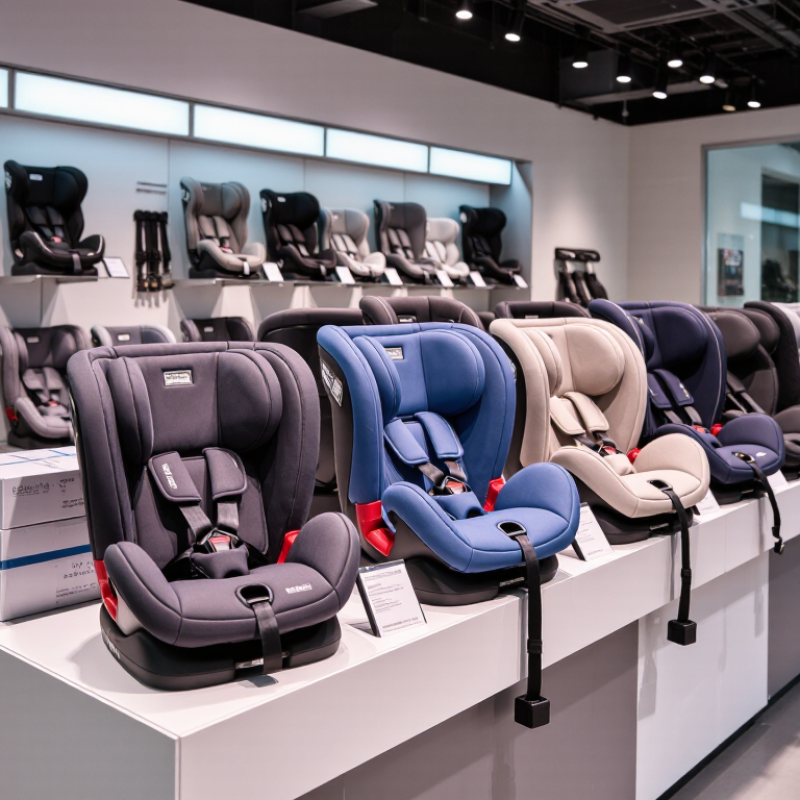
| Established child-restraint specialist | Typically offers high-back belt-positioning boosters, backless boosters, and models with optional lower-anchor attachments. Range and features vary by model. | United States: FMVSS No. 213 Canada: CMVSS 213 Request the applicable compliance documentation and product labels. Confirm that the exact model is approved for sale and use in the destination country. | Ask for current instruction manuals, installation guidance, replacement-part availability, warranty terms, and documented support for product questions or safety notices. | Buyers seeking a focused child-restraint range and established product documentation. |
| Multi-market safety-equipment manufacturer | May supply several booster configurations, including high-back and backless designs, with different belt guides, adjustment systems, and cover options. | Europe: UN Regulation No. 129 Check the approval marking and approved size range on the exact restraint. Do not assume that a model approved in one region is approved elsewhere. | Verify market-specific manuals and labels, language coverage, technical files where applicable, and a clear process for handling product updates and recalls. | Importers serving more than one market who need market-specific product versions and documentation. |
| Regional specialist with local-market focus | Often concentrates on a smaller selection of booster seats adapted to local vehicle fleets, retail channels, or consumer requirements. | Australia / New Zealand: AS/NZS 1754 Confirm the current applicable standard, certification status, approved model identity, and required markings with the supplier and relevant local authority. | Check local-language instructions, local warranty and service arrangements, parts supply, and experience supporting regional distributors. | Distributors prioritizing local compliance familiarity and in-market service coordination. |
| OEM / private-label producer | May offer configurable seat shells, fabrics, packaging, and branding for high-back or backless booster programs, subject to engineering and production capability. | Approval is model-specific; changes to design, materials, manufacturing site, or labeling may affect compliance. Agree in writing who manages testing, certification, and change control for each destination market. | Request sample approval records, quality-management details, production traceability, change-control procedures, audit access, and written responsibilities for post-market issues. | Brands and importers developing a controlled private-label program with defined technical oversight. |
| Value-focused high-volume producer | May focus on a limited set of cost-conscious booster models, with optional differences in fabrics, packaging, or attachment features. | Confirm the precise model number, production version, approval evidence, test scope, and destination-market labeling. A factory or product certificate should not be treated as proof that every variant is approved. | Evaluate production consistency, batch traceability, defect-handling timelines, spare-part commitments, and the supplier’s ability to provide complete technical documentation. | Buyers prioritizing cost and volume, provided compliance and quality controls are independently verified. |