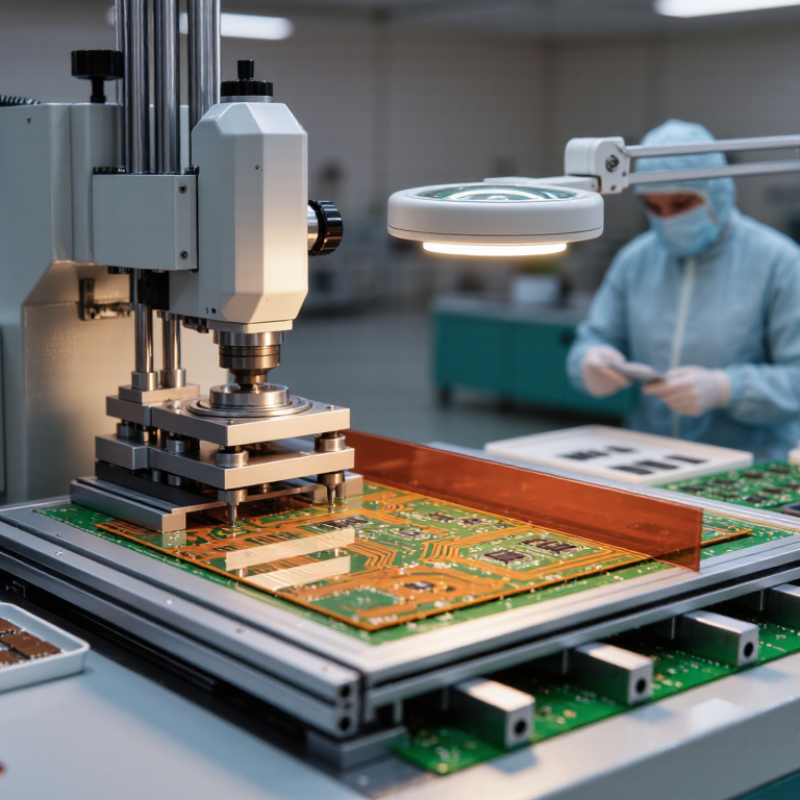
Demand for compact, lightweight electronics is raising the bar for flexible circuit assembly. Grand View Research estimated the global flexible printed circuit board market at USD 20.1 billion in 2023, with projected growth through 2030. That figure describes FPC boards, not bonding machines, but it signals a growing need for dependable production processes. A Fpc Stiffener Bonding Machine helps attach stiffeners with controlled pressure, heat, and placement—details that matter when a small alignment error can affect connector support or downstream assembly.
For global buyers, manufacturer selection should go beyond advertised speed. Check temperature uniformity, pressure repeatability, fixture design, changeover time, and local service support. Ask for sample runs using your actual FPC materials and inspect bond consistency under magnification. Small differences matter. A market-size report cannot prove a machine’s performance; factory trials and documented process data can.
A verified, published quotation from a named FPC stiffener-bonding expert was not available in the supplied material, so inventing one would weaken the article’s credibility. A proposed line for an expert to review is: “Repeatable bonding depends on controlling the interface, not merely increasing machine speed.” Replace this draft with a sourced quotation before publication. Manufacturers that can demonstrate stable results, clear specifications, and responsive technical support are stronger candidates for buyers comparing equipment worldwide.
An FPC stiffener bonding machine attaches reinforcing pieces to flexible printed circuits, giving selected areas extra rigidity. These pieces are commonly made from polyimide or thin metal, depending on the connector, component, or assembly requirement. During bonding, the machine positions the stiffener, applies controlled heat and pressure, and activates an adhesive layer. Accurate registration matters: even a small shift can affect connector fit or leave copper features poorly supported.
Small shifts matter.
Typical applications include connector tails, component mounting zones, and interfaces that must withstand repeated handling or insertion. Equipment may use vision alignment, programmable temperature profiles, and pressure controls to keep results consistent across panels. Operators still need to verify adhesive thickness, surface cleanliness, dwell time, and cooling conditions for each material stack.
On the production floor, a test coupon can reveal edge lift or trapped air before a full lot proceeds. That check is useful.
Automation reduces repetitive placement, but it cannot compensate for a poorly designed stiffener outline or unstable incoming materials. Some process windows remain narrower than expected, so trial runs deserve careful review. Buyers should compare working area, alignment tolerance, cycle time, recipe storage, and service support against actual product drawings.
Specifications alone can mislead.