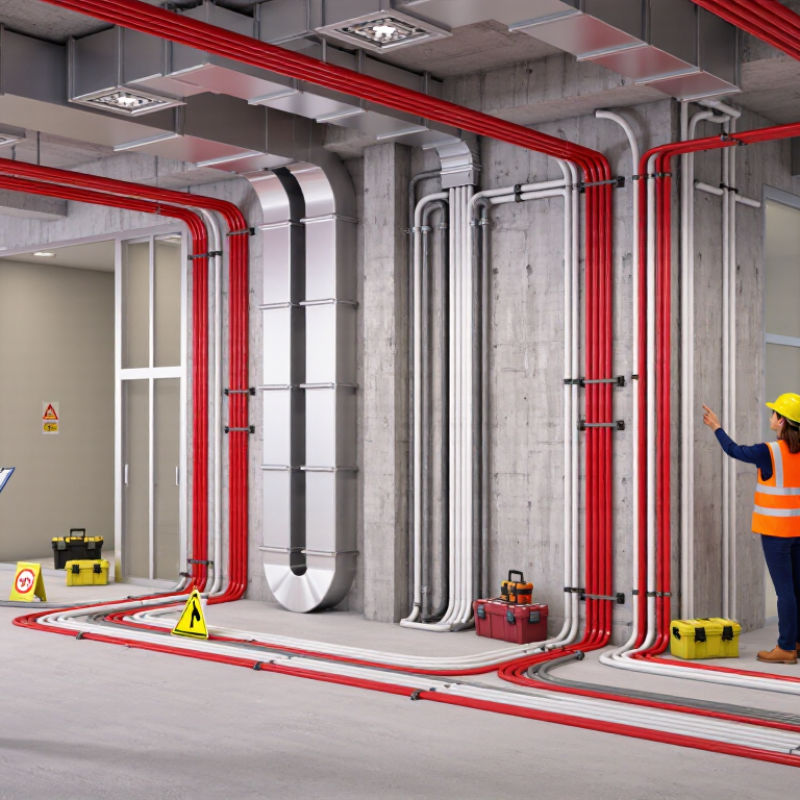
| Penetration fire resistance | Sealing around cables, cable bundles, pipes, ducts, and mixed-service penetrations | EN 1366-3; ASTM E814; UL 1479 | A tested system detail showing the exact substrate, service type, opening size, sealant depth, backing material, installation orientation, and fire-resistance period | Critical for commercial buildings, data centers, hospitals, industrial facilities, and infrastructure projects |
| Linear joint protection | Sealing construction and movement joints in fire-rated walls, floors, façades, and compartments | EN 1366-4; ASTM E1966; UL 2079 | Joint width range, movement capability, backing configuration, joint orientation, cyclic movement results, and fire exposure classification | Important where buildings experience thermal expansion, settlement, vibration, or seismic movement |
| Fire classification | Clear classification for integrity, insulation, and smoke-control performance | EN 13501-2; ASTM E814; UL 1479 | Classification report, direct-field-of-application rules, tested duration, and limitations on substrates and service configurations | Helps align product selection with local building regulations and project specifications |
| Smoke leakage control | Resistance to ambient-temperature and elevated-temperature smoke leakage | EN 1366-3 or EN 1366-4 with smoke-control classification; ASTM E814 where applicable | Smoke leakage classification, pressure conditions, test configuration, and compatibility with the fire-rated assembly | Particularly relevant to escape routes, smoke compartments, underground transport, and high-rise buildings |
| Movement capability | Accommodation of repeated joint movement without loss of firestopping performance | ASTM E1966; UL 2079; project-specific movement-cycle requirements | Declared movement percentage, joint geometry, number of cycles, preconditioning, and post-movement fire-test results | Essential for curtain-wall perimeters, precast panels, parking structures, and seismic regions |
| Substrate compatibility | Reliable adhesion to concrete, masonry, gypsum systems, metals, and approved coated surfaces | Manufacturer adhesion testing; ASTM C920 performance criteria where applicable; project-specific fire-test evidence | Primer requirements, surface preparation, adhesion or cohesion results, moisture limitations, and approved substrate list | Reduces installation failures caused by dusty, damp, porous, painted, or chemically incompatible surfaces |
| Sealant technology | Selection between acrylic, silicone, hybrid, or intumescent formulations based on the application | Product-specific fire-resistance testing; ASTM C920 for elastomeric sealant properties where applicable | Cure chemistry, application temperature, curing time, shrinkage, elasticity, intumescence behavior, and chemical compatibility | Supports correct specification for interior joints, wet areas, façades, service penetrations, and high-movement locations |
| Environmental durability | Resistance to humidity, water exposure, temperature variation, UV exposure, and aging | EN 1366-3 or EN 1366-4 durability conditioning; manufacturer weathering and aging data | Exposure limitations, service-temperature range, water-resistance data, UV suitability, and validated life-expectancy information | Important for façades, car parks, plant rooms, tunnels, marine environments, and unconditioned spaces |
| Chemical and corrosion compatibility | No harmful reaction with cable jackets, insulation, metal pipes, coatings, or adjacent sealants | Product compatibility testing; applicable material safety and electrical-installation requirements | Compatibility statement, corrosivity information, plasticizer interaction data, and restrictions for sensitive metals or polymers | Reduces risk in electrical rooms, laboratories, cleanrooms, industrial plants, and process facilities |
| Health and safety compliance | Safe handling, installation, curing, and disposal in the destination market | Safety Data Sheet under the destination-market chemical communication rules; VOC testing where specified | Current SDS, hazard classification, VOC data, personal protective equipment guidance, and transport information | Required for procurement approval, site safety planning, customs documentation, and contractor training |
| Quality management | Consistent batch quality and traceable manufacturing controls | ISO 9001 quality-management certification; batch testing and inspection records | Certificate scope, manufacturing location, batch or lot traceability, shelf-life controls, and nonconformance procedure | Useful for approved-vendor programs, regulated projects, and long-term framework purchasing |
| Installation productivity | Practical packaging, tooling, cure speed, and application consistency | Technical data sheet requirements; application trials; project-specific installation method statements | Cartridge or sausage-pack sizes, coverage rate, tooling window, cure time, nozzle requirements, and substrate preparation steps | Affects labor cost, installation scheduling, waste, inspection outcomes, and site productivity |
| Technical support and traceability | Accessible engineering support and documentation for international projects | Third-party test reports, engineering judgments where permitted, installation drawings, and inspection records | Document revision control, multilingual instructions, approved-system drawings, response time, and project submittal support | Helps buyers manage different codes, authorities having jurisdiction, contractors, and inspection procedures |
| Packaging and logistics | Stable supply, export-ready packaging, and controlled storage conditions | Product shelf-life and storage specifications; applicable transport and customs documentation | Shelf life, storage temperature, pallet configuration, country of origin, labeling language, minimum order quantity, and lead time | Supports reliable delivery to multiple regions and reduces the risk of expired or improperly stored material |