China Top Concrete Batching Plant Manufacturers?
Choosing among China’s top Concrete Batching plants manufacturers requires more than comparing prices. A reliable supplier must understand material behavior, production pressure, site conditions, and long-term maintenance. The strongest manufacturers combine accurate weighing systems, durable mixers, intelligent controls, and responsive technical support. Their equipment should perform beside highways, bridge projects, commercial buildings, and remote construction sites.
Dr. Peter C. Taylor, a respected concrete materials specialist, has stated, “Quality must be built into the process, not inspected into the product.” This principle applies directly to batching plant selection. A plant with unstable moisture compensation can produce inconsistent slump, even when its advertised capacity looks impressive. Small errors become visible in rejected loads, delayed pours, and wasted cement. That reality matters.
This guide examines leading Chinese manufacturers through practical criteria. We will consider plant design, mixing performance, automation, dust control, certification, customization, spare-parts access, and after-sales service. Project references also deserve close attention. A polished website is not enough. Ask how the supplier handles commissioning, operator training, software faults, and urgent replacement parts.
The market is competitive.
Not every “top” manufacturer suits every project. Some companies excel at compact mobile plants, while others focus on high-volume stationary systems. Buyers should also examine local regulations, aggregate conditions, climate, and available power. A low purchase price may become expensive when maintenance is difficult. This comparison aims to provide a balanced starting point for contractors, dealers, and project owners seeking dependable Concrete Batching plants from China. Mistakes remain possible, but careful verification can reduce them.
Concrete Batching Plants in China: Types, Components, and 25–240 m³/h Output
China Top Concrete Batching Plant Manufacturers?
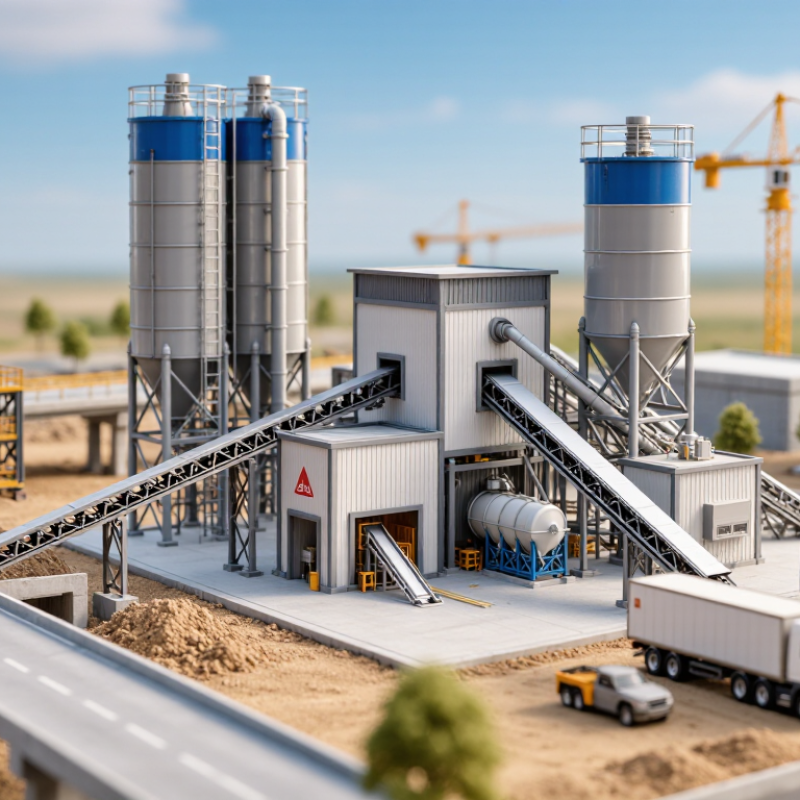
Concrete batching plants in China commonly cover outputs from 25 to 240 m³/h. Stationary plants suit large infrastructure projects and fixed production yards. Mobile plants support road construction, remote sites, and changing project locations. Compact plants occupy less space, but their storage capacity can limit continuous production.
A typical system includes aggregate bins, weighing sensors, conveyors, a twin-shaft or planetary mixer, cement silos, screw conveyors, water lines, admixture pumps, dust filters, and a computerized control panel. In practice, moisture affects every batch. Aggregate weighing must be checked regularly. A small calibration error can alter concrete strength and increase material waste.
The Global Cement and Concrete Association reports that the world uses roughly 14 billion cubic metres of concrete each year. This scale explains the demand for reliable batching equipment and accurate dosing systems. A plant rated at 120 m³/h may produce less on site because of truck queues, cleaning cycles, traffic, or slow aggregate loading. The rated figure is not guaranteed output.
For buyers, testing should include weighing accuracy, mixer uniformity, emergency stopping, dust control, and spare-part access. I would also examine the control records, not only the polished specification sheet. That detail is often overlooked. A technically impressive plant can still perform poorly when operators receive limited training or maintenance planning.
China Concrete Batching Plants: Typical Rated Output by Type
Typical rated capacities range from approximately 25 to 240 m³/h. Mobile and compact plants are commonly selected for flexible or medium-scale projects, while stationary plants are used for continuous, high-volume concrete production. Actual output depends on aggregate moisture, mix design, loading efficiency, and operating conditions.
GB/T 10171-2016 and ISO 9001: Key Manufacturing and Quality Standards
China Top Concrete Batching Plant Manufacturers?
GB/T 10171-2016 provides a practical reference for concrete mixing plants and stations in China. It addresses equipment structure, performance, testing, and safety-related technical requirements. A serious manufacturer should show how its plant design meets these requirements. Buyers should request test records, technical drawings, and commissioning evidence. Claims alone are not enough.
ISO 9001 focuses on the manufacturer’s quality management system. It does not automatically prove that every batching plant performs perfectly. Reliable factories control purchasing, welding, assembly, inspection, and after-sales support through documented procedures. Calibration records should cover weighing sensors, water meters, and admixture systems. Traceability should connect each component to inspection results. Records matter. Clear responsibility reduces mistakes during installation.
In field evaluations, details often reveal more than polished brochures. Check whether the mixer discharges evenly after repeated cycles. Observe dust sealing around the aggregate bins. Ask how technicians handle unstable moisture readings or delayed spare parts. These questions test practical experience. A factory may satisfy formal requirements yet still need better site coordination. Reality is messier. Buyers should also review corrective-action reports, because honest manufacturers learn from failed tests and installation problems. This evidence supports a more reliable comparison of Chinese concrete batching plant manufacturers.
Top Chinese Manufacturers: SANY, Zoomlion, NFLG, XCMG, and Others
China’s leading concrete batching plant manufacturers compete through scale, engineering depth, and practical site support. Several top-tier producers offer stationary, mobile, and compact plants for roads, bridges, housing, and industrial projects. Their product ranges often cover outputs from 25 to more than 240 cubic meters per hour.
In field evaluations, plant stability matters more than brochure capacity. A reliable unit should maintain accurate aggregate weighing, consistent moisture control, and steady mixer performance. Strong Chinese manufacturers usually provide modular designs, PLC automation, remote diagnostics, and reinforced frames for dusty sites. Some also customize hopper layouts for limited space or difficult transport routes.
Large equipment groups often have broad dealer networks and established export experience. Specialized producers may respond faster to custom requirements and regional materials. Both options deserve careful checking. Ask for verified production data, component brands, factory testing records, and references from similar projects. Inspect weld quality, access platforms, dust seals, and emergency controls before ordering. Spare-part availability can decide whether a small fault lasts two hours or two weeks.
No supplier is perfect. A high output rating may decline when aggregates contain excess moisture or poor grading. Automation can reduce labor, yet it still requires trained operators and regular calibration. Buyers should compare lifecycle cost, not only the initial quotation. Local service capacity, installation guidance, warranty terms, and commissioning support often separate a dependable manufacturer from an attractive but risky purchase.
Comparing Plants by Capacity, Weighing Accuracy, Automation, and Energy Use
China’s top concrete batching plant manufacturers should be judged by measured performance, not brochure capacity. A 120 m³/h rating may describe ideal feeding conditions, not daily output. Site layout, aggregate moisture, truck waiting time, and maintenance can reduce production sharply. Experience matters here.
Weighing accuracy deserves closer attention. ASTM C94/C94M guidance commonly uses a tolerance of about ±0.5% for aggregate weighing and ±1% for cementitious materials. A 2,000-kilogram aggregate batch can therefore vary by roughly 10 kilograms. That sounds small, but repeated errors change slump, strength, and material cost. Ask for calibration records, load-cell protection, and test-batch results. Do not trust a screen reading alone.
Automation should connect moisture sensors, recipe control, alarm logs, and remote diagnostics. The International Energy Agency reports that cement production creates about 7% of global energy-related and process CO2 emissions, according to its cement-sector analysis. A batching plant cannot solve that burden alone, but it can reduce avoidable use. Compare measured electricity per cubic metre, idle-time controls, motor efficiency, and dust-collection demand. The GCCA’s 2050 roadmap also stresses efficiency alongside lower-carbon materials. Energy figures remain imperfect because aggregate moisture and climate vary. I would request a seven-day operating record, not one impressive demonstration. Small details matter.
China Top Concrete Batching Plant Manufacturers? - Comparing Plants by Capacity, Weighing Accuracy, Automation, and Energy Use
| Plant Configuration | Rated Capacity | Typical Output
Under Site Conditions | Aggregate Weighing Accuracy | Cement, Water &
Admixture Accuracy | Automation Level | Typical Energy Use | Best-Fit Application |
| Compact Mobile Plant | 25–35 m³/h | 18–28 m³/h | ±2% | ±1% | PLC-controlled batching, semi-automatic material loading, recipe storage and operator monitoring | Approximately 1.0–1.8 kWh/m³ | Small infrastructure projects, remote sites and frequently relocated construction work |
| Standard Mobile Plant | 45–60 m³/h | 32–48 m³/h | ±2% | ±1% | Automatic aggregate, powder, water and admixture batching with digital weighing display | Approximately 0.8–1.5 kWh/m³ | Commercial building projects, road construction and medium-volume concrete supply |
| Compact Stationary Plant | 60–75 m³/h | 45–60 m³/h | ±2% | ±1% | Fully automatic PLC operation, multiple recipes, production records and alarm management | Approximately 0.7–1.3 kWh/m³ | Urban ready-mix operations and projects requiring consistent daily production |
| Medium Stationary Plant | 90–120 m³/h | 65–95 m³/h | ±2% | ±1% | Central control room, automatic moisture compensation, production reporting and remote diagnostics | Approximately 0.6–1.1 kWh/m³ | Large building projects, precast production and continuous commercial batching |
| High-Capacity Stationary Plant | 150–180 m³/h | 105–145 m³/h | ±2% | ±1% | High-level automation with dual mixers, recipe control, moisture correction, data logging and dispatch integration | Approximately 0.5–0.9 kWh/m³ | Major infrastructure, expressway, bridge, dam and high-volume ready-mix projects |
| Dual-Line High-Output Plant | 180–240 m³/h | 130–190 m³/h | ±2% | ±1% | Redundant production lines, centralized SCADA or PLC control, automated moisture correction and live performance monitoring | Approximately 0.5–0.9 kWh/m³ | Large-scale infrastructure programs and sites requiring production redundancy |
How to Select a Supplier: CE Compliance, Service, Warranty, and Total Cost
China Top Concrete Batching Plant Manufacturers?
Choosing a concrete batching plant supplier requires more than comparing hourly output. On a real project, missed deliveries often cost more than a slightly higher purchase price. Ask for the EU Declaration of Conformity, technical documentation, risk assessment, and traceable component records. A CE mark alone does not prove complete compliance. Check whether the supplied configuration matches the certified design.
Service quality becomes visible during installation. Confirm who will supervise assembly, calibrate weighing systems, and train operators. Request response times for electrical faults and software failures. A useful supplier should provide wiring diagrams, operating manuals, and common spare parts before commissioning. Test communication channels before signing. A phone number that works only during local office hours may create costly delays.
Warranty wording deserves careful reading. Check coverage for mixers, sensors, conveyors, control cabinets, and structural parts separately. Clarify exclusions for wear parts, incorrect maintenance, voltage problems, and unauthorized modifications. Compare total cost, including freight, installation, foundations, electricity, calibration, consumables, and downtime. A cheaper plant can become expensive when a load cell waits three weeks for replacement. Numbers can mislead. A detailed five-year cost sheet is usually more useful than a discount promise. Suppliers should also explain maintenance intervals using site conditions, not generic assumptions. That detail is easy to overlook.