| Cooking Equipment | Ranges, ovens, griddles, fryers, steamers, and hot-holding equipment | Stainless-steel housings; gas or electric heating; model-dependent capacity, controls, and output | NSF/ANSI 4 may apply to commercial cooking and hot-food equipment. Electrical or gas approvals depend on the destination market and appliance type. | Confirm fuel type, voltage and phase, installation clearances, ventilation needs, service access, and availability of replacement parts. |
| Food Preparation | Mixers, food processors, slicers, vegetable cutters, work tables, and sinks | Food-contact surfaces commonly use stainless steel; removable components can support cleaning and maintenance | NSF/ANSI 2 covers food equipment; NSF/ANSI 51 addresses materials used in food equipment. Verify applicable local electrical and workplace-safety requirements. | Check food-contact materials, guarding and interlocks, batch capacity, cleanability, operating speed, and whether accessories are included. |
| Commercial Refrigeration | Reach-in refrigerators and freezers, undercounter units, prep tables, and display cases | Insulated cabinets, door gaskets, adjustable shelving, and mechanical or electronic temperature controls; refrigerant varies by model | NSF/ANSI 7 applies to commercial refrigerators and freezers. Confirm electrical, energy-efficiency, and refrigerant rules for the destination market. | Compare usable volume, temperature range, ambient operating conditions, defrost method, energy use, door configuration, and service requirements. |
| Warewashing | Undercounter, door-type, conveyor, and glasswashing machines; pre-rinse equipment | Stainless-steel wash chambers; model-dependent wash cycles, water consumption, and built-in or external chemical systems | NSF/ANSI 3 covers commercial warewashing equipment. Local plumbing, backflow-prevention, electrical, and sanitation rules may also apply. | Match throughput to peak demand; verify rack dimensions, water temperature and pressure requirements, drainage, chemical compatibility, and installation utilities. |
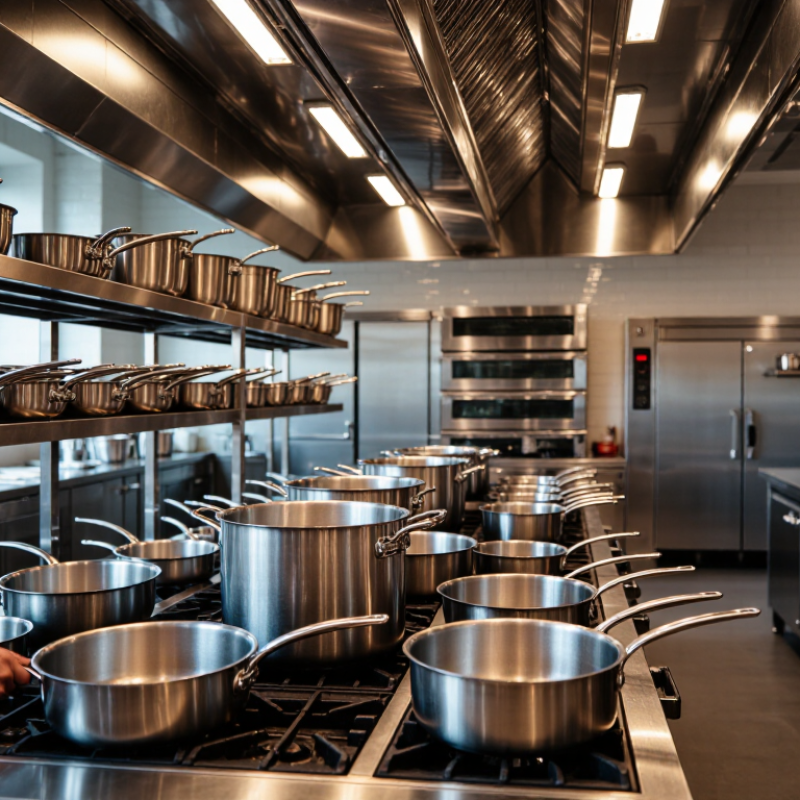
| Cookware and Bakeware | Commercial pots, pans, sheet pans, roasting pans, and food-service utensils | Common constructions include stainless steel, aluminum, and coated or uncoated metal; suitability depends on the cooking method and product design | Check applicable food-contact material rules in the destination market and request documentation for coatings or other food-contact surfaces. | Assess dimensions, thickness, handle construction, heat-source compatibility, cleaning instructions, and suitability for repeated commercial use. |
| Stainless-Steel Fixtures and Storage | Work tables, shelving, cabinets, sinks, and wall-mounted storage | Stainless-steel grades and finishes vary by component; welded construction and adjustable feet are common design features | NSF/ANSI 2 may apply to relevant food equipment. Confirm local requirements for sinks, drainage, and installation. | Request drawings and dimensions; check load capacity, finish, weld quality, edge treatment, assembly method, and packaging for transport. |