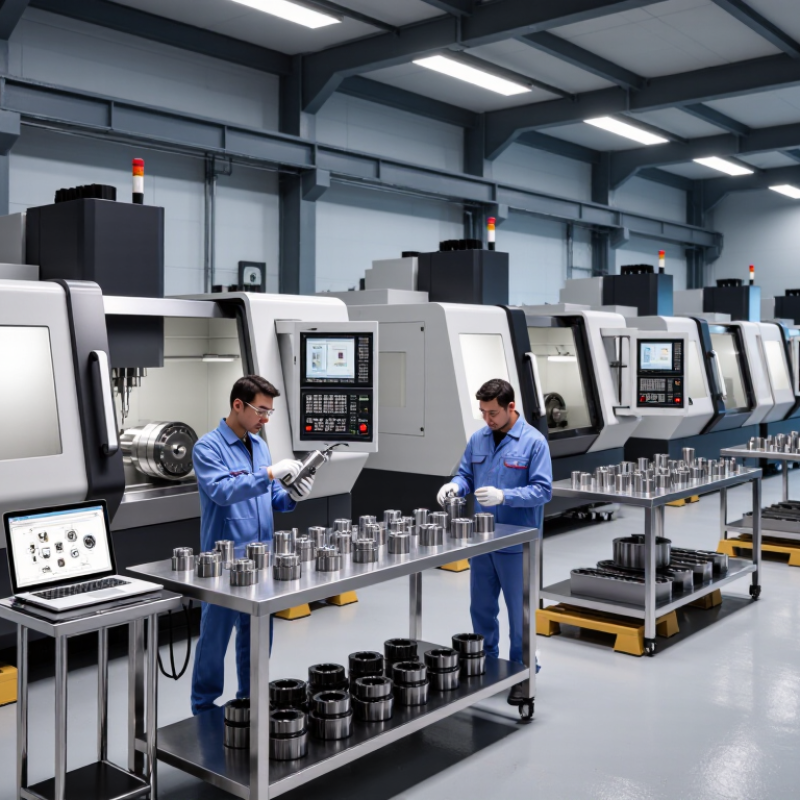
| Machining Capabilities | Whether the supplier’s CNC milling, turning, drilling, and finishing processes suit the part geometry, material, and production volume. | Equipment list, process descriptions, sample parts, and details of any outsourced operations. | Clear process capability information and a practical explanation of how the part will be made. |
| Material Control | Availability and traceability of specified metals, such as aluminum, stainless steel, carbon steel, brass, or titanium. | Material certificates, purchase records, and lot-identification procedures where required. | Materials are checked against the drawing and purchase specification, with traceability appropriate to the project. |
| Quality Management | How the supplier controls inspection, nonconforming parts, corrective actions, and production records. | Quality-system documentation, inspection procedures, and relevant certification records. ISO 9001 is a widely used quality-management standard. | Documented controls and records that match the risks and requirements of the order. |
| Dimensional Inspection | Whether measurement methods and equipment are suitable for the drawing’s tolerances and critical features. | Sample inspection reports, calibration records, and details of available measuring equipment, such as CMMs or gauges. | Inspection results are traceable to drawing revisions, specified tolerances, and measurement methods. |
| Engineering Support | Ability to review drawings, identify manufacturing risks, and suggest design-for-manufacturing improvements without changing requirements without approval. | A sample design review, clarification process, and change-control procedure. | Questions are raised early, recommendations are explained, and approved changes are documented. |
| Surface Finish and Secondary Processes | Whether required treatments—such as anodizing, plating, passivation, or coating—are performed and controlled in-house or by qualified subcontractors. | Process specifications, finish inspection records, and disclosure of outsourced steps. | Finish requirements are defined and verified, with responsibility for subcontracted processes clearly assigned. |
| Production Capacity | Available machine time, staffing, and capacity for both initial samples and repeat production. | Capacity information, production planning details, and a schedule based on the actual order quantity. | Capacity commitments are realistic and account for setup, inspection, and any secondary operations. |
| Lead Time and Delivery | Quoted timing for engineering review, samples, production, inspection, and shipment. | A milestone-based schedule, stated assumptions, and the supplier’s process for communicating delays. | Lead times are clearly defined, progress is communicated, and schedule changes are raised promptly. |
| Cost Transparency | How pricing accounts for material, machining time, setup, tooling, finishing, inspection, packaging, and shipping. | An itemized quotation with stated quantity breaks, validity period, and any minimum-order requirements. | Pricing assumptions and potential cost changes are explained before the order is placed. |
| Communication and Change Control | Responsiveness, technical communication, drawing-revision control, and approval of deviations. | Named points of contact, document-control practices, and examples of deviation or change-approval records. | One controlled drawing revision is used for production, and deviations require documented customer approval. |
| Risk and Compliance Fit | Whether the supplier can meet applicable industry, regulatory, confidentiality, and export requirements for the project. | Relevant certificates, written procedures, and project-specific compliance documentation. | Requirements are confirmed before production, and evidence is provided only where applicable to the part and market. |
| Sample-to-Production Consistency | Whether approved samples, production parts, and inspection criteria are controlled consistently. | First-article inspection results, approved sample records, and a documented production-control plan. | Production follows the approved specification, with changes reviewed and recorded. |