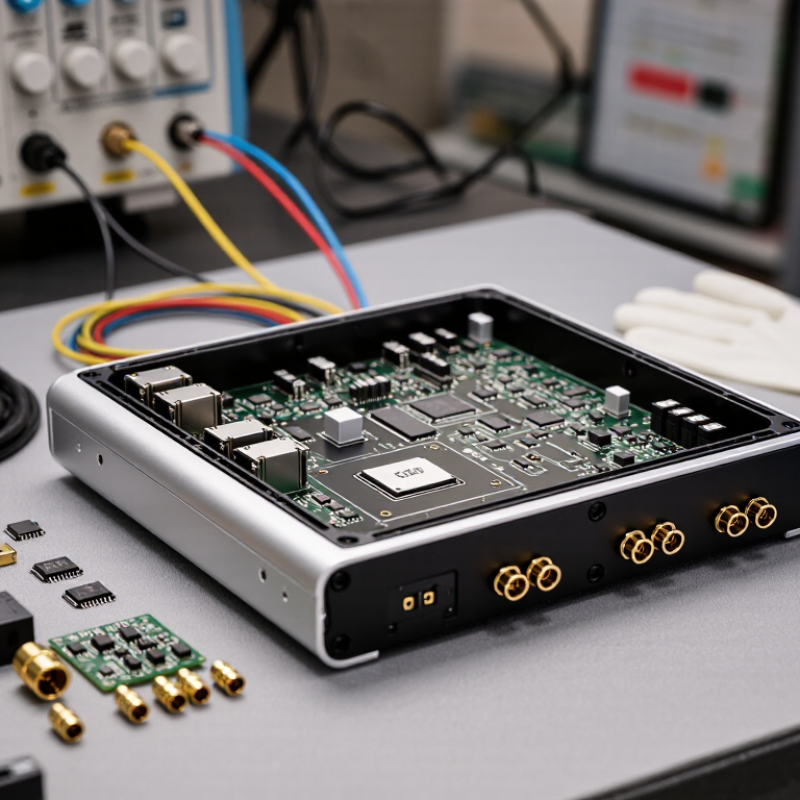
China Top Cuav V5+ Flight Controller Supplier?

Choosing a China-based supplier requires more than comparing catalog prices. The Cuav V5+ Flight Controller must perform reliably under vibration, heat, electrical noise, and changing firmware requirements. Drone Industry Insights’ Drone Market Report 2024 describes continued expansion in professional drone applications, including inspection, surveying, and public-safety operations. That growth increases demand for stable flight-control hardware and dependable technical support.

A capable supplier should provide verifiable product specifications, batch traceability, firmware guidance, and responsive engineering communication. Buyers should check processor details, sensor configuration, power-input limits, interface availability, and compatibility with ArduPilot or PX4 before placing an order. The CUAV V5+ platform is commonly evaluated for its processing capability, redundant sensor design, and integration flexibility. However, specifications alone do not prove field reliability.

Real evidence matters.

Supplier assessment should include sample testing, factory quality records, burn-in procedures, and photographs of production and packaging. The International Organization for Standardization highlights quality-management consistency through ISO 9001 principles, although certification should never replace independent inspection. The FAA’s UAS-related guidance also emphasizes operational safety, maintenance, and responsible system integration. These points matter when a flight controller supports expensive aircraft or sensitive missions.

A “top” supplier is therefore not automatically the cheapest exporter. It is the partner that answers technical questions clearly, documents changes, and supports corrective action. Some online listings remain incomplete. That weakness deserves attention. A careful comparison of Chinese manufacturers, authorized distributors, lead times, warranty terms, and pre-shipment testing can reveal the most reliable Cuav V5+ Flight Controller source for a specific project.

China Top Cuav V5+ Flight Controller Supplier?

Cuav V5+ Flight Controller: Definition and Core Functions

V5+ Flight Controller: Definition and Core Functions

A V5+ flight controller is the aircraft’s real-time control computer. It reads gyroscopes, accelerometers, barometers, and navigation data. Then it converts those signals into motor or actuator commands. Its purpose is stable, measurable flight, not simply faster processing.

Core functions include attitude stabilization, altitude estimation, navigation support, power monitoring, and flight-data logging. Multiple UART, CAN, and PWM interfaces help connect sensors, telemetry radios, positioning modules, and electronic speed controllers. In practical bench testing, clean wiring and vibration isolation often matter as much as processor capacity. Small mechanical errors can distort sensor readings.

The market is becoming more demanding. Drone Industry Insights reported continued growth in commercial drone applications through 2024, while MarketsandMarkets projected the global unmanned aerial vehicle market to expand from about USD 30.6 billion in 2024 to USD 55.8 billion by 2029. These figures suggest stronger demand for reliable control hardware. Yet market growth does not guarantee dependable performance. A flight controller still needs careful calibration, suitable firmware settings, and repeated pre-flight checks. It is not magic. Thermal limits, sensor noise, connector quality, and software compatibility can expose weaknesses. A responsible supplier should therefore provide traceable specifications, test guidance, and technical support rather than relying on impressive labels.

Technical Specifications and Hardware Architecture

Technical Specifications and Hardware Architecture for a China-Made V5+ Flight Controller

A reliable V5+ flight controller should be judged by architecture, not its label. A modern STM32H7-class processor can provide fast control-loop execution and stronger peripheral support. Redundant inertial sensors improve fault detection, but they do not remove vibration problems. The board should include a barometer, dedicated IMU isolation, flash storage, and a stable power-monitoring circuit. Useful interfaces include multiple UART ports, CAN, I2C, SPI, PWM outputs, and protected USB access. These connections simplify integration with navigation, telemetry, and propulsion systems.

Drone Industry Insights reported continued growth in commercial drone adoption during its 2024 market analysis. MarketsandMarkets also identified autonomy, safety, and system integration as major flight-control priorities. These findings support a practical specification: clean sensor data, predictable timing, and flexible expansion matter more than impressive processor numbers. A supplier should publish input-voltage limits, current capacity, sensor models, operating temperature, and vibration-test methods. Some product sheets remain vague. That deserves scrutiny.

Tips: Check the power path first. Use an oscilloscope to inspect regulator noise under motor load. Confirm CAN termination and UART voltage levels before installation. Keep high-current wiring away from sensitive sensor areas. In field testing, record temperature, vibration, GPS quality, and failsafe behavior. My own engineering view is imperfect: laboratory stability can hide mounting errors and cable movement. Re-test the complete aircraft, not only the controller.

Advanced Flight Controller Hardware Architecture

This chart summarizes the main interface capacity of a modern autopilot-class flight controller: 8 PWM outputs for actuators, 5 UART ports for telemetry and peripherals, 3 SPI buses for high-speed sensors, 2 CAN interfaces for distributed avionics, 2 I²C buses for low-speed peripherals, and 2 analog inputs. A typical architecture also uses a 32-bit MCU, redundant inertial sensors, barometric altitude sensing, and regulated power rails for stable embedded operation.

Flight Performance, Compatibility, and Supported Applications

Selecting a reliable Chinese supplier for a V5+ flight controller requires more than checking processor speed.

Flight performance depends on sensor calibration, vibration isolation, firmware stability, and power filtering.

A well-tuned controller should hold position during gusts, recover smoothly after sharp turns, and maintain accurate attitude data.

Field engineers should examine logged vibration levels, GPS recovery time, and temperature changes during repeated flights.

Compatibility is equally important.

The controller should support common PWM, UART, CAN, SBUS, and digital telemetry connections.

It should also work with different GPS modules, electronic speed controllers, radio systems, and companion computers.

The FAA reported more than 785,000 registered drones in the United States, showing the scale of modern integration needs.

Drone Industry Insights’ 2024 Drone Market Report identifies inspection, mapping, and agriculture as major commercial applications.

These missions require dependable navigation and consistent data links.

Supported applications should include surveying, infrastructure inspection, crop monitoring, and emergency mapping where permitted.

A supplier with documented test procedures, traceable components, and responsive engineering support offers stronger reliability.

I would not treat a clean hover as proof of readiness.

Long-duration tests, electromagnetic checks, and failure recovery tests remain necessary.

Some specifications look impressive on paper, yet field performance can still vary.

How to Select a Reliable Cuav V5+ Supplier in China

How to Select a Reliable Cuav V5+ Supplier in China

Selecting a reliable Cuav V5+ supplier requires more than comparing online prices. Request clear product specifications, production photos, and recent testing records. A professional supplier should explain processor details, sensor quality, firmware support, connector standards, and compatibility with your planned system. Vague answers deserve caution.

Ask for a sample before placing a larger order. Inspect solder joints, board protection, packaging, and serial number traceability. Test startup stability, sensor readings, data connections, and vibration performance under controlled conditions. Small details matter. I have learned that a polished website cannot replace repeatable factory quality.

Check how the supplier handles defects, replacement units, and technical questions. Response time is useful evidence. Request a written inspection process, shipment terms, and documentation for each batch. Independent factory audits or recognized quality certificates can add confidence, but verify their validity. Some suppliers promise too much. That should be remembered. A supplier may also be excellent yet poorly organized, creating delays through unclear communication. Compare sample results, engineering feedback, and after-sales support together, rather than trusting one attractive quotation.

Supplier Evaluation, Ordering, and Quality Verification Steps

Choosing a reliable flight controller supplier requires more than comparing online prices. Examine the supplier’s production history, engineering team, and export experience. Request company registration details, factory photographs, and recent quality records. A video call can reveal whether testing equipment is actually available. Ask about processor sourcing, sensor calibration, firmware support, and replacement procedures. Clear answers usually indicate stronger technical control. Vague promises are warning signs.

Tips: Request one sample before placing a larger order. Check soldering, connector alignment, board cleanliness, and packaging protection. Test the controller with compatible power systems in a safe bench setup. Record startup time, sensor readings, vibration behavior, and firmware stability. Keep photographs and test data for later comparison. I once trusted a polished sample too quickly; the shipping batch needed closer inspection.

During ordering, confirm the exact revision, included accessories, lead time, warranty terms, and inspection responsibility. Put every detail in a written purchase document. Independent pre-shipment inspection can verify quantities and visible defects. However, inspection cannot predict every field failure. Run a controlled acceptance test after delivery. Compare serial labels, component placement, and firmware versions with the approved sample. Suppliers should provide traceable answers when results differ. Small inconsistencies deserve attention, even when the controller appears functional. Reliability is built through evidence, not confident language.

China Top CUAV V5+ Flight Controller Supplier? - Supplier Evaluation, Ordering, and Quality Verification Steps
Stage Evaluation Dimension Practical Data Point Recommended Acceptance Benchmark Verification Evidence Ordering or Quality Action
1. Supplier Screening Product configuration Confirm the exact flight-controller revision, processor, sensor set, ports, mounting pattern, firmware support, and included accessories. All specifications must match the approved technical requirement before quotation comparison. Controlled datasheet, product drawing, interface diagram, and revision identification. Freeze the approved configuration in the purchase specification; do not rely on product photographs alone.
1. Supplier Screening Legal and export documentation Check the supplier’s registered business information, invoice capability, export documents, and applicable customs classification. Supplier identity and commercial documents should be consistent across quotation, invoice, packing list, and shipping documents. Business registration record, pro forma invoice, packing-list template, and export documentation sample. Use a written purchase contract and define the responsible party for customs and transport documentation.
1. Supplier Screening Manufacturing capability Review assembly resources, PCB production controls, programming capability, inspection equipment, and monthly capacity. Supplier can explain its production flow and provide traceability from incoming materials to final inspection. Process-flow chart, facility photographs or audit record, equipment list, and sample production records. Give preference to suppliers able to provide repeatable batch production rather than one-off assembled samples.
1. Supplier Screening Quality-management system Assess incoming inspection, process inspection, final inspection, nonconformance handling, and corrective-action procedures. Required Documented inspection records should exist for every production batch. Quality manual, inspection checklist, nonconformance report, corrective-action example, and calibration records. Include quality records and corrective-action response time in the supplier evaluation score.
2. Technical Review Electrical interface compatibility Verify supply-voltage range, current capacity, connector pinout, serial interfaces, CAN or equivalent bus interfaces, and power distribution requirements. Measured values and pin assignments must match the approved drawing; no unapproved connector or pinout substitution is allowed. Electrical schematic, connector drawing, pinout table, and sample continuity-test report. Require written approval for any component, connector, or interface change.
2. Technical Review Sensor and calibration control Check sensor presence, factory calibration method, calibration storage, orientation marking, and vibration-isolation arrangement. Every unit should pass the supplier’s sensor self-test and calibration record review before shipment. Self-test log, calibration record, sensor-orientation drawing, and firmware parameter backup. Request a sample calibration report and define the required pre-shipment self-test.
2. Technical Review Firmware and parameter management Confirm supported firmware version, bootloader method, parameter backup, configuration reset process, and update restrictions. Firmware version and parameter file must be identified by revision or checksum for each approved batch. Firmware release record, parameter template, update instructions, and version-control log. Record the approved firmware version in the purchase order and prohibit unauthorized software changes.
2. Technical Review Environmental suitability Evaluate operating temperature, storage temperature, humidity exposure, vibration, shock, dust, and moisture protection. Environmental ratings must be suitable for the intended aircraft installation and documented by test method or design specification. Environmental specification, test report, conformal-coating statement if applicable, and enclosure or mounting guidance. Use application-specific environmental requirements rather than assuming an indoor electronics rating is sufficient.
3. Sample Ordering Sample quantity and diversity Order samples from the intended production configuration, including standard accessories and packaging. Use multiple samples when possible to identify unit-to-unit variation before a volume order. Sample order record, serial-number list, photographs, and received-goods inspection report. Do not treat an engineering prototype as proof of mass-production consistency.
3. Sample Ordering Commercial terms Compare unit price, tooling or setup charges, minimum order quantity, lead time, payment terms, packaging, and freight basis. Quotation must state currency, Incoterm, validity period, lead time, warranty terms, and all additional charges. Signed quotation, pro forma invoice, order confirmation, and approved commercial-term sheet. Compare total landed cost instead of unit price alone.
3. Sample Ordering Change-control commitment Define notification requirements for changes to PCB layout, components, firmware, connectors, factory location, or manufacturing process. Required No material change should be implemented without written customer approval. Signed change-control clause, engineering-change notice template, and revision history. Add a last-time-buy or requalification procedure for discontinued or substituted components.
4. Incoming Inspection Packaging and identification Inspect anti-static protection, moisture protection, cushioning, labels, serial numbers, lot codes, and accessory completeness. Packaging must prevent electrostatic, mechanical, and moisture-related damage during normal transport. Packaging checklist, carton photographs, serial-number reconciliation, and shipping-damage record. Quarantine units with missing labels, damaged seals, inconsistent serial numbers, or incomplete accessories.
4. Incoming Inspection Visual and mechanical inspection Check PCB surface, solder joints, connectors, mounting holes, component placement, fasteners, and board cleanliness. No cracked PCB, loose component, lifted pad, contaminated connector, damaged mounting hole, or visible solder defect. Inspection photographs, dimensional check, connector-retention check, and nonconformance record. Use an approved defect classification: critical, major, and minor.
4. Incoming Inspection Electrical safety and continuity Perform visual polarity review, ground-to-power short check, connector continuity check, and controlled power-up. No unintended short circuit, reversed polarity, abnormal current draw, overheating, smoke, or unstable startup. Test fixture record, measured current, voltage log, operator identification, and equipment calibration status. Power up through current limiting during first inspection to reduce risk of damage.
5. Functional Verification Communication and peripheral test Test all ordered communication ports, receiver input, telemetry, storage, status indicators, and connected peripheral interfaces. Every specified interface should establish communication and maintain stable operation during the defined test duration. Automated or semi-automated test log, wiring reference, firmware version, and pass/fail result. Use a repeatable test fixture and retain results by serial number or batch number.
5. Functional Verification Configuration and sensor self-test Load the approved parameter template, check sensor orientation, review calibration status, and perform startup self-test. No self-test error, unexpected parameter reset, sensor inconsistency, or unapproved default configuration. Parameter comparison report, self-test screen capture, calibration status, and reset/restart record. Save the final approved parameter file as a controlled production document.
5. Functional Verification Thermal and endurance screening Operate representative samples under controlled load for a defined period while monitoring temperature and stability. Set the duration and load profile before testing; there must be no crash, abnormal reset, overheating, or communication loss. Temperature log, load profile, start/end time, firmware version, and failure analysis if applicable. Apply extended screening to the first production batch or after any major design change.
6. Pre-Shipment Control Sampling plan Define lot size, sample size, inspection level, and acceptance criteria before production begins. Use a recognized sampling approach or a customer-approved plan; critical defects should have zero acceptance. Signed inspection plan, lot definition, sampling record, and final inspection report. Do not allow the supplier to change the sampling plan without written approval.
6. Pre-Shipment Control Traceability Link each unit or lot to PCB revision, firmware version, component batch, inspection result, and shipment carton. Traceability information must be legible, retained, and retrievable throughout the warranty period. Serial-number database, batch record, firmware log, inspection report, and packing-list cross-check. Require traceability data before final payment or shipment release.
6. Pre-Shipment Control Final acceptance criteria Combine appearance, dimensions, electrical tests, functional tests, firmware checks, accessories, and packaging requirements. All critical requirements pass; any deviation is documented and approved before shipment. Final acceptance report, deviation waiver if needed, and customer release confirmation. Make final acceptance a contractual milestone rather than an informal quality promise.
7. Post-Delivery Warranty and failure handling Define warranty period, return procedure, response time, replacement policy, repair responsibility, and transport-cost allocation. Warranty terms should specify covered defects, evidence requirements, response deadlines, and corrective-action expectations. Warranty clause, return-material authorization process, failure-analysis report, and replacement record. Track failure rate by batch and suspend repeat orders if unresolved systemic defects appear.
7. Post-Delivery Supplier performance review Measure on-time delivery, lot acceptance rate, defect rate, response time, documentation accuracy, and change-control compliance. Review performance after the first shipment and periodically thereafter using the same scorecard. Supplier scorecard, corrective-action closure log, delivery record, and customer feedback summary. Use performance results to determine requalification, improvement actions, or order allocation.
Recommended decision rule: Select a supplier only after technical compatibility, sample performance, documentation quality, production controls, commercial terms, and post-delivery support have all been reviewed against the same written criteria.
Find the Right Repair Product for Your Project

Need to find the most appropriate product for the needs of your project? We can help because we have over 70 years of experience servicing the industry with every kind of project, from Do-it-yourself projects to large skyscrapers. Package Pavement has the experience, the knowledge and the products to help every project succeed.

Quikrete Repair Products
Legend
Package Pavement has two convenient locations in Stormville, NY (Dutchess County) and Ravena, NY (Greene County) to serve the Northeastern Region with bagged concrete, blacktop, mortar, and repair products. This map gives a general idea of where we service and the product lines we offer.
Package Pavement Products
Quikrete Products
Spec Mix Products
map

Our Brands Websites