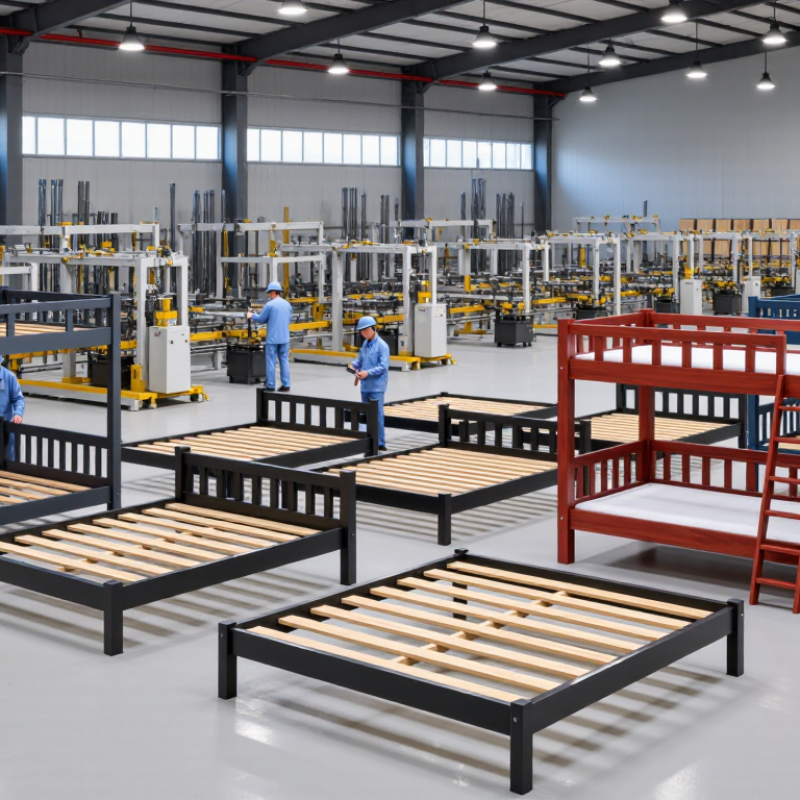
| Twin-over-Twin Bunk Bed | Approximately 75 × 38 in
(190 × 97 cm) | Steel, solid wood, engineered wood, or mixed materials | Two single-size sleeping platforms arranged vertically, usually connected by guardrails, a ladder, and support slats. | Children’s bedrooms, dormitories, hostels, camps, and compact guest rooms. | Efficient use of floor space and a simple, widely compatible layout. | Check upper-bunk weight capacity, guardrail height, ladder security, and ceiling clearance. |
| Twin-over-Full Bunk Bed | Upper: approximately 75 × 38 in
Lower: approximately 75 × 54 in | Powder-coated steel, solid wood, plywood, or engineered wood | A narrower upper bunk is positioned above a wider lower bunk, with reinforced lower-bed supports. | Shared bedrooms, family homes, vacation rentals, and rooms used by children of different ages. | Provides a larger lower sleeping surface while retaining vertical space efficiency. | The wider lower frame requires stronger cross-supports and more floor clearance than a twin-over-twin model. |
| Full-over-Full Bunk Bed | Approximately 75 × 54 in
(190 × 137 cm) | Steel or solid wood, often with reinforced joints and center supports | Two full-size sleeping platforms stacked vertically, commonly supplied with full-length guardrails on the upper level. | Teen bedrooms, guest accommodations, rental properties, and shared rooms requiring generous sleeping space. | Offers more width for each sleeper than twin-size configurations. | It is heavier and wider; room dimensions, stair or doorway access, and floor loading should be reviewed. |
| Triple Bunk Bed | Usually twin-size; some designs combine twin and full sizes | Steel tubing, solid wood, or reinforced composite panels | Three sleeping levels or two stacked beds with an additional pull-out or integrated lower berth. | Large families, dormitories, camps, worker accommodations, and high-occupancy rooms. | Maximizes sleeping capacity within a limited floor area. | Requires careful assessment of ceiling height, access to each level, guardrails, ventilation, and total load capacity. |
| Loft Bunk Bed | Commonly twin-size; full-size versions are also available | Powder-coated steel, solid wood, or engineered wood | The elevated bed leaves open space underneath for a desk, seating area, storage, or an additional bed. | Children’s rooms, student housing, studio apartments, and compact bedrooms. | Creates a multifunctional zone without substantially increasing the bed’s footprint. | Verify the working height beneath the loft, upper guardrail coverage, ladder placement, and stability of the base. |
| L-Shaped Bunk Bed | Usually twin-over-twin or twin-over-full | Solid wood, engineered wood, steel, or hybrid construction | Two sleeping platforms meet at a right angle, often creating storage space or an open corner below the upper bunk. | Shared children’s rooms, corner installations, and rooms needing additional storage options. | Offers improved separation between sleepers and can use corner space effectively. | Its footprint is wider than a straight bunk bed; confirm the orientation, ladder position, and available wall space. |
| Convertible Bunk Bed | Typically twin-over-twin or twin-over-full | Solid wood, engineered wood, steel, or a combination of materials | Designed to separate into two independent beds or convert between bunk and non-bunk configurations. | Growing families, guest rooms, rental properties, and flexible-use bedrooms. | Provides long-term adaptability as room needs or user ages change. | Conversion hardware, connector alignment, and independent-bed stability should be checked before purchase. |
| Bunk Bed with Trundle | Upper and lower beds are commonly twin-size; trundle is usually twin-size | Steel, solid wood, engineered wood, or mixed construction | Includes a low-profile pull-out bed beneath the lower bunk, sometimes with drawers or storage compartments. | Children’s rooms, sleepovers, guest rooms, and compact hospitality spaces. | Adds an occasional sleeping surface while keeping the trundle concealed when not in use. | Allow clearance for the pull-out mechanism and confirm that the floor is level enough for smooth operation. |
| Metal Bunk Bed | Most commonly twin-size; full-size options are also produced | Powder-coated steel or other finished metal tubing | Welded or bolted metal rails, metal slats, guardrails, and ladder components. | Dormitories, hostels, military-style accommodation, camps, and institutional housing. | Generally durable, easy to clean, and suitable for high-use environments. | Inspect weld quality, coating durability, joint fasteners, noise control, corrosion resistance, and load ratings. |
| Wooden Bunk Bed | Commonly twin, twin-over-full, or full-size combinations | Solid pine, rubberwood, beech, plywood, or engineered wood | Wooden posts, rails, slats, guardrails, and ladders with visible or concealed fastening systems. | Residential bedrooms, boutique accommodation, vacation homes, and children’s furniture collections. | Warm appearance, broad design flexibility, and compatibility with painted or stained finishes. | Review wood moisture control, joint strength, surface finish, splinter prevention, and long-term fastener maintenance. |