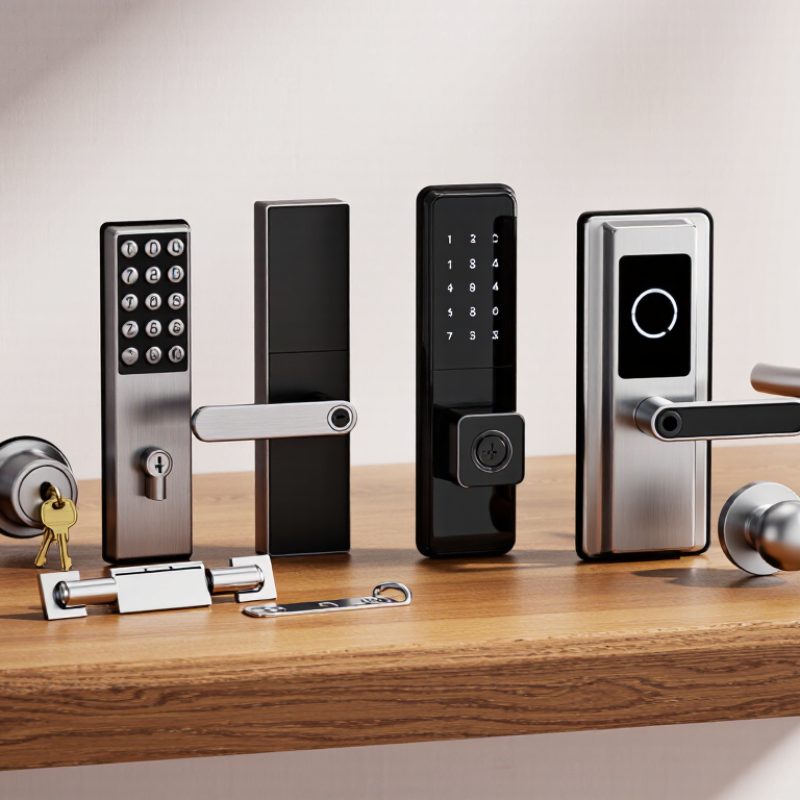
| Privacy Door Knob | A round knob operates a spring latch, while an interior button or thumb turn locks the door. | Moderate | Basic; intended mainly for privacy rather than forced-entry resistance. | A small outside pinhole or emergency-release slot, depending on the design. | Easy replacement when the door already has a standard bore. | Affordable, familiar, and widely available in standard door preparations. | Can be difficult to operate with wet or limited-mobility hands; not designed as a high-security lock. | Interior bedrooms where simple privacy is the main requirement. |
| Privacy Door Lever | A lever retracts the latch and a push button or thumb turn provides interior locking. | Moderate | Basic; generally comparable to a privacy knob when used with the same latch type. | An exterior pinhole, slot, or emergency-release turn. | Easy to moderate, depending on the existing door holes and latch. | Easier to operate than a knob and convenient for children or users with reduced grip strength. | The lever can be pressed accidentally by clothing or objects; it provides limited resistance to forced entry. | Family bedrooms, guest rooms, and accessible residential interiors. |
| Keyed Entry Knob or Lever | A keyed cylinder controls the latch from outside, while the inside usually has a thumb turn or button. | High | Moderate; stronger privacy than a passage lock, but the latch alone is not equivalent to a deadbolt. | A spare key or the interior thumb turn; emergency access depends on the specific configuration. | Moderate; correct backset, bore size, and door thickness must be confirmed. | Provides controlled key access and can be rekeyed or replaced without changing the entire door. | Keys can be lost, and the latch may offer less forced-entry protection than a deadbolt. | Bedrooms requiring keyed access, such as shared homes or rental properties. |
| Single-Cylinder Deadbolt | A solid bolt extends into the strike plate; it uses a key outside and a thumb turn inside. | High | High for a residential lock when correctly installed with a reinforced strike and long screws. | The interior thumb turn normally allows immediate exit without a key. | Moderate; requires accurate drilling and alignment with the strike. | Offers stronger resistance to common latch attacks than a spring-latch lock. | May be unnecessary for an interior bedroom and can delay emergency access if the key is unavailable. | Bedrooms opening directly outdoors or rooms where stronger physical security is needed. |
| Mortise Lock | A lock case fits inside a pocket cut into the door and commonly combines a latch, deadbolt, and handles. | High | High when properly fitted; the integrated case can provide a robust locking arrangement. | Usually an interior thumb turn, lever, or key depending on the configuration. | Difficult; it normally requires specialist door preparation and careful alignment. | Combines several functions in one compact case and can provide a solid, durable feel. | Higher installation cost and may not fit a door prepared for a standard cylindrical lock. | Premium residential doors, traditional interiors, and heavy-use bedrooms. |
| Cylindrical Lever Lockset | A tubular or cylindrical lock body sits inside the door, with a lever operating the spring latch. | Varies by function; privacy and keyed versions are common. | Moderate to high, depending on the latch, cylinder, strike, and tested door-hardware grade. | Privacy models often use an exterior release; keyed models require a key or interior turn. | Easy to moderate for compatible pre-bored doors. | Available in passage, privacy, and keyed functions with convenient lever operation. | Compatibility varies by door thickness, backset, bore size, and latch dimensions. | Bedrooms needing a practical lever set with a choice of locking functions. |
| Electronic Keypad Lock | A numeric code operates a motorized or electronically controlled latch or deadbolt. | High | Moderate to high; security depends on the mechanical hardware, code management, and installation. | Many models include a concealed mechanical key, external power contact, or interior manual release. | Moderate; alignment and battery access must be considered. | Removes the need to carry a key and allows codes to be changed when needed. | Requires batteries, and forgotten or shared codes can reduce security. | Guest rooms, home offices, and bedrooms needing keyless entry without a network connection. |
| Smart Connected Lock | A motorized lock is controlled by an app, wireless connection, keypad, physical key, or a combination of these. | High | Moderate to high; cybersecurity, account protection, mechanical design, and network settings all matter. | A physical key, keypad, interior thumb turn, or emergency power method may be provided. | Moderate to difficult; door alignment, batteries, and connectivity need attention. | Supports temporary access, activity records, remote control, and integration with some home systems. | Higher cost, software dependence, battery maintenance, and possible privacy or connectivity concerns. | Bedrooms in connected homes or properties that require flexible access management. |
| Pocket Door Lock | A recessed pull and hook-shaped latch allow a sliding pocket door to close and lock within the wall cavity. | Moderate | Basic to moderate; primarily designed for privacy and compatibility with sliding doors. | Usually an exterior emergency-release slot or turn. | Easy when replacing an existing pocket-door lock; difficult if the door has not been prepared. | Flush design saves space and avoids a swinging door handle. | Not suitable for standard hinged doors and generally provides less physical security than a deadbolt. | Bedrooms with pocket doors where space efficiency is important. |
| Surface Bolt or Slide Bolt | A manually operated bolt slides into a surface-mounted keeper on the door frame. | Moderate | Low to moderate; it is mainly a supplementary latch rather than a complete high-security lock. | Normally operated directly from the interior; exterior emergency access may be limited. | Easy, provided the door and frame are strong enough for the fasteners. | Simple construction, low cost, and useful as an additional privacy measure. | Can create an emergency egress concern and is not ideal as the only lock on a bedroom door. | Private rooms where a basic interior bolt is acceptable and emergency access has been considered. |