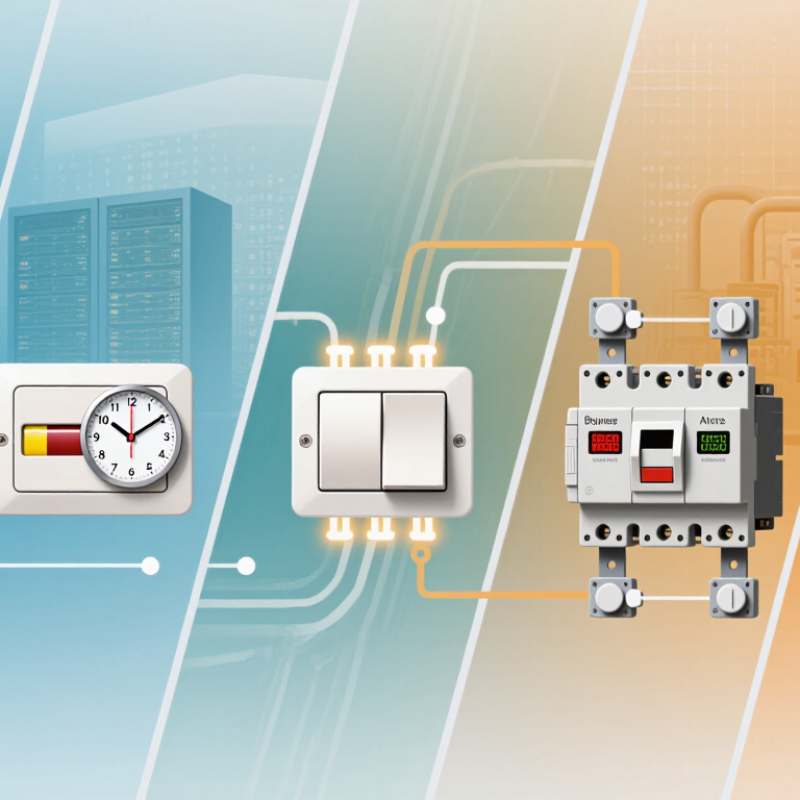
Open-transition ATS
(break-before-make) | Disconnects the active source before connecting the alternate source. The load experiences an interruption during transfer. | Commercial buildings, standby generators, and general loads that can tolerate a brief outage. | Simple, widely used operating sequence; prevents the two sources from being connected in parallel during transfer. | Check whether sensitive equipment needs UPS support or another ride-through solution. Transfer time depends on the equipment and source availability. |
| Delayed-transition ATS | Uses an intentional neutral or open interval between disconnecting one source and connecting the other. | Loads with motors or other inductive equipment where residual voltage should decay before reconnection. | Provides time for residual voltage to diminish and can help reduce electrical or mechanical stress during transfer. | Confirm that the load can tolerate the added interruption and that the delay settings suit the equipment and operating sequence. |
Closed-transition ATS
(make-before-break) | Connects the alternate source before disconnecting the preferred source, briefly paralleling them during transfer. | Facilities seeking a transfer with minimal interruption, where the power sources and utility arrangements support parallel operation. | Can transfer loads with little or no interruption when properly applied and the sources are suitable for paralleling. | Requires compatible source voltage, frequency, and phase conditions. Utility approval, protection, and interconnection requirements may apply. |
| Bypass-isolation ATS | Combines automatic transfer with a bypass path that can supply the load while the ATS is isolated for inspection or maintenance. | Critical facilities that need a means of maintaining load power during ATS servicing. | Supports maintenance or replacement of the transfer section without necessarily interrupting the load, depending on the design and procedure. | Review the bypass sequence, interlocks, maintenance procedure, available space, and whether the configuration meets the facility’s continuity requirements. |
| Static transfer switch (STS) | Uses power electronics to transfer a load between two sources rather than relying solely on mechanically operated contacts. | Critical electronic loads, such as certain data-processing or control systems, supplied by suitably coordinated sources. | Designed for rapid source transfer and frequent operation when the sources and load are compatible. | Check source synchronization limits, load characteristics, fault-current coordination, heat dissipation, and the manufacturer’s transfer specifications. |
| Service-entrance-rated ATS | A service-entrance rating describes the switch’s role and construction; its transfer sequence may be open, delayed, or another supported mode. | Installations where the transfer equipment is used at the service entrance, subject to applicable codes and listing requirements. | Can combine transfer functions with service-entrance provisions when specifically listed and configured for that use. | Verify the equipment’s listing, service disconnect and overcurrent-protection arrangement, system grounding, and local code requirements. |