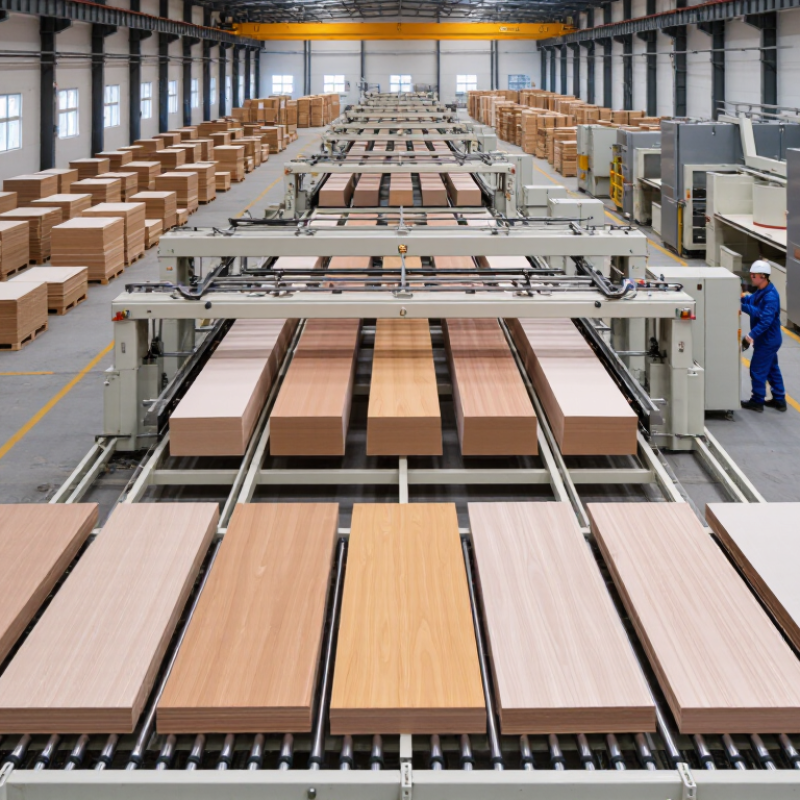
| 1 | Panel format | 1220 × 2440 mm (approximately 4 × 8 ft) is a common commercial panel format, not a universal requirement. | Confirm actual length, width, squareness, and available made-to-order sizes. |
| 2 | Panel thickness | Thickness is product-specific; plywood is manufactured in multiple nominal thicknesses rather than one universal veneer-plywood thickness. | Compare declared nominal and actual thickness, measurement method, and applicable tolerance. |
| 3 | Intended service conditions | EN 636 classifies plywood for use in dry conditions (636-1), humid conditions (636-2), and exterior conditions (636-3). | Request the declared EN 636 class and confirm it suits the intended exposure. |
| 4 | Bonding quality | EN 314-2 defines bond-quality requirements for plywood in three classes corresponding to dry, humid, and exterior service conditions. | Check the stated bond class and the test report for the exact panel construction. |
| 5 | European formaldehyde emissions | The E1 limit commonly referenced for wood-based panels under EN 13986 is 0.124 mg/m³, determined using the EN 717-1 chamber method. | Ask for the applicable test method, test date, product scope, and emission result. |
| 6 | U.S. formaldehyde emissions | The U.S. EPA TSCA Title VI limit for hardwood plywood is 0.05 ppm. | For U.S. sales, verify applicable certification, labeling, and documentation for the specific product. |
| 7 | Face veneer appearance | EN 635-2 provides appearance classifications for hardwood plywood faces, including grades E, I, II, III, and IV. | Request the face and back grades, grading standard, and agreed visual reference samples. |
| 8 | Construction-product documentation | EN 13986 covers wood-based panels for use in construction and specifies relevant characteristics and conformity requirements. | Where applicable, check the declaration of performance and product marking for the intended market and use. |
| 9 | Dimensional tolerances | EN 315 specifies tolerances for dimensions and shape of plywood; permitted values depend on the relevant product requirements. | Compare declared tolerances for thickness, length, width, straightness, and squareness. |
| 10 | Traceability and test evidence | Standards and regulatory declarations apply to defined products and test conditions; results should not be assumed to cover every product from a supplier. | Match each certificate or test report to the product code, veneer face, core, adhesive, thickness, and production period. |