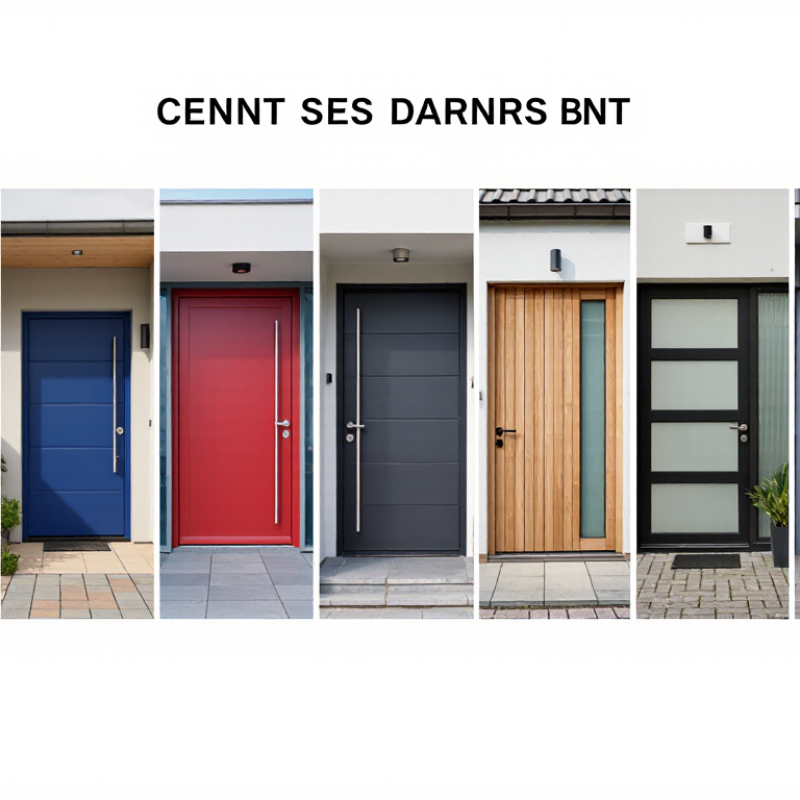
| 1 | Minimalist Flush Panel | A smooth, uninterrupted face creates a clean modern entrance; available with or without glazing. | Choose a well-sealed, insulated assembly suited to local temperature and weather conditions. | A solid slab can limit visibility, but a strong frame, quality lock, and secure installation are essential. | High when fitted without glass; lower with clear glazing. | Homes seeking a simple, understated entrance. |
| 2 | Vertical-Slat or Ribbed Door | Vertical lines add texture and visual height; the slats may be decorative or part of the door surface. | For exposed locations, use materials and finishes rated for local moisture, sun, and temperature changes. | Confirm that decorative elements do not weaken the door or interfere with the lock and frame. | Usually high when the door has no glass. | Modern façades that need texture without added glazing. |
| 3 | Door with Narrow Vertical Glass | A slim glazed panel brings daylight into the entry while keeping the overall look restrained. | Use suitable insulated glazing and weather seals; consider solar exposure and heat transfer. | For glass near the lock, consider security glazing and a layout that makes the lock difficult to reach from outside. | Frosted or textured glass offers more privacy than clear glass. | Entryways that need daylight with limited visual openness. |
| 4 | Door with Transom | A glazed panel above the door adds light and emphasizes ceiling height. | Ensure the door and transom are properly flashed and sealed against rain and drafts. | Specify secure glazing and a securely fixed frame for the transom area. | Clear transoms may reveal interior light or movement; obscured glass can reduce this. | Tall entrances and homes that benefit from natural light above eye level. |
| 5 | Door with Sidelights | One or two glazed panels beside the door create a brighter, more open entrance. | Check the full assembly for insulation and air leakage, including the junctions between panels. | Use appropriate secure glazing, strong framing, and carefully positioned locks. | Privacy depends on glass type, window coverings, and the entry’s sightlines. | Wider entrances where daylight and a welcoming appearance are priorities. |
| 6 | Warm-Toned Wood Door | Natural grain adds warmth and contrast to contemporary materials such as stone, concrete, or metal. | Wood can respond to moisture and temperature changes; choose suitable construction and maintain its protective finish. | Security depends on the door’s construction, frame, hardware, and installation rather than wood appearance alone. | High when designed as a solid, unglazed door. | Modern homes seeking a natural focal point at the entrance. |
| 7 | Steel-Look Modern Door | Clean lines and slim-framed glazing create an industrial or contemporary look. | Check thermal performance, condensation control, and corrosion protection for the local climate. | Frame strength and glazing specification matter; a slim appearance alone does not indicate security performance. | Clear glass offers little privacy; choose obscured glazing or suitable coverings where needed. | Homes that want a crisp, architectural entrance and generous daylight. |
| 8 | Fiberglass Door with Modern Panels | Can provide a smooth, wood-grain, or paneled appearance in a range of contemporary designs. | Many models are designed to resist common weather-related wear, but ratings and care requirements vary by product. | Look for a complete assembly with a secure frame and compatible, properly installed locking hardware. | Solid versions provide strong visual privacy; glazing options change the level of privacy. | Owners looking for design flexibility and comparatively low routine upkeep. |
| 9 | Double Entry Doors | Two matching door leaves create a balanced, formal entrance and a wider opening. | More joints and meeting edges require careful weatherstripping and installation. | Both leaves need secure, well-fitted locking and fastening; pay particular attention to the inactive leaf. | High with solid leaves; glazing and sidelights may reduce privacy. | Large façades or entrances where a wide opening is useful. |
| 10 | Pivot-Style Door | A large, dramatic slab rotates on pivot hardware and can create a distinctive modern entrance. | Large doors can be more exposed to air leakage and weather; confirm suitable seals and local performance ratings. | Use hardware and locking designed for the door’s size and weight, and verify that the complete assembly meets local requirements. | High with a solid slab; glazing changes sightlines and privacy. | Architectural entrances where scale and a statement-making design are priorities. |