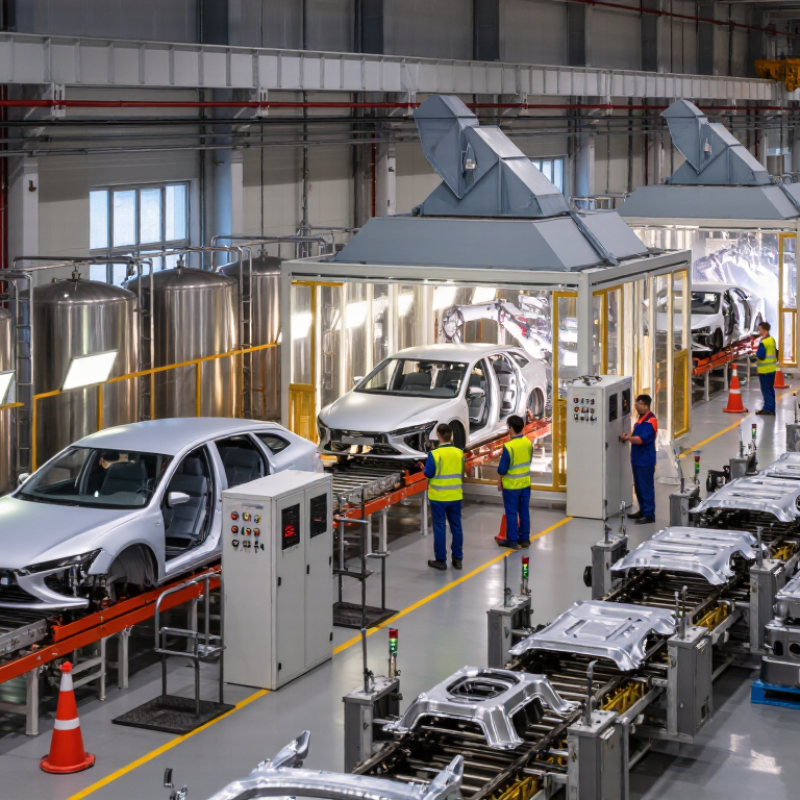
China’s metal finishing industry serves automotive, aerospace, electronics, machinery, and construction supply chains. Its manufacturers work with processes such as electroplating, anodizing, polishing, and protective coating. Each process changes how a component handles corrosion, wear, appearance, or electrical contact. A plated connector may need uniform coverage inside narrow recesses. A visible aluminum panel may require an even anodized finish. Details matter.
Grand View Research estimated the global metal finishing market at USD 104.7 billion in 2023, with projected growth of 4.6% annually from 2024 to 2030. These figures provide useful context, not a guarantee of individual suppliers’ performance. Buyers should also review process capabilities, quality controls, material experience, and consistency between production batches. The report’s broad market scope may not match every company’s definition of “metal finishing.” That distinction deserves attention.
This China Top 10 Metal Surface Finishing Manufacturers guide is intended as a starting point for comparing suppliers, not a substitute for technical audits or sample testing. AESF Fellow Frank Altmayer is a recognized finishing-industry educator; his practical guidance can be summarized as choosing a finish for its service conditions, not appearance alone. Ask how a supplier controls coating thickness, adhesion, and surface defects. Request evidence. A polished sample can look convincing, while long-term performance remains unproven.
China’s metal surface finishing industry supports machinery, construction, electronics, transport, and household hardware production. Its services range from cleaning and polishing to electroplating, anodizing, powder coating, and thermal spraying. The right process depends on the base metal, part geometry, exposure conditions, and required appearance. A small bracket and a large hydraulic component rarely need identical preparation. Details matter.
In practice, shops typically remove oil, scale, and residues before applying a finish. Operators monitor bath chemistry, temperature, coating thickness, and rinse quality, since small variations can affect adhesion and corrosion resistance. For powder coating, grounded parts and controlled curing help create an even film across edges and recesses. Inspection may include visual checks, thickness readings, adhesion tests, and salt-spray testing when specifications require it. Results vary.
The market includes large integrated plants and smaller specialist workshops, serving both high-volume orders and custom batches. Capacity, process consistency, documentation, and communication can differ substantially between suppliers. Buyers should clarify substrate grades, finish standards, inspection methods, packaging needs, and acceptable defect limits before sampling. Environmental management also shapes operations, particularly where wet chemical processes require wastewater treatment and careful handling. That part is not always visible. A realistic assessment should examine sample parts and production records, rather than rely on a polished catalogue alone. Even a good sample cannot guarantee every later batch; ongoing checks remain necessary.