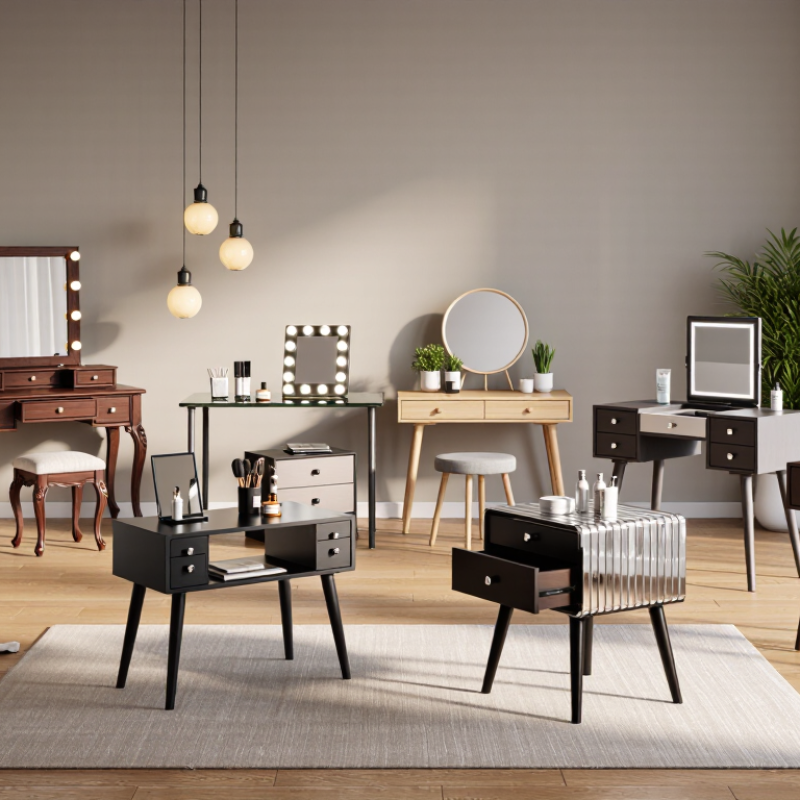
| 1. Classic Vanity | A freestanding table with a central mirror, a broad top, and balanced drawer or leg details. | Usually several drawers for cosmetics, brushes, and accessories. | Bedrooms with enough floor space for a dedicated grooming area. | The generous surface and integrated mirror support seated grooming and keep everyday items close at hand. |
| 2. Compact Bedroom Vanity | A narrow, small-footprint table, often with a simple mirror and a lightweight stool. | One or two shallow drawers, sometimes supplemented by small organizers. | Small bedrooms, apartments, or occasional-use dressing areas. | Its reduced depth preserves walking space, though the limited surface calls for careful organization. |
| 3. Wall-Mounted Vanity | A table or shelf fixed to the wall, typically with a separate wall mirror and no floor-standing legs. | Storage varies; some models have a slim drawer, while others rely on wall shelves. | Rooms where open floor space and a visually light appearance are priorities. | The open area beneath makes floor cleaning easier and allows the table height to be planned for the user. |
| 4. Floating Drawer Vanity | A wall-fixed drawer unit with a clear space below and a mirror mounted above it. | Enclosed drawer storage keeps small items out of sight. | Modern rooms and narrow spaces where a streamlined look is preferred. | The drawer provides concealed storage without a full set of legs, but wall support and installation must suit the load. |
| 5. Dressing Table with Flip-Top Mirror | A tabletop mirror that folds down into or over the surface when not in use. | Often includes compartments beneath the hinged top, with additional drawers in some versions. | Multipurpose bedrooms where the surface may also be used for other tasks. | Closing the mirror can reclaim the tabletop, while the concealed compartments help organize small grooming items. |
| 6. Dressing Table with Tri-Fold Mirror | A central mirror with two side panels that open outward. | Storage is commonly provided by drawers beneath the table surface. | Users who want to view their appearance from more than one angle. | The side panels broaden the viewing angle; the opened panels need enough clearance from nearby walls or objects. |
| 7. Corner Dressing Table | An angled or L-shaped tabletop designed to fit into a room corner. | May use corner drawers, small cabinets, or shelves above the work surface. | Bedrooms with an unused corner or a layout that limits placement along a full wall. | Its shape makes use of corner space, but the mirror and seat should be positioned so the user can sit comfortably. |
| 8. Dressing Table with Integrated Lighting | A vanity mirror paired with built-in or attached lights around its edge or sides. | Storage depends on the table and may include drawers or open compartments. | Grooming areas where consistent, close-up illumination is useful. | Purposeful lighting can make detail work easier; placement and brightness should avoid glare and harsh shadows. |
| 9. Dressing Table with Open Shelving | A tabletop paired with visible shelves, cubbies, or side compartments instead of relying solely on drawers. | Open storage keeps frequently used products accessible and easy to see. | Users who prefer quick access and have a manageable number of regularly used items. | Visible storage makes items easy to reach but can look cluttered unless products are arranged neatly. |
| 10. Dressing Table with Stool Storage | A table designed to pair with a stool that can tuck fully or partly beneath the top. | The stool may be hollow or lift-top; table drawers provide additional storage when included. | Rooms where keeping the seat out of the way is important. | A tucked-in stool reduces obstruction when the table is not in use; seat height should allow a comfortable position at the mirror. |