| 1 | Retail shopfronts in shopping centres | Shop entrances facing malls or shared public corridors | A shutter can close an opening to help limit fire spread between a shop and an adjoining area. | Confirm that the complete shutter assembly is tested and approved for the required opening and fire-protection purpose. |
| 2 | Warehouse compartment openings | Large openings between storage areas or fire compartments | A motorised shutter can close across a wide opening when activated by its approved release or control system. | Check the tested size limits, operating method, installation details, and required fire-resistance performance. |
| 3 | Loading bays | Internal openings between loading areas and adjoining building zones | A fire shutter can provide a closable barrier where a permanently open passage would compromise compartmentation. | Coordinate the shutter with loading equipment, traffic routes, detection, and any required fail-safe operation. |
| 4 | Factory production areas | Openings between production rooms, workshops, or process zones | A steel curtain and its supporting components form part of a tested fire-protection assembly at the opening. | Consider heat, dust, vibration, frequency of operation, and the maintenance access needed for the system. |
| 5 | Commercial kitchens and service areas | Pass-throughs or openings between kitchens and adjacent spaces | A shutter may close an opening to help separate areas during a fire, where the design and local rules permit its use. | Specify a system suitable for the environment and verify that its listing covers the intended application. |
| 6 | Car parks and service corridors | Openings connecting parking areas with internal building zones | A shutter can be used as part of a fire-compartment boundary at a designated opening. | Confirm how the shutter interacts with escape routes, ventilation, fire detection, and the building fire strategy. |
| 7 | Conveyor-system openings | Wall openings through which conveyors pass | A purpose-designed shutter arrangement can protect an opening associated with a conveyor, subject to its tested design. | Check conveyor interfaces, obstruction detection, closing sequence, and approval for the specific configuration. |
| 8 | Commercial kitchens in hotels or institutions | Openings between food-preparation areas and other occupied spaces | Where permitted, a fire-rated shutter can close a service or circulation opening as part of the compartmentation design. | Do not assume a standard shutter provides grease, smoke, or hygiene control; confirm each required function separately. |
| 9 | Retail stockrooms and back-of-house areas | Openings between sales floors, stockrooms, and service areas | A shutter can allow normal access when open and close the opening when triggered by the approved system. | Check clearances, controls, access requirements, and whether the shutter may be used on the designated escape route. |
| 10 | Transport and public-service buildings | Selected openings in stations, terminals, and other large public buildings | A shutter may help divide large interior spaces into fire-protection zones when included in the approved building design. | Coordinate with public circulation, emergency procedures, accessibility, and the applicable local building regulations. |
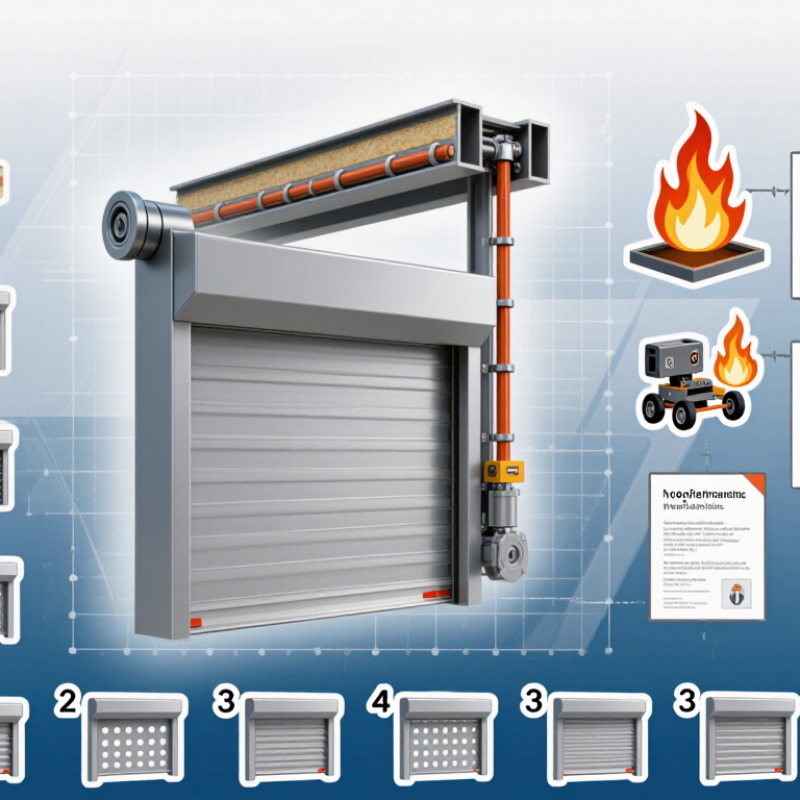
| General note: A steel fire-rated shutter is a complete assembly, typically including a steel curtain, guides, barrel, bottom bar, operating equipment, and release or control devices. Fire-resistance ratings, permitted opening sizes, smoke-control performance, and activation requirements depend on the tested product configuration, local codes, and the approved building design. A fire rating alone does not mean the shutter is smoke-rated. |