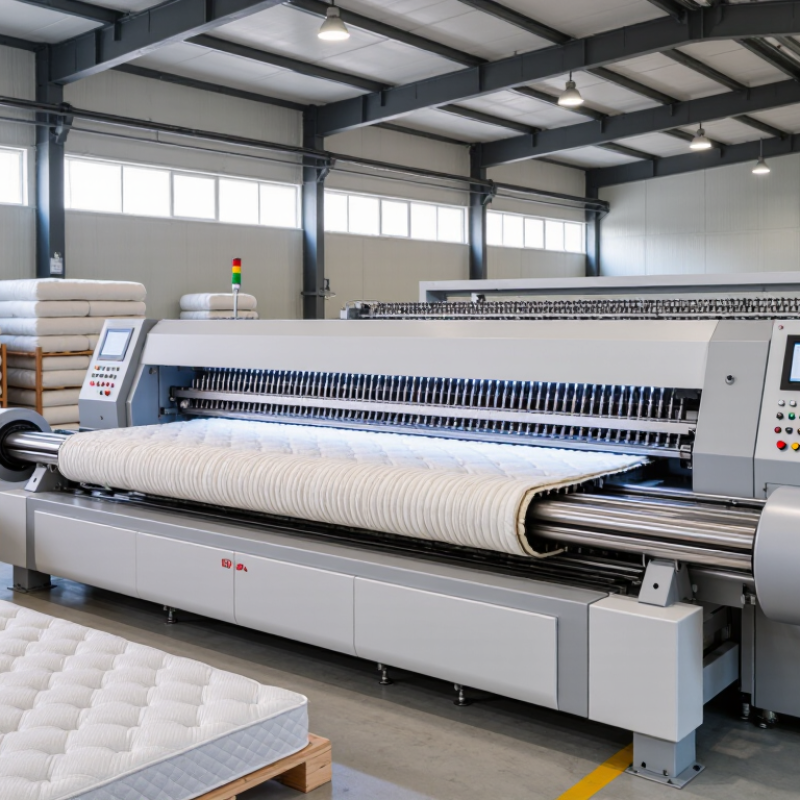
| 1 | Machine Configuration | Confirm whether the machine is suitable for the intended quilting structure, including multi-needle, lockstitch, chainstitch, or computer-controlled patterns. | Complete technical datasheet, machine layout, needle arrangement, stitch formation description, and configuration list. | Match the proposed configuration with the products, fabrics, and quilting patterns planned for production. | 15% |
| 2 | Usable Quilting Width | Select a working width that covers the largest planned mattress or panel size while allowing practical edge margins. Common industrial configurations are often offered in widths around 2,000–2,800 mm, but the exact requirement depends on the product range. | Effective working-width specification, maximum material-width drawing, and sample quilting results. | Measure the actual quilted width during a witnessed factory test rather than relying only on the frame width. | 10% |
| 3 | Production Capacity | Compare output using the same fabric, stitch length, pattern complexity, and operating schedule. Advertised maximum speed should not be treated as guaranteed finished-product output. | Rated quilting speed, recommended operating speed, cycle-time data, and production samples. | Request a recorded acceptance test using the buyer’s material and target pattern. | 12% |
| 4 | Stitch Quality and Pattern Accuracy | The machine should maintain consistent stitch density, fabric feeding, thread tension, pattern alignment, and edge registration during continuous operation. | Finished samples, pattern files, tolerance information, tension-control specifications, and quality-inspection records. | Inspect at least one long-run sample for skipped stitches, puckering, pattern deviation, and uneven tension. | 14% |
| 5 | Material Compatibility | Verify compatibility with the actual fabric, foam, wadding, felt, cotton, polyester, and composite layers used in the mattress line. | Material test report, recommended needle and thread specifications, supported material-thickness range, and feeding-system details. | Send representative production materials for testing and retain the approved sample as a contractual reference. | 10% |
| 6 | Automation and Software | Evaluate pattern-editing functions, job storage, USB or network transfer, automatic thread trimming, thread-break detection, tension control, and operator-interface usability. | Software demonstration, supported file formats, user manual, backup procedure, and training plan. | Ask operators to create, save, modify, and reload a production pattern during a live demonstration. | 10% |
| 7 | Build Quality and Maintainability | Assess frame rigidity, accessibility of wear parts, lubrication points, electrical cabinet quality, guarding, and ease of routine cleaning and adjustment. | Assembly drawings, maintenance schedule, wear-part list, electrical diagrams, and recommended preventive-maintenance intervals. | Inspect an operating machine and ask an experienced technician to evaluate access to service points. | 9% |
| 8 | Safety and Compliance Documentation | The machine should include appropriate guarding, emergency stops, electrical protection, operating instructions, warning labels, and documentation required for the destination market. | Risk assessment, declaration of conformity where applicable, electrical test records, safety manual, and wiring diagrams. | Have the buyer’s safety or compliance team review the documents before issuing the purchase order. | 8% |
| 9 | Installation and After-Sales Support | Prioritize suppliers able to provide installation, commissioning, operator training, remote troubleshooting, technical manuals, and a defined response process. | Service coverage, technician availability, training agenda, response-time commitment, warranty terms, and service references without undisclosed commercial claims. | Include installation acceptance, training completion, service response, and escalation procedures in the contract. | 7% |
| 10 | Total Cost of Ownership | Calculate purchase price together with freight, installation, energy use, spare parts, needles, thread consumption, maintenance, downtime risk, and operator training. | Itemized quotation, spare-parts price list, power requirements, warranty exclusions, delivery schedule, and five-year operating-cost estimate. | Compare at least three technically equivalent quotations using the same production assumptions and acceptance criteria. | 5% |