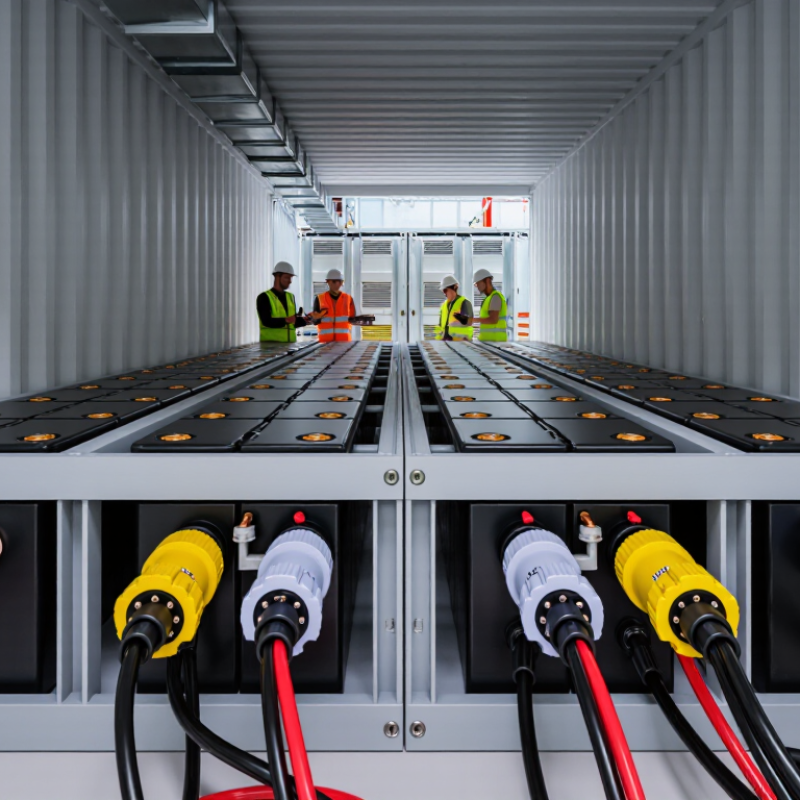
| 1 | Battery-module pole connector | Electrical connection between battery modules or module assemblies. | Some product designs are specified for systems up to 1,500 V DC; current ratings are model-specific and commonly selected in the tens-to-hundreds of amperes. | IEC 61984; IEC 60529 for stated IP protection; UL 1977 where applicable. | Touch protection, polarity coding, mating-cycle rating, temperature rise, and prevention of mismating. |
| 2 | Rack power connector | Connects battery racks to a DC bus or other power-distribution equipment. | Designed ratings vary by system; products may be specified for up to 1,500 V DC, with current capacity determined by the connector and cable assembly. | IEC 61984; IEC 60529; UL 1977 where applicable. | Rated voltage, continuous current, short-circuit withstand, interlock options, and cable-size compatibility. |
| 3 | Bolted busbar connector | Forms a fixed electrical joint between busbars or between a busbar and a terminal. | Current capacity is determined by conductor dimensions, material, joint design, and temperature limits; voltage depends on insulation and assembly clearances. | IEC 61439 assembly requirements may be relevant to the finished switchgear; IEC 61984 may apply to connector assemblies within its scope. | Contact resistance, plating, bolt torque, thermal cycling, and mechanical support. |
| 4 | Compression or mechanical cable lug | Terminates power cables at battery, busbar, or equipment terminals. | Current capacity depends on cable conductor size and installation. The lug itself does not establish the complete assembly’s voltage rating. | IEC 61238-1 series for applicable power-cable connectors; UL 486A-486B where applicable. | Copper/aluminium compatibility, conductor range, tool and die specification, pull-out performance, and temperature class. |
| 5 | Flexible laminated busbar connector | Accommodates vibration, movement, or thermal expansion between busbars and equipment. | Current and voltage ratings are assembly-specific; they depend on conductor cross-section, insulation, joint geometry, and cooling conditions. | IEC 61439 may be relevant to the completed assembly; verify any product-level test reports and insulation specifications. | Flex life, bend radius, temperature rise, insulation material, and resistance to vibration. |
| 6 | High-voltage inline cable connector | Joins or disconnects DC power cables in a battery or power-conversion system. | Select by the system’s maximum DC voltage and operating current; some BESS product families are designed for systems up to 1,500 V DC. | IEC 61984; IEC 60529; UL 1977 where applicable. | DC switching suitability, touch safety, locking mechanism, cable range, and whether energized disconnection is permitted. |
| 7 | Low-voltage auxiliary power connector | Supplies control, monitoring, or auxiliary equipment, often at 12, 24, or 48 V DC. | Common system voltages include 12–48 V DC; allowable current depends on contact size, wire gauge, and connector temperature limits. | IEC 61984 or IEC 61076 series, depending on connector design and scope; IEC 60529 for IP claims. | Contact count, keyed mating, vibration resistance, sealing, and separation from high-voltage circuits. |
| 8 | Signal and control connector | Connects battery-management, sensing, interlock, and communication circuits. | Signal-level ratings vary widely by contact and connector family; check the rated voltage, current per contact, shielding, and data-interface requirements. | IEC 61076 series for applicable connector formats; IEC 60529 for stated enclosure protection. | EMC shielding, contact resistance, pin assignment, coding, and separation from power conductors. |
| 9 | Protective-earth and bonding connector | Bonds equipment frames, doors, or enclosures to the protective-earth system. | Specify conductor size and required fault-current performance for the system; there is no universal BESS connector current rating. | IEC 61439 requirements may apply to the finished assembly; verify applicable grounding and installation rules for the target market. | Bonding continuity, corrosion resistance, fastening method, and fault-current test evidence. |
| 10 | Enclosure bulkhead connector | Provides a sealed electrical interface through a battery cabinet or equipment enclosure wall. | Electrical ratings follow the installed connector and cable assembly; the enclosure penetration also affects the achieved ingress-protection level. | IEC 60529 for IP classification; IEC 61984 or UL 1977 where applicable to the connector. | Panel thickness, sealing method, cable strain relief, corrosion resistance, and IP test configuration. |