| 1 | Define the complete pipe specification before ordering | Confirm outside diameter, wall thickness, pipe length, steel grade, manufacturing process, end finish, coating, and quantity. | Every requirement must match the approved purchase specification and the applicable standard, such as ASTM, EN, or API requirements selected for the project. | Approved technical data sheet, purchase order, and revision-controlled drawing. |
| 2 | Select the correct steel grade for the service | Check the material grade and chemical composition against the intended use, including pressure, temperature, corrosion, and weldability requirements. | The heat number, grade designation, and chemistry shown on the material certificate must correspond to the ordered grade and project specification. | Material test certificate, heat certificate, and traceability register. |
| 3 | Confirm dimensional tolerances in writing | Measure outside diameter, wall thickness, ovality, length, straightness, and end squareness using calibrated equipment. | All measurements must fall within the tolerances stated in the contract or applicable standard. Do not rely on nominal dimensions alone. | Inspection report with equipment identification and calibration status. |
| 4 | Review the manufacturing method | Identify whether the pipe is seamless, longitudinally welded, or helically welded, and verify that the process is suitable for the design application. | The actual manufacturing process must be the same as the process specified in the purchase order; unauthorized substitutions require written approval. | Manufacturing route, process qualification documents, and production batch records. |
| 5 | Inspect weld quality and weld areas | Check weld seams for visible cracks, lack of fusion indications, undercut, excessive reinforcement, arc strikes, and unacceptable surface defects. | Welds must meet the visual and nondestructive examination requirements defined by the selected pipe standard and project specification. | Visual inspection report, weld examination records, and repair log if applicable. |
| 6 | Require appropriate nondestructive testing | Confirm that the required ultrasonic, radiographic, magnetic-particle, or other examination has been completed on the specified quantity or percentage of pipes. | Test coverage, method, operator qualification, acceptance level, and results must satisfy the contract and applicable standard. | Nondestructive testing reports, examiner qualifications, and equipment calibration records. |
| 7 | Check hydrostatic or pressure-test requirements | Verify the test pressure, holding time, test medium, test temperature, and evidence of leakage or permanent deformation where pressure testing is required. | Each tested pipe or defined test lot must pass the specified pressure test without leakage or unacceptable deformation. | Pressure-test chart or certificate showing pressure, duration, pipe identification, and result. |
| 8 | Inspect surface condition and protective coating | Examine the external and internal surfaces for rust, laminations, dents, gouges, scale, contamination, coating holidays, and uneven coating coverage. | Surface defects must be within the permitted limits, and coating type, dry-film thickness, adhesion, and holiday-test results must meet the coating specification. | Surface inspection report, coating thickness readings, adhesion results, and holiday-test report. |
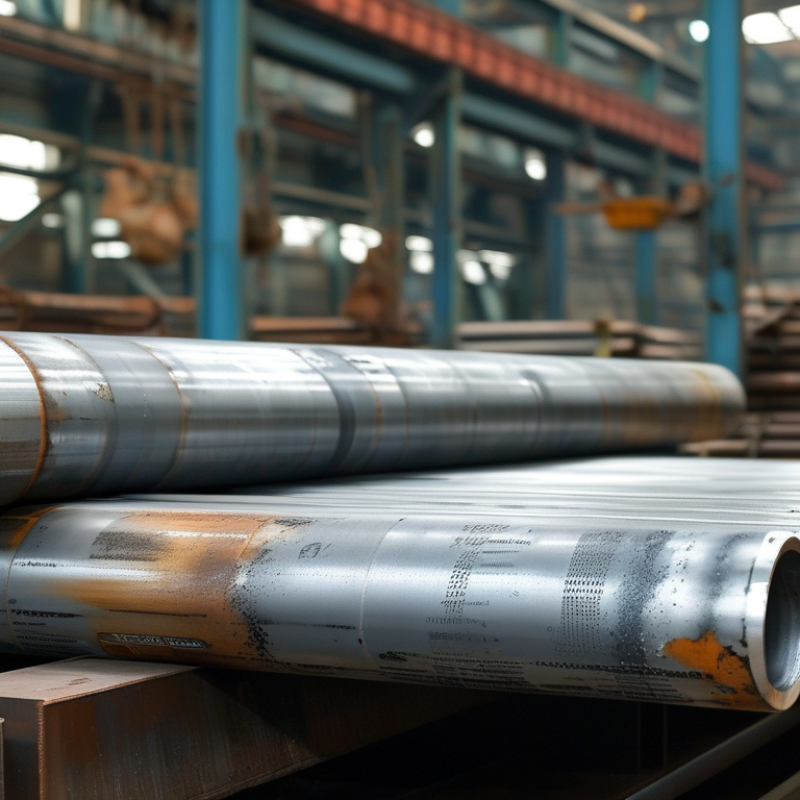
| 9 | Verify marking, traceability, and documentation | Match pipe markings, heat numbers, batch numbers, dimensions, grade, and inspection status with the packing list and certificates. | Each pipe or bundle must remain traceable from the finished product back to the material heat and inspection records. | Marking photographs, packing list, material certificates, and traceability matrix. |
| 10 | Complete a documented pre-acceptance inspection | Use a sampling plan or full inspection as required, record nonconformities, and confirm that corrective actions are closed before release. | Do not sign final acceptance or authorize shipment until dimensions, testing, appearance, quantity, packaging, and documentation are approved. | Signed inspection checklist, nonconformance reports, corrective-action evidence, and final release note. |