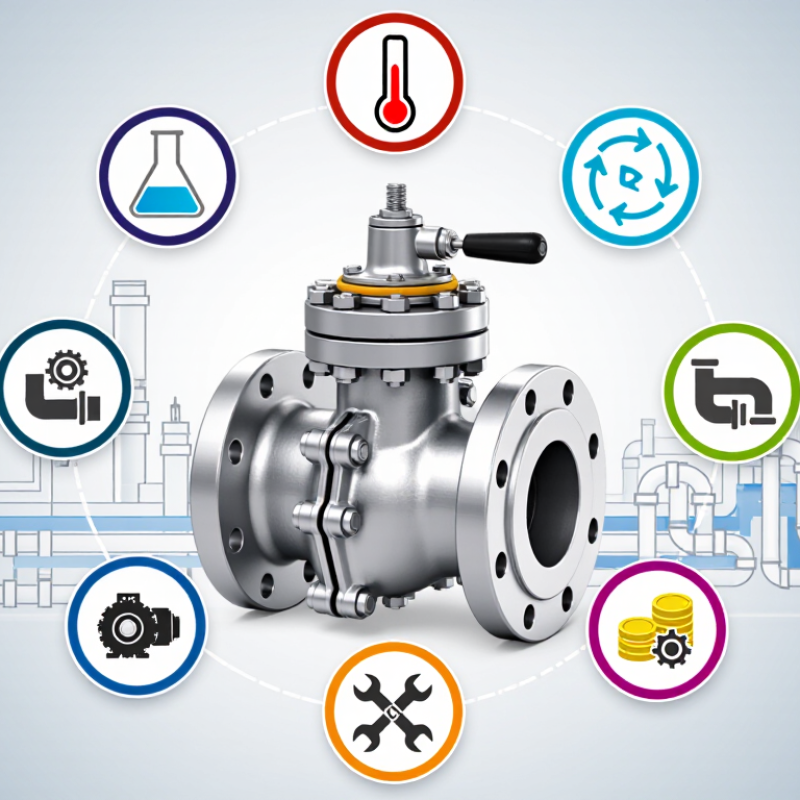
| 1 | Confirm the Applicable Standards | Check the required design, face-to-face, flange, pressure-testing, and material standards for the project. | EN 593 API 609 ISO 5752 ASME B16.5
Confirm that the selected standard matches the piping system and local regulations. | Correct standards help ensure dimensional compatibility, predictable testing requirements, easier inspection, and safer integration with existing piping. |
| 2 | Match Pressure and Temperature Ratings | Review the maximum operating pressure, pressure class, fluid temperature, pressure surges, and shut-off requirements. | Select a pressure rating equal to or higher than the system design pressure. Confirm seat and disc materials for the complete operating temperature range. | A valve rated only for normal conditions may fail during start-up, water hammer, thermal expansion, or other temporary operating events. |
| 3 | Choose the Correct Valve and Seat Materials | Identify the fluid composition, concentration, abrasiveness, cleanliness, corrosion potential, and required leakage performance. | Compare body, disc, shaft, liner, and seat materials. For corrosive or abrasive services, request compatibility data and service limitations. | Material compatibility reduces corrosion, swelling, erosion, contamination, and premature leakage while improving service life. |
| 4 | Measure Installation Space and Orientation | Check pipe size, flange type, face-to-face dimension, actuator clearance, stem orientation, nearby supports, and insulation thickness. | Allow sufficient room for actuator removal, bolt access, disc rotation, inspection, and safe operation. Verify that the disc will not interfere with internal pipe components. | Adequate clearance prevents installation delays, disc obstruction, inaccessible fasteners, and difficult future maintenance. |
| 5 | Select the Appropriate Actuation Method | Determine whether the valve will use a lever, gearbox, pneumatic actuator, electric actuator, or another control arrangement. | Size the actuator for maximum breakaway torque, running torque, shut-off conditions, safety factor, control signal, fail position, and operating frequency. | Proper actuation provides reliable positioning and prevents undersized actuators, excessive energy use, slow response, or damage to the valve stem. |
| 6 | Plan for Maintenance and Inspection | Review access to fasteners, actuator components, seat areas, stem seals, isolation points, and any replaceable parts. | Prefer designs with documented inspection procedures, accessible service components, available replacement parts, and clear maintenance intervals. | Maintainable equipment reduces downtime, simplifies troubleshooting, improves safety, and lowers the total cost of ownership. |
| 7 | Evaluate Total Cost, Not Purchase Price Alone | Compare purchase cost with installation, actuation, energy consumption, inspection, spare parts, downtime, and expected service life. | Assess lifecycle cost over the planned service period. Confirm warranty terms, documentation, testing records, delivery time, and technical support requirements. | A slightly higher initial cost can be economically preferable when it delivers longer service life, fewer failures, lower maintenance, and reduced operational risk. |