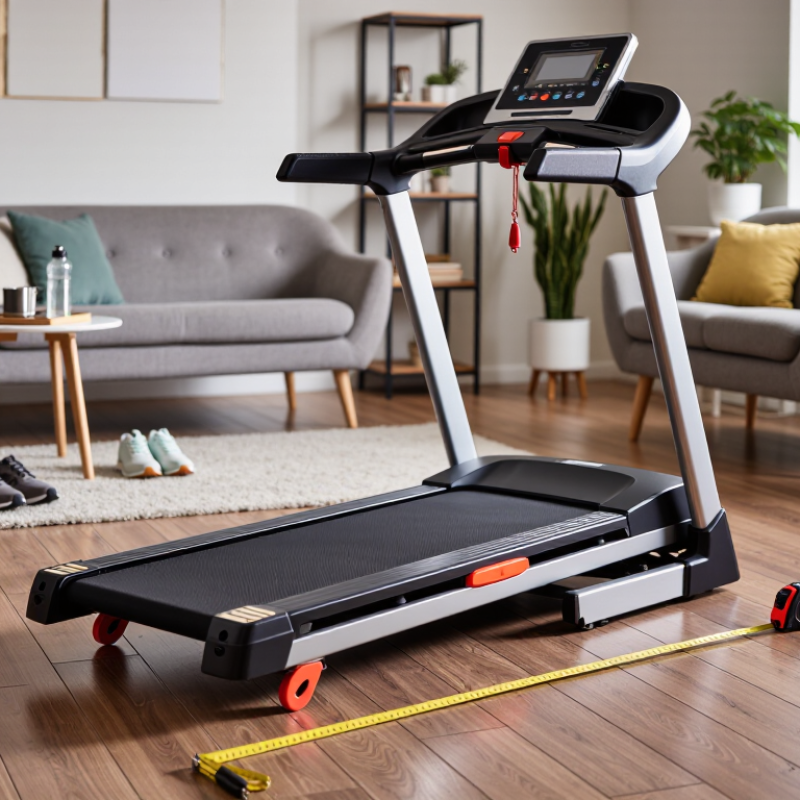
| 1 | Walking and Running Surface | Choose a belt that provides enough room for the user’s natural stride. A longer and wider deck is generally more suitable for running than for walking. | Measure the usable belt area rather than the outside frame. For regular running, verify that the deck supports the user’s stride length and does not force shortened steps. | 15% | Very High |
| 2 | Motor and Speed Range | Match the motor and maximum speed to the intended activity: gentle walking requires less output than frequent jogging or running. | Confirm whether the stated speed is intended for walking, jogging, or running. A treadmill used near its maximum speed may experience more heat and mechanical wear. | 12% | High |
| 3 | User Weight Capacity | Select a unit whose published maximum user weight is comfortably above the heaviest expected user, rather than choosing a model at the exact limit. | Check the manufacturer’s rated capacity and consider additional loads caused by running impact. A safety margin can support quieter operation and longer service life. | 10% | High |
| 4 | Folded Size and Storage | Compare both the operating footprint and the folded dimensions. The treadmill should fit the planned storage location with clearance for ventilation and access. | Measure doorways, closets, under-bed space, and ceiling clearance where applicable. Do not rely only on product photographs or the shipping-box dimensions. | 12% | Very High |
| 5 | Portability and Transport | Look for sturdy transport wheels, a manageable lifting weight, and a secure folding or locking mechanism. | Confirm whether one person can move the treadmill safely. Check wheel placement, handle design, folded balance, and whether the unit can be moved without dragging the belt or frame. | 8% | High |
| 6 | Incline and Workout Control | Choose manual incline for basic variety or powered incline when frequent, convenient adjustment is important. | Determine whether incline changes are manual or motorized, how many levels are available, and whether controls can be reached safely while walking. | 8% | Medium |
| 7 | Maintenance Requirements | Prioritize clear belt-lubrication instructions, accessible adjustment points, and a deck designed for routine cleaning. | Review the recommended lubrication interval, belt-tension procedure, cleaning instructions, and replacement-part availability. Keep the belt and surrounding floor free of dust and debris. | 10% | High |
| 8 | Noise and Stability | A stable frame, shock-absorbing deck, and smooth belt movement are important for apartments, shared rooms, and regular use. | Look for independent testing or user feedback about vibration and noise under load. Place the treadmill on a level surface and use a suitable floor mat when recommended. | 8% | Medium |
| 9 | Warranty and Service Support | Prefer clearly stated coverage for the frame, motor, parts, and labor, with accessible service procedures and replacement components. | Read exclusions, registration requirements, return periods, labor coverage, shipping responsibility, and whether warranty service is available in the buyer’s country. | 10% | Very High |
| 10 | Overall Value and Safety | Judge total ownership cost rather than purchase price alone. Include delivery, assembly, accessories, maintenance, electricity, and possible repairs. | Verify emergency-stop protection, handrail security where fitted, child-safety features, electrical requirements, return conditions, and the cost of commonly replaced parts. | 7% | Very High |
| Scoring Guidance: Rate each dimension from 1 to 5, multiply the rating by the suggested weight, and compare the total with your actual walking or running needs. A lower-priced treadmill is not necessarily better value if it has limited storage flexibility, weak service support, or high maintenance costs. |