



Top 10 Tips for Choosing the Right Cement Mix for Your Project?

Choosing the right cement mix for your project can significantly impact the outcome. John Smith, a leading expert in construction materials, once said, "The right cement mix is essential for durability." This statement emphasizes the importance of knowing your options.

A suitable cement mix ensures your project stands the test of time. Yet, many overlook this critical decision. Some may feel overwhelmed by the various types available. Factors like climate and intended use can complicate the choice. Taking the time to understand these elements is crucial.

Each project is unique, and a one-size-fits-all approach rarely works. It's easy to assume all cement mixes are the same. In reality, small differences can lead to significant issues. For instance, a mix that works well in dry climates may fail in wet conditions. Reflecting on these challenges is part of the process. Make informed decisions to create a successful project.

Top 10 Tips for Choosing the Right Cement Mix for Your Project?

Understanding Different Types of Cement Mixes for Various Applications

Top 10 Tips for Choosing the Right Cement Mix for Your Project?

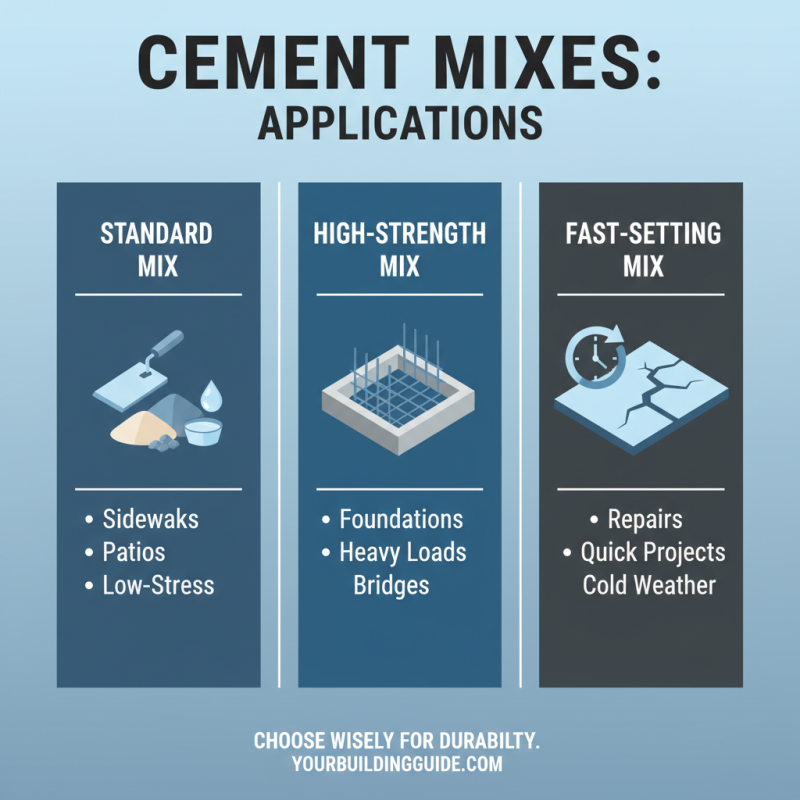
When selecting a cement mix for your project, understanding the types available is crucial. There are various cement mixes, each designed for specific applications. For example, a standard mix, often used in sidewalks or patios, typically contains sand, gravel, and water. It’s ideal for low-stress applications. However, this mix may not withstand heavy loads over time.

For more demanding projects, such as structural foundations, a high-strength mix is essential. This type often includes additives to enhance durability and load-bearing capabilities. Keep in mind that choosing the wrong mix can lead to cracks or structural failures. It’s an area where many face challenges. The wrong choice may result in costly repairs or delays.

Consider also the environmental conditions where the cement will be applied. A mix that performs well in dry climates might fail in wet areas. Reflecting on your project’s location and purpose is vital. It can save you from future headaches. Don't rush the decision. Take the time to evaluate all options and their implications thoroughly.

Evaluating Project Requirements for the Right Cement Mix Selection

Choosing the right cement mix begins by evaluating the specific requirements of your project. Different applications call for different strengths and characteristics. For instance, structural concrete typically requires a mix with a compressive strength of at least 25 MPa. According to the American Concrete Institute, selecting the right mix impacts durability and consistency in performance.

Consider environmental factors as well. If your project is in a coastal area, you may need a mix that resists chloride intrusion. A study by the National Ready Mixed Concrete Association highlights that coastal structures benefit from mixes with supplementary cementitious materials. These additives enhance the longevity and can reduce the overall carbon footprint.

In practical terms, the texture of the mix also matters. A smoother finish may be needed for aesthetic purposes, while rougher textures can help with adhesion in certain applications. Understand the balance between aesthetics and function. Evaluate whether your project can accommodate variations in the mix. Crafting a perfect mix is often more about experimentation and adjustments than sticking to a rigid recipe. Consider documenting the process to refine future selections.

Key Characteristics to Look for in a Quality Cement Mix

When choosing the right cement mix, several key characteristics stand out. First, consider the strength. Look for mixes that meet the specific compressive strength needed for your project. A mix with higher strength often means a longer lifespan for your structure. However, achieving the perfect balance between strength and workability can be tricky. You may find mixes that offer great strength but are hard to work with.

Next, examine the setting time. Some projects require a fast-setting mix, while others may need more time for adjustments. A faster set can rush the work but may lead to mistakes. Ensure that you understand the needs of your specific project. Also, don’t overlook the water-to-cement ratio. It greatly affects the durability and strength of the final product. An improper ratio can result in cracks and failures later.

Another aspect to consider is the mix’s resistance to environmental factors. If your project is outdoors, select a cement with good weather resistance. But remember, not all mixes perform equally in wet or extreme conditions. Test samples might show varying results. Lastly, evaluate any additives in the mix. They can enhance performance but may complicate your mix and workability. This requires careful consideration and planning.

Best Practices for Mixing and Applying Cement for Optimal Results

Top 10 Tips for Choosing the Right Cement Mix for Your Project?

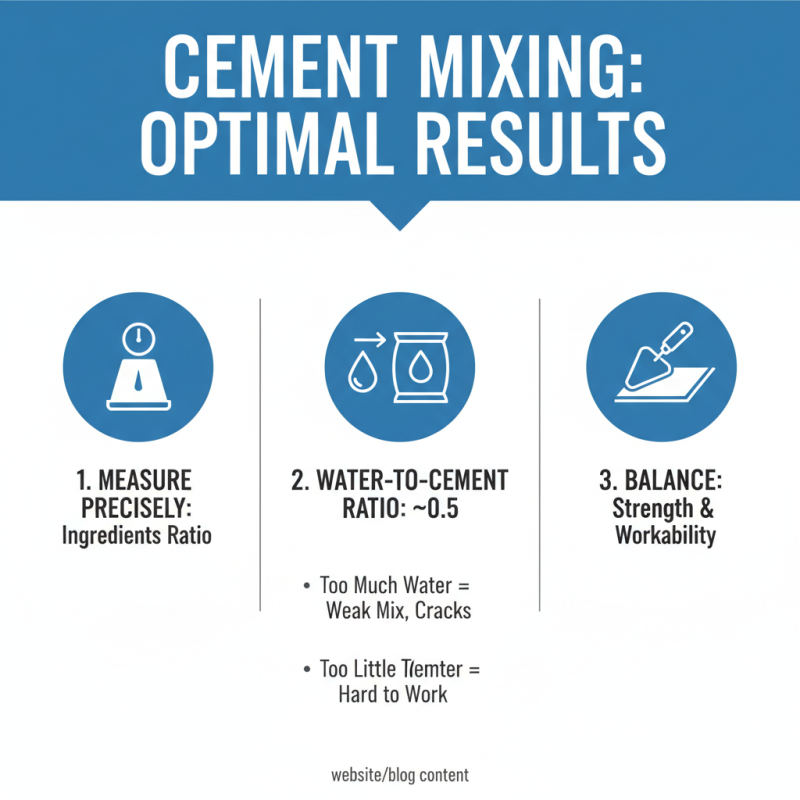
Mixing cement requires attention to detail for the best results. It's crucial to measure your ingredients precisely. Using too much water can weaken the mix, leading to cracks. On the other hand, too little water makes it hard to work with. A good rule of thumb is to use a water-to-cement ratio of around 0.5. This balance ensures strength and workability.

When applying the mix, surface preparation matters. Clean the area well, removing debris and loose material. This makes sure the cement adheres properly. Always work in small batches to prevent wastage. Timing can be tricky; if the mix begins to set, don’t try to remix it. Consider the temperature as well. Hot weather can cause rapid drying, while cold can slow curing.

Mistakes can happen, like overworking the mix or applying it too roughly. These require reflection. Take time to assess your techniques after each project. Learning from errors leads to better outcomes in future jobs. The more you practice, the more comfortable you'll become with the process.

Common Mistakes to Avoid When Choosing a Cement Mix for Your Project

Choosing the right cement mix for your project is crucial. Many people make common mistakes that can lead to unsatisfactory results. One frequent error is not matching the mix to the project's needs. For example, using a mix designed for heavy-duty structures in a small backyard project can be overkill. Always consider the intended use of the cement.

Another pitfall is overlooking environmental conditions. If you’re in a humid area, a mix that fights moisture is essential. On the other hand, cold temperatures require special additives to ensure proper curing. Ignoring weather impacts can compromise your work. Sometimes, people assume all mixes are the same, which is a misconception. Each mix has unique properties that suit different applications.

Tip: Always consult with an expert when uncertain. This can save you from unnecessary expenses on the wrong mix. Additionally, test small batches to see how they set. This practice allows for adjustments before committing to larger quantities. Mistakes can be costly, but understanding your requirements can make a significant difference.

Top 10 Tips for Choosing the Right Cement Mix for Your Project

Tip Number Tip Description Common Mistake to Avoid
1 Identify the Purpose of Your Project Choosing the wrong mix for structural vs. decorative purposes.
2 Consider Environmental Factors Ignoring climate impacts on curing and strength.
3 Check the Strength Requirements Underestimating the strength needed for load-bearing elements.
4 Understand the Different Types of Cement Mixes Using a mix unsuitable for the specific application.
5 Evaluate Local Availability of Materials Overlooking supply chain limitations for specific mixes.
6 Consult with Professionals Neglecting expert advice based on project demands.
7 Account for Workability Choosing a mix that is too stiff or too fluid for the job.
8 Look for Durability Ratings Underestimating the importance of longevity in harsh environments.
9 Review the Mixing Ratio Not adhering to specified ratios can lead to failures.
10 Prepare for Mixing and Application Skipping proper preparation can compromise the final result.
Find the Right Repair Product for Your Project

Need to find the most appropriate product for the needs of your project? We can help because we have over 70 years of experience servicing the industry with every kind of project, from Do-it-yourself projects to large skyscrapers. Package Pavement has the experience, the knowledge and the products to help every project succeed.

Quikrete Repair Products
Legend
Package Pavement has two convenient locations in Stormville, NY (Dutchess County) and Ravena, NY (Greene County) to serve the Northeastern Region with bagged concrete, blacktop, mortar, and repair products. This map gives a general idea of where we service and the product lines we offer.
Package Pavement Products
Quikrete Products
Spec Mix Products
map

Our Brands Websites