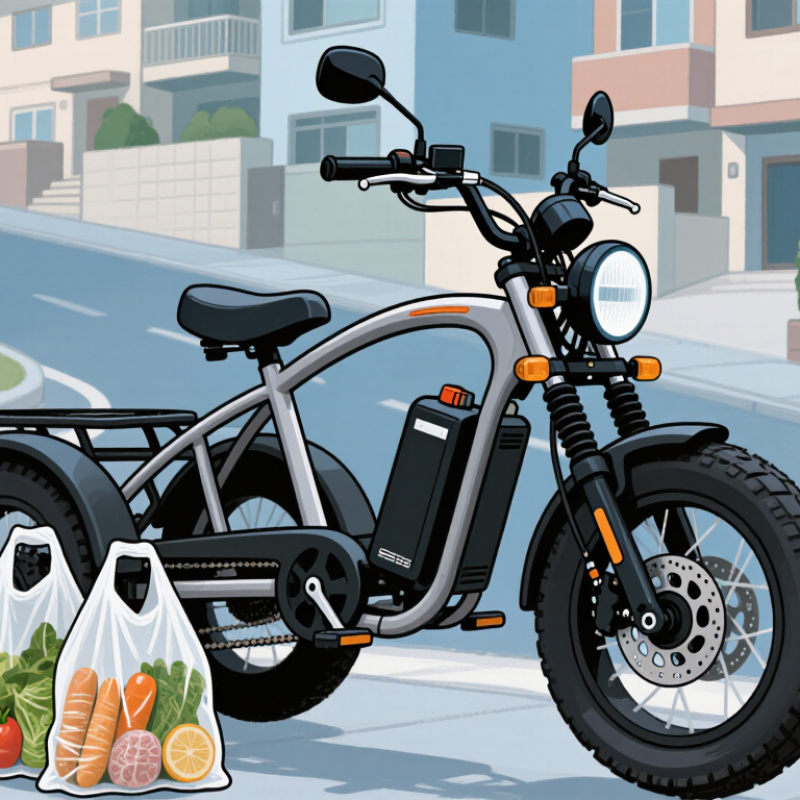
| 1 | Define the primary use | Grocery trips, commuting, family transport, mobility support, or leisure riding | Choose a cargo layout for loads, a passenger layout for people, or a step-through frame for easier mounting | The frame, seating, storage, and balance should match the main task rather than occasional use |
| 2 | Measure daily travel distance | Short trips of 5–15 km, regular trips of 15–30 km, or longer daily travel above 30 km | Select a usable range at least 25–40% greater than your planned daily distance | Extra capacity helps offset hills, cold weather, heavy loads, stop-and-go traffic, and battery aging |
| 3 | Match the tricycle to your route | Paved streets, shared paths, uneven roads, gravel surfaces, or steep residential routes | Check tire width, ground clearance, braking performance, turning space, and stated incline capability | A tricycle that feels stable on smooth pavement may handle uneven or sloped routes differently |
| 4 | Calculate the load requirement | Rider plus groceries, tools, parcels, child seat, or other equipment | Add rider weight and cargo weight, then remain below the manufacturer’s total payload rating | Overloading can reduce braking control, increase stopping distance, and affect stability and range |
| 5 | Choose suitable battery capacity | Light assistance on flat roads or frequent assistance on hills and with heavy loads | For many everyday uses, compare batteries around 400–750 Wh by calculating watt-hours, not only advertised distance | Watt-hours provide a clearer basis for comparing energy capacity across different systems |
| 6 | Evaluate motor assistance | Flat commuting, moderate slopes, or repeated steep climbs | Compare continuous power, torque, pedal-assist response, and legal power limits in your area | Torque and control response are especially important when starting from a stop or climbing with cargo |
| 7 | Check stability and handling | New riders, low-speed maneuvering, narrow paths, or frequent turns | Test steering feel, wheelbase, turning radius, seat height, parking brake, and low-speed balance | Three wheels provide stationary support, but cornering technique and vehicle width still affect handling |
| 8 | Prioritize braking and visibility | Urban traffic, downhill routes, evening travel, or heavier payloads | Look for dependable front and rear brakes, brake lights, reflectors, a headlight, bell or horn, and reflective details | Stopping ability and visibility become more demanding as speed, traffic, slope, and total weight increase |
| 9 | Consider comfort and accessibility | Daily riding, longer journeys, limited leg strength, or frequent mounting and dismounting | Check step-through height, adjustable handlebars, saddle support, suspension options, and an upright riding position | A comfortable, accessible setup encourages consistent use and improves control over longer trips |
| 10 | Plan charging and storage | Apartment storage, outdoor parking, workplace charging, or daily use in wet conditions | Confirm battery removability, charging time, charger location, storage width, lock points, and weather protection | A tricycle is easier to use when it can be safely stored, secured, and charged after every trip |