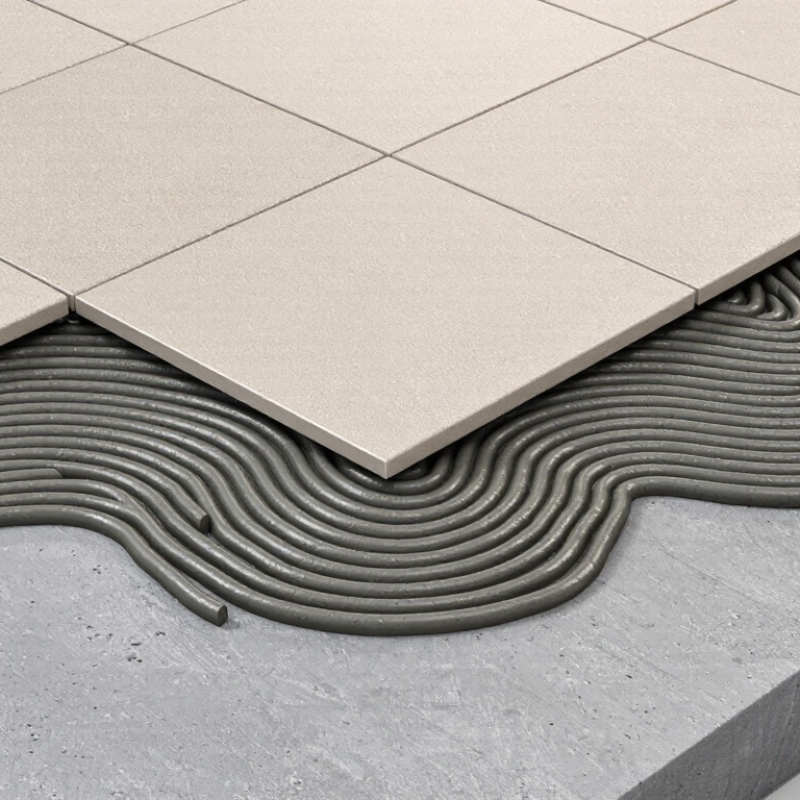
| Definition | Tile bond adhesive is a prepared bonding material used to attach ceramic, porcelain, glass, stone, and other tiles to a suitable substrate. | It forms a continuous bond layer that transfers load between the tile and the surface below. |
| Common Adhesive Families | Cement-based thin-set mortar, ready-mixed organic adhesive, and reactive resin adhesive such as epoxy-based systems. | Different chemistries provide different levels of flexibility, moisture resistance, chemical resistance, and working time. |
| Primary Ingredients | Cementitious products generally contain cement, graded mineral fillers, water-retention agents, and polymer modifiers. Premixed products use organic binders, fillers, and additives. | Fillers control body and coverage, while binders and modifiers improve adhesion, workability, water retention, and flexibility. |
| Bonding Mechanism | The adhesive keys into surface irregularities and develops adhesion through mechanical interlock, physical adhesion, and chemical or polymer-related interactions. | Multiple bonding mechanisms help resist shear, tension, vibration, and small movements at the tile interface. |
| Cement-Based Curing | Cement-based adhesive hardens mainly through hydration, a chemical reaction between cement compounds and water. Drying also influences moisture loss in some formulations. | Hydration creates a hardened mineral matrix that locks the tile to the substrate. |
| Polymer-Modified Performance | Polymer additives can improve flexibility, wet adhesion, deformability, water retention, and resistance to cracking or shrinkage. | The modified adhesive can better accommodate minor substrate movement and thermal expansion. |
| Recommended Substrates | Common substrates include sound concrete, cement mortar beds, cement backer boards, masonry, and properly prepared gypsum-based boards where permitted. | Compatible, clean, stable, and properly prepared substrates reduce bond failure caused by dust, movement, or contamination. |
| Surface Preparation | The surface should be structurally sound, clean, dry or appropriately damp, and free from dust, grease, curing compounds, loose paint, and weak material. | Good preparation maximizes contact and prevents contaminants from acting as a bond-breaker. |
| Application Method | The adhesive is usually spread with a notched trowel. The tile is pressed and moved slightly into place to collapse ridges and improve contact. | Uniform coverage reduces voids, weak spots, and localized stress beneath the tile. |
| Open Time | Open time is the period during which tiles can be placed into the applied adhesive. It varies with product formulation, temperature, humidity, airflow, and substrate porosity. | Placing tiles before surface skinning occurs helps maintain effective wet contact and adhesion. |
| Coverage and Contact | Coverage requirements depend on tile size, substrate flatness, trowel profile, and installation exposure. Larger tiles and wet areas generally require particularly high contact. | Higher contact minimizes unsupported areas where impact, water, or thermal stress could cause cracking or debonding. |
| Moisture Resistance | Some adhesives are suitable for damp or wet locations, but adhesive selection must match the exposure and the complete waterproofing system. | Moisture-compatible formulations help retain bond strength when exposed to periodic or continuous humidity. |
| Flexibility and Movement | Flexible or deformable adhesives are used where thermal changes, vibration, or limited substrate movement may occur. | Controlled flexibility helps dissipate movement-related stress instead of transferring all of it to the tile or bond line. |
| Temperature Considerations | High or low temperatures can change working time, curing rate, viscosity, and final performance. Installation conditions should remain within the product specification. | Correct temperature control supports consistent curing and limits thermal stress during installation. |
| Main Causes of Bond Failure | Typical causes include contaminated or moving substrates, insufficient adhesive coverage, excessive skinning, incorrect mixing, premature loading, incompatible materials, and unsuitable environmental conditions. | Following the adhesive’s technical instructions and the applicable tile-installation standard helps prevent premature debonding and cracking. |